Small workshops need dependable dust control without giving up valuable floor space. The right extractor can capture fine particles at the tool, simplify cleanup, and make sanding, routing, and cutting more comfortable.
This roundup compares ten practical options, from HEPA-equipped extractors and wet-dry vacuums to air-filtration systems and cyclone separators, so you can match dust control to your tools, workspace, and budget.
Best 10 Dust Extractors for Small Workshops Picks for 2026
HEPA Jobsite Extractor
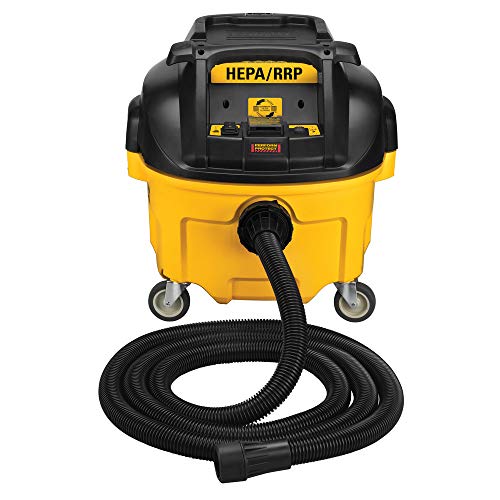
- Automatic filter cleaning every 30 seconds
- HEPA filtration with 150 CFM airflow
- Tool activation and portable wheeled design
Best For: Portable power-tool dust collection
Ambient Air Cleaner
WEN 3410 Air Filtration System
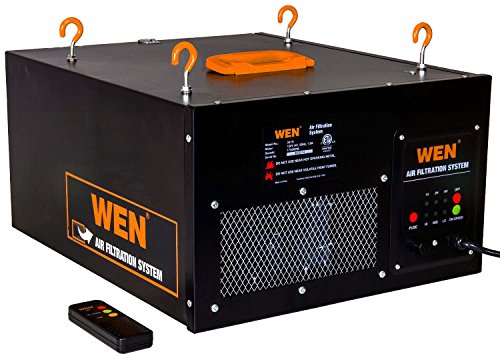
- Three speeds up to 400 CFM
- 1-micron filter with replaceable pre-filter
- RF remote and programmable timer
Best For: Ambient air filtration in workshops up to 400 square feet
OSHA-Focused HEPA Extractor

- Automatic filter cleaning every 15 seconds
- HEPA filtration rated at 99.97% at 0.3 microns
- Tool activation and adjustable Power Broker suction
Best For: Fine-dust extraction from grinders and power tools
Pre-Separator System
Dustopper Pro Cyclone Separator

- Separates sawdust before it reaches the vacuum
- Fits standard 5-gallon pails with EPDM gasket
- Includes two high-flow sweep elbows
Best For: Reducing shop-vac filter and bag loading
Premium HEPA Pick

- HEPA filtration with adjustable high-performance turbine
- Automatic tool start and touch operation
- Compact 15-liter design with included cleaning tools
Best For: Mobile workshop users prioritizing filtration and convenience
Budget Woodworking Collector
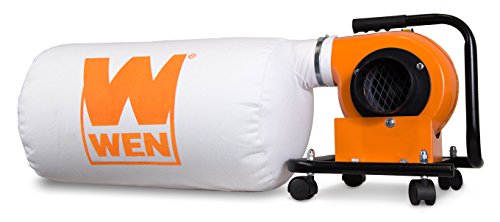
- 660 CFM airflow from a 5.7-amp motor
- 12-gallon, 5-micron zippered collection bag
- Mobile base with optional wall mounting
Best For: Small woodworking shops needing dedicated high-airflow collection
Versatile Wet-Dry Option
8-Gallon Remote-Control Extractor

- Dry, wet, and blowing functions in one machine
- HEPA and paper bags with a 1000W motor
- Remote control and 8-gallon collection tank
Best For: Garage workshops needing versatile cleanup beyond dry dust
Ceiling-Mounted Air Cleaner
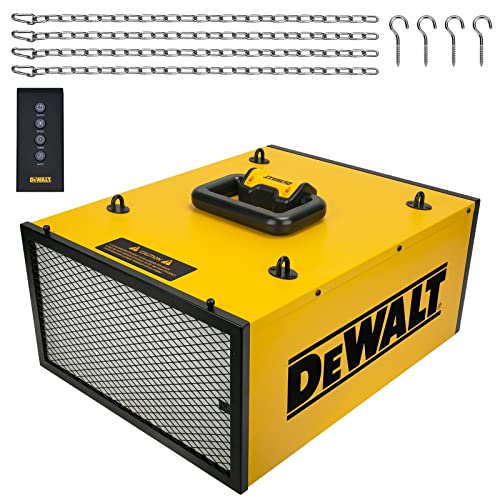
- Two-stage cotton pre-filter and H11 HEPA filtration
- Four modes with remote control and up to 8-hour timer
- Ceiling-mount design saves floor space
Best For: Small workshops needing ambient air filtration without sacrificing floor space
Mobile Tool-Connected Extractor
DYNAVEX 12-Gallon Dust Extractor

- 1.5 HP motor delivers 142 CFM airflow
- 12-gallon steel tank and mobile-wheel design
- Auto-start tool link with hose and adapter kit
Best For: Small shops needing portable, higher-capacity dust collection
Compact Timed Air Filtration
Tabletop MERV-13 Dust Collector

- Compact metal housing with carry handle and cord wrap
- MERV-13 filter with up to 780 CFM airflow
- 120-minute timer and auxiliary outlet
Best For: Small home workshops needing portable, timed ambient air cleaning
HEPA Jobsite Extractor – DEWALT DWV010
For small workshops that need portable dust extractors for small workshops, the DEWALT DWV010 combines HEPA filtration, automatic filter cleaning, and tool activation in a compact 8-gallon canister. Its 150 CFM airflow and 15-foot anti-static hose suit connected power-tool work.
Best For: Portable sanding, cutting, and renovation work where HEPA filtration and automatic filter cleaning matter.
Pros:
- Automatic filter cleaning pulses every 30 seconds to help maintain continuous operation.
- HEPA filter and 150 CFM airflow support fine-dust collection.
- Power Tool Actuation automatically controls the extractor with a connected tool.
- Heavy-duty wheels, casters, and a swivel universal hose connector improve mobility.
Cons:
- Its 80 dB noise rating may be noticeable in a small enclosed workshop.
- The supplied hose has a 1.25-inch diameter, which may limit compatibility with some accessories.
- EPA RRP HEPA-vacuum compliance requires DWV9330 filters.
The DWV010 is a practical choice when workshop portability and tool-triggered operation are priorities. Its automatic cleaning cycle reduces interruptions, while the HEPA setup adds useful filtration for dust-sensitive tasks.
Ambient Air Cleaner – WEN 3410 Air Filtration System
The WEN 3410 is an overhead air-filtration system rather than a tool-connected vacuum, making it a useful complement to dust extractors for small workshops. It filters workshop air at 300, 350, or 400 CFM and includes remote control and timer functions.
Best For: Small workshop air cleanup after woodworking tasks, especially in rooms up to 400 square feet.
Pros:
- Three airflow settings provide up to 400 CFM of air movement.
- Includes a 1-micron filter and replaceable 5-micron pre-filter.
- RF remote works from up to 26 feet and does not require direct line of sight.
- Programmable timer can shut the unit off automatically.
Cons:
- It is an air-filtration system, not a connected dust extractor for capturing debris at the tool.
- The 31-pound body may require planning for placement or mounting.
- Noise is rated at 50 to 60 dB, depending on the setting.
Choose the WEN 3410 as a room-air supplement, not a replacement for source extraction. Its remote operation, timer, and 400-square-foot coverage make it convenient for clearing suspended fine dust between projects.
OSHA-Focused HEPA Extractor – Bosch VAC090AH Dust Extractor
For demanding dust extractors for small workshops, the Bosch VAC090AH offers automatic filter cleaning every 15 seconds, HEPA filtration, and power-tool activation. Its 150 CFM airflow, 97-inch static water lift, and Power Broker suction dial support varied dry-dust applications.
Best For: Workshop users handling fine dust from grinders and power tools who want adjustable suction and a compliance-oriented collection system.
Pros:
- Automatic filter cleaning helps maintain suction during extended use.
- HEPA filtration captures 99.97% of particles at 0.3 microns or larger.
- Power-tool activation and the Power Broker dial help match extraction to the application.
- Included fleece filter bag helps contain dry dust and protect the filter.
Cons:
- At 28 pounds, it is less lightweight than some compact extractors.
- The listed warranty is limited to one year.
- Its 60 dB noise rating may still be audible in a small workspace.
The VAC090AH is a strong fit for tool-based dust control where filtration performance and adjustable suction are more important than minimum size. Bosch also positions it within its PRO+GUARD system for moving toward OSHA Silica Table 1 compliance.
Pre-Separator System – Dustopper Pro Cyclone Separator
The Dustopper Pro takes a different approach to dust extractors for small workshops: it separates dust before it reaches a shop vacuum. Its cyclone-style separator is independently tested for fine and coarse sawdust and drywall powder, helping reduce filter and vacuum-bag loading.
Best For: Small woodworking setups using a standard 5-gallon pail and shop vacuum to improve pre-separation.
Pros:
- Third-party testing reported high separation efficiency across several dust types.
- Designed to reduce dust entering vacuum filters and bags.
- Preinstalled EPDM gasket fits standard 5-gallon pails and is intended to provide a leak-proof seal.
- Two high-flow sweep elbows are included to reduce turbulence and flow restriction.
Cons:
- It is a separator component, not a complete vacuum or powered dust extractor.
- A compatible shop vacuum and standard 5-gallon pail are needed for operation.
- The notes do not provide an airflow rating or filtration rating for the complete assembled system.
The Dustopper Pro is best viewed as an economical first-stage separator for a small workshop dust-collection setup. It can help extend filter and bag life, but the final performance depends on the connected vacuum, hose, and pail arrangement.
Premium HEPA Pick – Festool CT 15 Dust Extractor
For small workshops where cleaner air, dependable suction, and easy mobility matter, the Festool CT 15 is a refined choice among dust extractors for small workshops. Its HEPA filtration, automatic tool start, 15-liter capacity, and compact chassis suit detailed indoor work without taking up excessive floor space.
Best For: Woodworkers who want a compact, HEPA-filtered extractor with convenient tool activation and included cleaning accessories.
Pros:
- HEPA filtration and an adjustable high-performance turbine help capture fine dust.
- Automatic tool start and touch operation simplify workshop use.
- Compact, lightweight design with steel axles supports mobile work.
- 15-liter container and included crevice nozzle and upholstery brush reduce interruptions.
Cons:
- The 15-liter capacity is smaller than some larger shop vacuums.
- It is a corded extractor with one listed speed and power level.
The CT 15 is a strong fit when filtration, portability, and finish quality take priority over maximum collection volume. Its robust build and comprehensive three-year warranty add reassurance for frequent workshop use.
Budget Woodworking Collector – WEN DC3401 Dust Collector
The WEN DC3401 is a practical option for small workshops that need a dedicated woodworking dust collector rather than a compact canister vacuum. Its 5.7-amp motor moves up to 660 CFM, while the rolling base, 12-gallon bag, and optional wall mount provide flexible placement.
Best For: Small woodworking shops seeking high-airflow collection for compatible tools with a 4-inch dust port.
Pros:
- Moves up to 660 cubic feet of air per minute through its 6-inch impeller.
- The 12-gallon, 5-micron zippered bag reduces how often it needs emptying.
- Lockable swivel casters and an onboard handle make repositioning easier.
- Optional wall mounting helps save valuable workshop floor space.
Cons:
- Its foam filter and 5-micron collection setup may be less suited to fine-dust filtration than a HEPA extractor.
- The 4-inch dust port is intended for compatible woodworking tools rather than general-purpose cleanup.
- It has one listed speed and power level.
The DC3401 makes sense when airflow and collection capacity are more important than HEPA-level filtration or wet-dry versatility. Its compact footprint and mounting options are particularly useful in space-conscious woodworking areas.
Versatile Wet-Dry Option – 8-Gallon Remote-Control Extractor
For garages and flexible work areas, this 8-gallon model combines dry pickup, wet pickup, and blowing in one corded machine. It is a versatile entry among dust extractors for small workshops, with remote control operation, HEPA and paper bags, and an accessory kit for routine cleanup.
Best For: Garage-based users who want one machine for woodworking dust, wet messes, general floor cleaning, and blowing leaves.
Pros:
- Three-in-one dry, wet, and blowing functions support varied cleanup tasks.
- A 1000W motor works with HEPA and paper bags to help maintain suction and protect the motor.
- Remote control operation is convenient during garage or woodworking tasks.
- Eight-gallon capacity, an 11.5-foot hose, and a broad accessory kit support larger cleanup jobs.
Cons:
- Its 8-gallon body is larger and heavier than a compact handheld-style extractor.
- The supplied notes do not specify automatic tool start.
- It is a corded 120-volt unit.
This extractor is the most flexible choice of the three for users who want more than dry dust collection. Its wet-dry capability, remote control, and included tools make it well suited to a garage workshop that also handles general cleanup.
Ceiling-Mounted Air Cleaner – DeWALT DWXAF101
The DeWALT DWXAF101 is an air-filtration solution for small workshops where floor space is limited. Its two-stage setup combines a washable cotton pre-filter with an H11 HEPA filter, while ceiling mounting helps distribute cleaned air without taking up valuable workspace.
Best For: Small woodworking shops needing space-saving ambient air filtration and convenient remote control.
Pros:
- Two-stage filtration captures over 95% of 0.3-micron particles, according to the supplied specifications.
- Four operating modes include high, medium, low, and automatic air-quality sensing.
- Ceiling hooks and chains, timer settings, remote control, and a washable pre-filter support convenient use.
Cons:
- This is a ceiling-mounted air-filtration system rather than a portable tool-connected extractor.
- At 64 dB, it may be noticeable in a quiet workshop.
Choose this model when cleaner ambient air and minimal floor use matter more than direct collection at a saw, router, or sander. Its timer and filter indicator also make ongoing operation easier to manage.
Mobile Tool-Connected Extractor – DYNAVEX 12-Gallon Dust Extractor
The DYNAVEX 12-gallon dust extractor is a practical option among dust extractors for small workshops that need direct collection from power tools. Its 1.5 HP, 10-amp motor provides 142 CFM airflow, and the wheeled design helps you move it between work areas.
Best For: Small workshops that want a mobile, tool-connected extractor with a large collection tank.
Pros:
- The 12-gallon tank reduces how often you need to empty collected debris.
- Auto-start mode synchronizes the extractor with a connected power tool.
- Includes a 4-inch hose, clamps, replacement paper filters, and multiple hose adapters.
- A 0.5-micron HEPA filter is supplied for capturing fine particles.
Cons:
- The linked tool must not exceed 550 watts, and continuous auto-start use is limited to one hour.
- Wheels require optional installation.
With its steel 12-gallon tank and included connection hardware, the DYNAVEX suits shops that prioritize capacity and mobility. Check your tools’ power requirements before relying on the automatic switching feature.
Compact Timed Air Filtration – Tabletop MERV-13 Dust Collector
This compact tabletop collector is suited to small workshops where portability and limited-space placement are priorities. It combines a MERV-13 filter with two airflow settings, a 120-minute timer, and a metal housing that is easy to carry between work areas.
Best For: Home workshops and compact woodworking spaces needing portable ambient filtration with timed operation.
Pros:
- Compact metal housing and sturdy handle make it easy to relocate.
- MERV-13 filtration, with a stated filter life of up to six months, supports air cleaning.
- Two speed settings provide 580 CFM or 780 CFM airflow.
- Includes a 120-minute timer, circuit breaker, cord wrap, and auxiliary outlet.
Cons:
- It is an ambient air-filtration unit rather than a large tank-style tool extractor.
- The supplied specifications list only a two-speed range, with no automatic air-quality mode.
The tabletop format makes this collector convenient for carving, woodworking, renovation, or other small-shop tasks. It is a good fit when quick placement and timed air cleaning are more important than collecting debris directly at the tool.
How We Picked the Best Dust Extractors for Small Workshops
We focused on the features that matter most in compact woodworking spaces: filtration, suction or airflow, capacity, portability, noise-conscious operation, tool compatibility, and maintenance. The selection includes dedicated dust extractors, shop-vac-style units, air cleaners, cyclone separators, and tabletop collectors because no single design handles every type of workshop dust equally well.
We also considered practical details such as automatic filter cleaning, remote or tool-triggered operation, mobile bases, bag size, wet-dry capability, and whether a unit is better suited to source capture or general airborne-particle control.
Quick Comparison
| Type | Best For | Main Advantage | Watch Out For |
|---|---|---|---|
| HEPA dust extractor | Portable power tools and fine dust | Strong filtration and source capture | Limited by hose size and container capacity |
| Woodworking dust collector | Table saws, planers, and stationary tools | Higher-volume chip collection | May need ducting or adapters |
| Cyclone separator | Pre-separating chips and debris | Protects the vacuum filter and increases capacity | Usually works as part of a larger system |
| Air-filtration system | Fine dust suspended in room air | Improves overall air circulation | Does not replace source extraction |
| Tabletop collector | Benches, hobby work, and small sanding tasks | Compact and easy to position | Not suitable for high-volume chip removal |
Key Buying Factors for Dust Extractors for Small Workshops
Filtration and Fine-Dust Control
Look for a sealed system and a high-efficiency or HEPA filter if you regularly sand, cut composites, or work with fine wood dust. Automatic filter cleaning helps maintain airflow, while disposable bags can make cleanup safer and less dusty.
Airflow, Suction, and Tool Compatibility
High suction is useful for portable tools, narrow hoses, and long runs. High airflow matters more for stationary machines that produce larger volumes of chips. Check the hose diameter, included adapters, outlet size, and whether the extractor supports automatic tool start.
Capacity, Mobility, and Maintenance
A larger container reduces interruptions, but a compact tank is easier to store and carry. Locking casters, a mobile base, hose storage, and accessible filters can matter as much as headline motor power. Confirm that replacement bags and filters are easy to obtain.
Source Capture Versus Room Filtration
Connect an extractor directly to the tool whenever possible. Air-filtration units and tabletop collectors can reduce residual airborne dust, but they should supplement—not replace—source capture and appropriate respiratory protection.
Who Should Buy Which Dust Extractors for Small Workshops?
Choose a HEPA extractor if you use handheld sanders, routers, grinders, or other portable tools and want the most direct fine-dust control. A woodworking dust collector is the better fit for a table saw, planer, jointer, or other high-chip-output machine. Add a cyclone separator when you want to extend filter life and empty the main container less often.
If airborne dust remains after tool extraction, an air-filtration system can improve the workshop’s general air quality. For occasional bench work, crafts, or very limited space, a tabletop collector may be sufficient. Before buying, prioritize the machines you use most, verify connector compatibility, and choose the smallest system that delivers adequate airflow without becoming difficult to store or maintain.