The best gravity water filter for hiking makes it easier to treat water without constant pumping, making these systems especially useful on long trails, overnight trips, and group outings.
We compared capacity, filtration performance, portability, ease of use, and suitability for solo hikers versus groups to help you choose a practical system for your next adventure.
Best 10 Gravity Water Filter for Hiking Picks for 2026
Best Hands-Free Pick
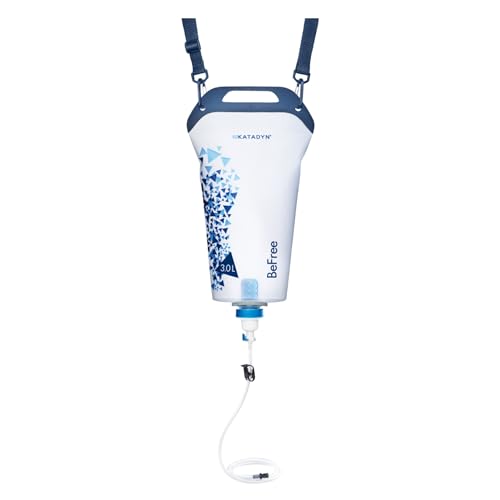
- Hands-free gravity filtration
- 3L collapsible reservoir
- Up to 2 L/min flow
Best For: Solo hikers and small groups wanting easy camp water filtration
Best Long-Life System

- Rated up to 100,000 gallons
- Wide-mouth 2L TPU bladder
- Includes cleaning accessories
Best For: Backpackers prioritizing durability and reusable filtration
Best High-Capacity Option
Waterdrop Gravity Filter Straw
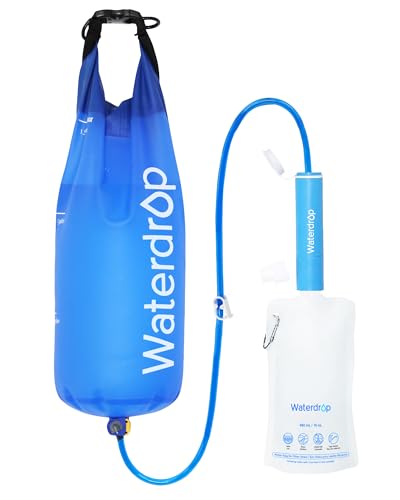
- 1.5-gallon gravity-fed bag
- Up to 700 ml/min flow
- Rated for 1,400 gallons
Best For: Groups and camps needing a larger filtered-water supply
Best Ultralight Backup

- Just 2 ounces
- Rated for up to 100,000 gallons
- Works with pouches, bottles, and hydration packs
Best For: Ultralight hikers wanting flexible, compact filtration
Best for Basecamps

- 10-liter capacity for groups
- 1.75-liter-per-minute flow
- Durable, cleanable reservoir
Best For: Backpacking groups, basecamps, and larger camping parties
Best for Group Camping
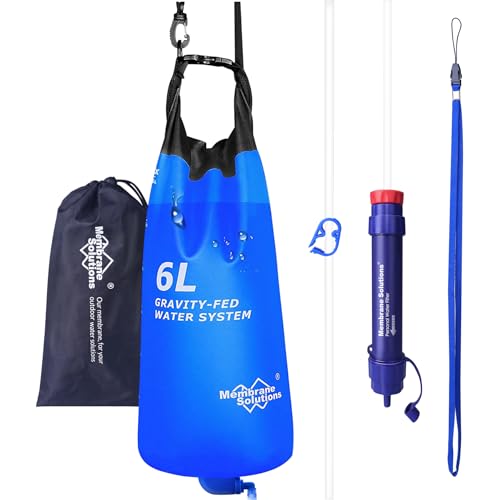
- 6-liter group-ready capacity
- Four-stage filtration design
- Pump-free and collapsible
Best For: Group camping, family trips, and emergency water backup
Best Ultralight Pick
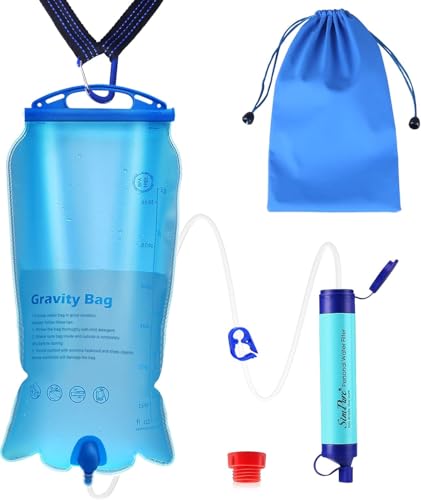
- About 3.2 ounces
- 27 liters-per-hour flow
- Bottle and tube-compatible design
Best For: Solo backpackers, lightweight kits, and emergency preparedness
Lightweight Trail Pick

- 11.2-ounce compact system
- 500 ml/min gravity flow
- Backwashable, bottle-compatible design
Best For: Solo hikers and small groups
High-Capacity Waterdrop Option

- 1.5-gallon gravity-fed bag
- 700 ml/min maximum flow
- Includes two straws and pouches
Best For: Day-long trips and small groups
Large-Volume Camp System

- 8-liter, approximately 2-gallon bag
- 0.01-micron membrane filtration
- Compatible with several common filter straws
Best For: Groups, base camps, and emergency prep
Best Hands-Free Pick – Katadyn BeFree Gravity 3L
The Katadyn BeFree Gravity 3L is a straightforward gravity water filter for hiking when you want to fill a reservoir, hang it, and let filtration happen without pumping or squeezing. Its 3-liter collapsible bag, 0.1-micron hollow-fiber filter, and flow rate of up to 2 L/min suit solo hikers and small groups.
Best For: Hikers who prioritize hands-free operation and a compact, easy-to-clean setup.
Pros:
- Gravity-fed design requires no pumping, squeezing, or power.
- 3-liter bag packs flat when empty and can hang from a branch or pole.
- Filters bacteria, protozoa, and sediment through a 0.1-micron membrane.
- Filter can be cleaned by shaking or swishing in water without tools.
Cons:
- Its 3-liter capacity may be limiting for larger groups.
- The filter is rated for up to 1,000 liters, less than some squeeze-filter alternatives.
Choose this model if convenience at camp matters more than maximum filter lifespan. The compact gravity format makes it a practical choice for lightweight backcountry water treatment.
Best Long-Life System – Sawyer Squeeze with CNOC 2L
The Sawyer Squeeze with CNOC 2L combines a reusable hollow-fiber filter with a wide-mouth TPU bladder. It is a versatile gravity water filter for hiking, though its manual squeeze operation also lets you produce filtered water directly when you need a faster, more active setup.
Best For: Backpackers seeking a durable, cleanable filter with a high stated lifetime capacity.
Pros:
- Filter is rated for up to 100,000 gallons and includes a lifetime warranty against manufacturing defects.
- CNOC bladder has a wide opening for easier filling.
- System weighs less than 6 ounces and includes a cleaning coupling and plunger.
- Removes bacteria, protozoa, cysts, sediment, and microplastics.
Cons:
- The system is designed for manual squeezing rather than purely hands-free gravity use.
- Its 2-liter bladder holds less water than several larger gravity reservoirs.
This is a strong option for hikers who value serviceability and longevity. The included bladder and cleaning accessories make it more adaptable than a dedicated gravity-only system.
Best High-Capacity Option – Waterdrop Gravity Filter Straw
The Waterdrop Gravity Water Filter Straw pairs a 1.5-gallon water bag with a 0.1-micron ultrafiltration membrane. For hikers who need substantial camp capacity, this gravity water filter for hiking can process up to 700 ml/min and connect with compatible water bags or bottles.
Best For: Groups, base camps, and emergency kits that benefit from a large water reservoir.
Pros:
- Large 1.5-gallon bag provides substantial water capacity.
- Rated for up to 1,400 gallons of filtered water.
- Offers a stated flow rate of up to 700 ml/min.
- Backwash function helps maintain the filter, and the system can connect to bottles or bags.
Cons:
- The 1.5-gallon reservoir is bulkier than smaller hiking filter bags.
- The supplied filter warranty is limited to 30 days.
- Its stated maximum supported TDS level is 300 ppm.
Consider this model when water volume is the priority. Its large bag and multiple connection options are useful for shared camp use, while the backwash feature supports repeated outings.
Best Ultralight Backup – Sawyer MINI Water Filter
The Sawyer MINI is a compact 2-ounce filter for hikers who want to minimize pack weight. While it is not a complete gravity reservoir system, it can attach to the included pouch, compatible 28 mm bottles, or hydration packs, making it a flexible lightweight choice for a gravity water filter for hiking setup.
Best For: Ultralight hikers and travelers who want multiple drinking and attachment options.
Pros:
- Weighs only 2 ounces and fits in the palm of your hand.
- Removes bacteria, protozoa, and 100% of microplastics according to the supplied specifications.
- Rated for up to 100,000 gallons.
- Includes a 16-ounce pouch, drinking straw, and cleaning plunger.
Cons:
- Its included pouch holds only 16 ounces.
- It does not include a dedicated gravity reservoir.
- Manual operation may require more effort than a complete gravity system.
The MINI makes the most sense when low weight and compatibility matter more than camp convenience. Pair it with a compatible bottle or pouch for a highly packable filtration setup.
Best for Basecamps – MSR AutoFlow XL 10L
For groups that need a high-capacity gravity water filter for hiking, the MSR AutoFlow XL offers a 10-liter reservoir and a fast 1.75-liter-per-minute flow rate without pumping. Its durable bag, sediment trap, and included hose system make it practical for extended camps and larger parties.
Best For: Backpacking groups, basecamps, and larger camping parties.
Pros:
- Large 10-liter capacity for group use.
- Fast 1.75-liter-per-minute gravity flow.
- Removes bacteria, protozoa, dirt, and debris.
- Durable reservoir with a flat base and sediment trap.
Cons:
- Bulkier than smaller personal gravity filters.
- Its 10-liter capacity may be excessive for solo hikers.
The AutoFlow XL is the strongest fit when water volume and throughput matter more than minimizing pack size. At 12 ounces, it remains relatively light for a group-oriented system, while the 3-year limited warranty adds useful ownership support.
Best for Group Camping – Membrane Solutions 6L Pro
The Membrane Solutions 6L Pro is a practical gravity water filter for hiking with friends, camping, or emergency storage. It combines a 6-liter bag, four-stage filtration, and pump-free operation, making it suited to groups of roughly three to six people.
Best For: Group camping, family trips, and emergency water backup.
Pros:
- 6-liter capacity designed for groups of three to six.
- Four-stage filtration with a 0.1-micron hollow fiber membrane.
- No pumping, squeezing, electricity, or batteries required.
- Filter life rated up to 1,320 gallons.
Cons:
- Flow rate is limited to up to 0.5 liter per minute.
- Heavier than the listed SimPure personal option at 12.8 ounces.
This system balances group capacity with a collapsible, backpack-friendly design. Its independently tested and certified filtration claims may appeal to buyers who want a versatile outdoor and emergency-use setup, though its slower flow favors patience over speed.
Best Ultralight Pick – SimPure 3L Gravity Filter
For solo hikers and minimalist kits, the SimPure 3L is a compact gravity water filter for hiking that weighs about 3 ounces and rolls down for easier packing. It can hang from a tree strap, connect to a bottle, or work with the included extension tube for more flexible drinking.
Best For: Solo backpackers, lightweight kits, and emergency preparedness.
Pros:
- Very light at approximately 3.2 ounces.
- Compact 3-liter TPU bag rolls for storage.
- 27-liter-per-hour flow rate.
- Versatile bottle, tube, and personal-filter connections.
Cons:
- Smaller 3-liter capacity than the group-oriented options.
- Not designed for supplying larger camping groups at once.
The SimPure stands out when pack weight and versatility are the priorities. Its 5,000-liter stated lifespan and hands-free operation add practical value, while the smaller reservoir makes it better suited to individual hikers or compact emergency supplies.
Lightweight Trail Pick – 1-Gallon Gravity Filter
If you want a compact gravity water filter for hiking, this 1-gallon Membrane Solutions system keeps the setup lightweight while offering hands-free filtration. Its 500 ml/min flow rate and backwashable design suit solo hikers and small groups.
Best For: Solo hikers, backpackers, and emergency kits where low weight and compact storage matter.
Pros:
- Lightweight 11.2-ounce design with a 1-gallon capacity.
- Four-stage filtration uses a 0.1-micron hollow fiber membrane, activated carbon, and dual PP filters.
- Backwashable without a syringe and compatible with standard water bottles.
- Adjustable one-piece tree strap and BPA-free, food-grade materials.
Cons:
- Its 1-gallon capacity is smaller than larger group-oriented systems.
- The listed maximum flow rate is lower than some competing options.
With NSF/ANSI 42, 372, and 401 certification and a stated 5,000-liter filter life, this is a practical choice when pack weight and straightforward maintenance take priority.
High-Capacity Waterdrop Option – 1.5-Gallon Filter Straw
This Waterdrop gravity water filter for hiking pairs a 1.5-gallon bag with a 0.1-micron filter straw, giving outdoor users more water capacity and a fast stated flow rate. The included pouches also make it useful for shared or emergency setups.
Best For: Day-long outdoor trips, small groups, and emergency preparedness requiring extra water capacity.
Pros:
- 1.5-gallon gravity-fed bag supports extended outdoor use.
- Up to 700 ml/min maximum flow rate.
- Five-stage filtration is designed to reduce sediment, particulates, chlorine, odors, and bad taste.
- Includes two filter straws, two 16-ounce pouches, and a backwash function.
Cons:
- The listed filter warranty is limited to 30 days.
- The larger bag and included components may take more room than a minimalist setup.
Its combination of higher capacity, faster listed flow, and flexible bottle or bag connections makes this a versatile pick for hikers who value convenience over the smallest possible kit.
Large-Volume Camp System – 8L Gravity Filter
For larger groups or base camps, this 8L gravity water filter for hiking provides a two-gallon bag and hands-free filtration without pumping or squeezing. The bag is also designed to work with several common filter straws for added flexibility.
Best For: Group camping, base camps, emergency preparedness, and hikers who need a larger water reservoir.
Pros:
- Large 8-liter, or approximately 2-gallon, BPA-free TPU water bag.
- 0.01-micron hollow fiber membrane combined with activated carbon and double PP cotton.
- Compatible with Sawyer Mini, Squeeze, Micro, and other common filter straws.
- Includes an adjustable strap, hose, and storage bag.
Cons:
- At 0.48 kg, it is heavier than the smaller listed systems.
- The large bag can be more cumbersome for minimalist solo hiking.
- The supplied specifications list a maximum supported TDS level of 300 ppm.
This system makes the most sense when water volume and compatibility are more important than ultralight packing. Its reinforced bag and hands-free operation are suited to camp-based use.
How We Picked the Best Gravity Water Filter for Hiking
We evaluated these gravity-fed systems based on the features that matter most outdoors: filter performance, flow rate, reservoir capacity, packed size, weight, setup simplicity, and replacement-filter availability. We also considered how well each option fits different use cases, including solo day hikes, backpacking trips, family camping, emergency preparedness, and larger groups.
A gravity filter should be judged as a complete system, not just by its advertised micron rating. The bag, hose, connectors, shutoff valves, and clean-water outlet all affect reliability in the field. We also gave preference to designs that are easy to backflush or clean when sediment slows the flow.
Quick Comparison
| Best For | Look For | Typical Capacity |
|---|---|---|
| Solo hiking | Compact design and low weight | 1–3 liters |
| Ultralight backpacking | Small packed size and flexible reservoir | 1–3 liters |
| Couples or small groups | Faster flow and larger dirty-water bag | 3–6 liters |
| Base camps and families | High capacity and durable components | 6–10 liters |
Key Buying Factors for a Gravity Water Filter for Hiking
Capacity and Weight
Choose enough capacity for your group without carrying unnecessary bulk. A 2- or 3-liter system can work well for one or two hikers, while larger bags reduce refilling at camp but take up more space and add weight when full.
Filtration and Water Conditions
Check what the filter is designed to remove. Many hiking filters target bacteria, protozoa, sediment, and particles, but standard filters may not remove viruses, chemicals, fuel, salt, or heavy metals. Clearer water also helps maintain flow, so prefilter muddy water when possible.
Flow Rate and Maintenance
Higher flow rates are useful when filling several bottles or cooking for a group. In practice, flow declines as the filter collects sediment. Backflushing compatibility, accessible cleaning instructions, and affordable replacement cartridges can matter as much as the initial rating.
Durability and Connections
Inspect the reservoir material, hose fittings, clips, and clean-side outlet. A system that is easy to hang and has secure connections is less likely to leak or contaminate treated water. Keep dirty and clean components separate in use.
Who Should Buy Which Gravity Water Filter for Hiking?
Solo hikers and ultralight backpackers: Choose a compact 1- to 3-liter system that packs small and can fill a bottle or soft flask directly.
Couples and small groups: A mid-capacity gravity filter with a faster flow rate offers a useful balance between carrying weight and reducing refill time.
Families, base camps, and emergency kits: Select a 6- to 10-liter model with durable fittings and readily available replacement filters. The extra capacity is worthwhile when multiple people need drinking and cooking water.
Before each trip, inspect the bag and tubing, test the connections, and verify the filter’s cleaning and storage requirements. No gravity water filter replaces good judgment: collect water away from contamination sources, follow the manufacturer’s instructions, and confirm whether additional purification is needed for your destination.