The best portable power stations make it easier to keep phones, laptops, lights, appliances, and essential medical equipment running when outlets are unavailable. The right model depends on more than battery capacity: output, recharge speed, portability, and battery chemistry all matter.
We selected 10 options ranging from compact travel-friendly units to high-capacity home and RV backups, so you can match your power needs and budget to a practical choice.
Best 10 Portable Power Stations Picks for 2026
Best Fast-Charging Pick

- 1,070Wh capacity with 1,500W AC output
- Optional one-hour emergency charging
- Lightweight 23.8-pound LiFePO4 design
Best For: Camping, road trips, and emergency backup
Best Home Backup Value

- 1,152Wh battery and 1,800W output
- Full AC charge in about one hour
- 20 ms UPS and 500W solar input
Best For: Home backup, power outages, and off-grid use
Best Lightweight Option

- 292Wh capacity in a roughly 7.5-pound body
- 300W output with six-device charging
- Over 4,000 LiFePO4 charge cycles
Best For: Hiking, camping, travel, and personal electronics
Best Compact High-Output Pick

- 1,024Wh capacity with 1,800W output
- 80% charge in about 45 minutes
- 10 ms UPS and 30dB silent mode
Best For: Compact home backup, camping, and road trips
Best Compact Home Backup

- 2,010Wh LiFePO4 capacity with 1,500W output
- Up to 10,000 charge cycles
- Compact design with 400W solar input
Best For: Home backup, outages, camping, and long-duration essential-device power
Best RV-Ready High-Capacity Pick
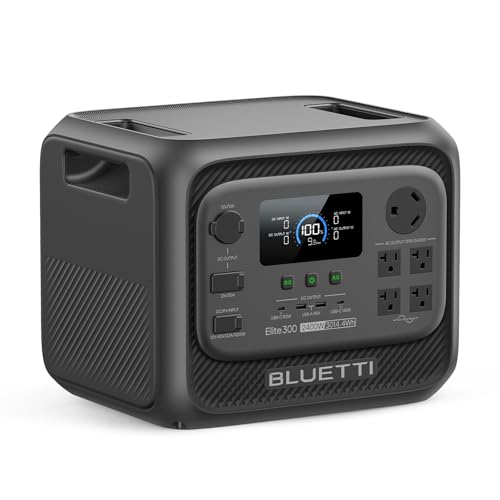
- 3,014Wh capacity and 2,400W output
- Dedicated TT-30 and 12V/30A DC ports
- 10ms UPS and 78-minute 80% recharge claim
Best For: RV travel, off-grid power, and extended home backup
Best Lightweight Camping Option
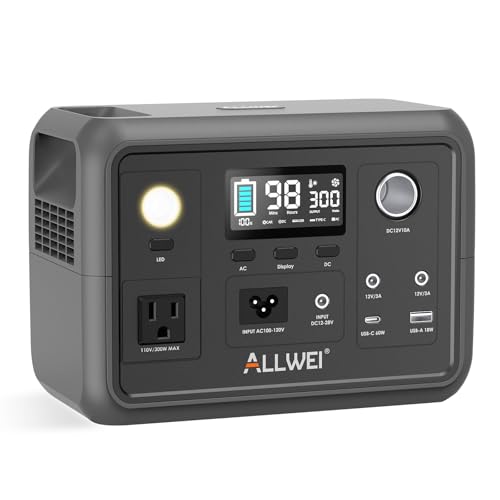
- 6.4-pound design with 256Wh capacity
- 300W output and 600W peak power
- Six ports plus AC, car, and solar charging
Best For: Camping, road trips, personal electronics, and light emergency use
Best Lightweight Emergency Pick

- 288Wh capacity in a 9.5-pound body
- 600W output with 1500W lifting mode
- Fast charging and 10ms UPS
Best For: Camping, road trips, CPAP users, and short home outages
Best Mid-Size Capacity Value

- 519Wh battery for electronics and small appliances
- 10 output options, including wireless charging
- Recharge by wall, car, or compatible solar panel
Best For: Camping, home backup, and powering several small devices
Best Fast-Charging Pick – Jackery Explorer 1000 v2
The Jackery Explorer 1000 v2 is a well-balanced choice among portable power stations for camping, road trips, and emergency backup. It combines a 1,070Wh LiFePO4 battery with 1,500W of AC output, while its compact 23.8-pound design remains practical to carry.
Best For: Campers and homeowners who want substantial capacity, fast charging, and a portable design.
Pros:
- 1,500W output and 3,000W surge capacity can handle appliances such as fridges, AC units, and electric pots.
- Emergency charging can reach 100% in one hour when enabled through the Jackery App.
- LiFePO4 battery is rated for more than 4,000 cycles and over 10 years of service.
- Includes three AC ports, USB-C, USB-A, a car port, LED lighting, and app control.
Cons:
- One-hour charging requires activating emergency charging in the app; the default mode takes 1.7 hours.
- Solar charging is compatible only with Jackery solar panels.
Choose this model if you want a versatile, relatively lightweight power station with unusually quick AC charging and long-term battery durability. Its app-based controls add flexibility, though solar users should plan around the Jackery ecosystem.
Best Home Backup Value – BLUETTI AC180
The BLUETTI AC180 is one of the more capable portable power stations for home backup and off-grid use. Its 1,152Wh LiFePO4 battery, 1,800W output, and fast AC or solar charging give it the flexibility to support both everyday devices and higher-demand essentials.
Best For: Homeowners and campers who need high output, multiple outlets, and dependable outage protection.
Pros:
- 1,800W output can be increased to 2,700W through the BLUETTI App.
- Charges fully in about one hour from a 1,440W AC input.
- 500W solar input can recharge the station in roughly 2.8 to 3.3 hours under suitable conditions.
- UPS function provides emergency power to essentials with a 20 ms switchover.
Cons:
- At 37.4 pounds, it is considerably heavier than compact camping-focused models.
- Higher-output charging and operation may be more than casual users need.
The AC180 stands out when output and backup functionality matter more than minimum weight. It is a strong fit for outage preparedness, while its solar input and 11 outlets also make it useful for extended outdoor stays.
Best Lightweight Option – Jackery Explorer 300
The Jackery Explorer 300 is a compact entry in the portable power stations category, weighing about 7.5 pounds while providing 292Wh of capacity. Its 300W output is suited to personal electronics, small camping setups, and backup power for devices such as laptops, cameras, and drones.
Best For: Hikers, campers, travelers, and anyone prioritizing low weight and easy carrying.
Pros:
- Lightweight design and integrated handle make it easy to transport.
- Six-device charging includes two AC outlets, USB-C, two USB-A ports, and a 120W car port.
- LiFePO4 battery is rated for more than 4,000 cycles before reaching 70% capacity.
- Can reach 80% in about 2.8 hours with a 100W Jackery solar panel.
Cons:
- 300W rated output limits it to smaller electronics and appliances.
- Its 292Wh capacity provides less runtime than larger power stations.
- Solar charging requires compatible Jackery panels.
This is the practical choice when portability matters most. The Explorer 300 is easier to pack than larger units and offers useful connectivity, but buyers needing to run high-wattage appliances or support extended outages should consider a higher-capacity model.
Best Compact High-Output Pick – BLUETTI Elite 100 V2
The BLUETTI Elite 100 V2 packs 1,024Wh of capacity and 1,800W of AC output into a 25-pound enclosure. Among portable power stations, it is particularly appealing for buyers who want near-1kWh capacity, rapid charging, quiet operation, and UPS protection without moving to a heavier design.
Best For: Campers, road-trippers, and households seeking compact everyday backup power.
Pros:
- 1,800W output and 2,700W Power Lifting support many everyday appliances.
- 1200W TurboBoost charging reaches 80% in approximately 45 minutes.
- 10 ms UPS switchover helps keep routers and computers running during outages.
- 25-pound design, 30dB silent mode, app connectivity, and 4,000-plus cycles add everyday convenience.
Cons:
- Vehicle fast charging requires the separate BLUETTI Charger 1.
- The supplied specifications list only four power outlets despite describing 11 total ports.
The Elite 100 V2 is a compelling middle ground between lightweight portability and serious output. Its fast 80% recharge, quiet mode, and UPS capability make it suitable for both overnight camping and routine home backup.
Best Compact Home Backup – Anker SOLIX S2000
The Anker SOLIX S2000 is one of the more capable portable power stations for home backup when you need substantial capacity without a bulky enclosure. Its 2,010Wh LiFePO4 battery, 1,500W continuous output, and 3,000W peak output can support essential appliances, while the compact 35.7-pound design is easier to move than many comparable 2kWh units.
Best For: Home backup, outages, camping, and users who want long battery life in a relatively compact package.
Pros:
- 2,010Wh capacity with 1,500W continuous and 3,000W peak output
- LiFePO4 battery rated for up to 10,000 charge cycles
- Supports up to 400W solar input and offers a sub-10ms UPS switchover
- Compact 8.2 × 11.1 × 12.7-inch design with a 35.7-pound weight
Cons:
- No 12V DC port
- Actual appliance runtime varies by load, usage, and temperature
The S2000 is a strong all-around choice among portable power stations, particularly for keeping essential home equipment running. Its main limitation is the lack of a dedicated 12V DC port, which may matter for some vehicle and camping setups.
Best RV-Ready High-Capacity Pick – BLUETTI Elite 300
The BLUETTI Elite 300 is a high-capacity option among portable power stations, combining a 3,014Wh LiFePO4 battery with 2,400W output. Its dedicated TT-30 RV outlet and 12V/30A DC output make it especially practical for camper vans and RVs, while a 10ms UPS mode adds protection for select home-office and networking equipment.
Best For: RV travel, off-grid use, extended home backup, and powering multiple essential appliances.
Pros:
- Large 3,014Wh capacity with 2,400W continuous and 4,800W surge output
- Includes a TT-30 RV port and high-current 12V/30A DC output
- 10ms UPS switching helps support computers, routers, and office equipment
- Can recharge from AC, solar, or a car charger, reaching 80% in as little as 78 minutes
Cons:
- Weighs 58 pounds, making it less convenient to carry than smaller units
- Only two total power outlets are listed in the supplied specifications
Choose the Elite 300 if capacity and RV compatibility matter more than minimum weight. It is a substantial unit, but the 3kWh battery, dedicated RV connections, and strong surge rating make it well suited to demanding backup and travel use.
Best Lightweight Camping Option – ALLWEI 300W Power Station
The ALLWEI 300W is a compact choice among portable power stations for smaller electronics and light-duty emergency use. Its 256Wh LiFePO4 battery provides 300W of continuous power, while the 6.4-pound body, multiple charging ports, and built-in LED light make it convenient for camping, road trips, and backup charging.
Best For: Camping, road trips, laptops, small devices, CPAP use, and lightweight emergency power.
Pros:
- Lightweight 6.4-pound design that is easy to carry
- 300W continuous output with 600W pure-sine-wave peak power
- Six output ports, including USB-C PD 60W and an automotive-style 12V port
- Supports AC, car, solar, and AC-plus-solar recharging
Cons:
- 256Wh capacity is intended for smaller loads rather than major appliances
- Solar panel is sold separately
- 300W output limits the range of devices it can run
The ALLWEI is a practical pick when portability matters more than long runtime or high output. It is best used for personal electronics, lighting, and other modest loads—not refrigerators or high-wattage household appliances.
Best Lightweight Emergency Pick – BLUETTI Elite 30 V2
For shoppers comparing portable power stations, the BLUETTI Elite 30 V2 stands out as a lightweight option with enough output for everyday electronics, selected small appliances, and emergency essentials. Its 288Wh capacity, 600W continuous output, and 10ms UPS make it especially versatile for travel and short outages.
Best For: Camping, road trips, CPAP users, and compact home backup.
Pros:
- Lightweight 9.5-pound design with 288Wh of capacity.
- 600W continuous output and 1500W Power Lifting mode.
- Fast wall charging reaches 80% in about 45 minutes.
- 10ms UPS helps protect laptops, routers, and CPAP devices during outages.
Cons:
- Its 288Wh capacity is smaller than many mid-size power stations.
- Solar panel is not included.
The Elite 30 V2 is a strong choice when portability and quick recharging matter more than extended runtimes. Its 600W output and UPS function give it broader emergency usefulness than many compact models.
Best Mid-Size Capacity Value – 500W 519Wh Solar Generator
This 519Wh portable power station is designed for shoppers who want more stored energy and plenty of connections without using gasoline or producing fumes. Its 500W pure sine wave inverter can handle common electronics and select small appliances rated below 500W.
Best For: Camping, residential backup, electronics, and longer off-grid use.
Pros:
- 519.48Wh capacity supports phones, laptops, routers, TVs, CPAP machines, and similar devices.
- Up to 10 devices can be connected through AC, USB, USB-C, DC, car, and wireless outputs.
- Pure sine wave AC power and built-in battery protections support sensitive electronics.
- Can recharge from a wall outlet, car, or compatible solar panel.
Cons:
- At 18 pounds, it is less convenient to carry than compact models.
- Solar panel is not included.
- Devices over 500W should not be connected.
Choose this model if capacity and port variety are higher priorities than minimum weight. The slower recharge times are a tradeoff for its larger battery, while the 500W ceiling limits it to modest appliances.
Best Ultra-Portable Power Bank – MARBERO 88Wh Power Station
The MARBERO 88Wh is one of the most portable options among these portable power stations, weighing about 3.2 pounds and measuring roughly 6.5 by 4.6 by 3.1 inches. It is suited to phones, tablets, laptops, lights, and other smaller loads rather than high-draw appliances.
Best For: Road trips, emergency lighting, personal electronics, and lightweight camping.
Pros:
- Compact 3.2-pound design with an ergonomic carry handle.
- Eight output ports can charge multiple devices at once.
- Built-in LED light offers three brightness levels plus SOS mode.
- Reaches 80% charge in about two hours with the included adapter.
Cons:
- Its 88Wh capacity is limited for extended backup or larger appliances.
- Lower output is better suited to electronics than demanding equipment.
- Dedicated solar panels are optional rather than included.
The MARBERO makes the most sense when low weight and emergency lighting are more important than battery capacity. It is a convenient personal backup for travel, vehicles, and short power interruptions.
How We Picked These Portable Power Stations
We compared the selected models by usable battery capacity, continuous and peak output, recharge options, portability, battery chemistry, and intended use. We also considered features that affect everyday convenience, including AC outlet count, USB charging, display information, solar compatibility, and recharge speed.
Capacity and wattage are not interchangeable. Watt-hours (Wh) indicate how much energy a station stores, while watts (W) indicate how much power it can deliver at once. A model with high capacity may still be unsuitable for a demanding appliance if its inverter output is too low.
Quick Comparison
- Best all-around capacity: Jackery Explorer 1000 v2 or BLUETTI AC180.
- Best compact option: Jackery Explorer 300, BLUETTI Elite 30 V2, or ALLWEI 300W.
- Best for extended backup: BLUETTI Elite 300 or Anker SOLIX S2000.
- Best for simple emergency charging: MARBERO 88Wh.
- Best for camping and RV flexibility: BLUETTI Elite V2 models and the 500W/519.48Wh unit.
Key Buying Factors for Portable Power Stations
Battery Capacity
Choose capacity based on what you need to run and for how long. Compact units are suitable for phones, cameras, routers, lights, and laptops. Capacity around 1,000Wh is more practical for longer trips, CPAP use, small appliances, or short outages. Multi-thousand-watt-hour stations are better for extended backup but are heavier and more expensive.
Output and Surge Rating
Check the continuous AC rating against each device’s running wattage. Refrigerators, pumps, kettles, and power tools can draw substantially more power when starting, so a strong peak or surge rating is important. Avoid relying on advertised surge output as a substitute for continuous capacity.
Recharge Speed and Input Options
Fast wall charging is convenient before a trip or during a brief outage. Solar input is valuable for off-grid use, but actual charging speed depends on panel wattage, sunlight, cable compatibility, and the station’s maximum solar input. Car charging can provide another useful option while traveling.
Battery Chemistry, Size, and Safety
LiFePO4 batteries generally offer long cycle life and strong stability, while lighter compact stations may prioritize portability. Compare weight, handle design, operating temperature, warranty, ventilation, and protection features before choosing a larger unit.
Who Should Buy Which Portable Power Stations?
Travelers and casual campers should prioritize a compact station that fits easily in a vehicle and supports USB devices, lights, and laptops. Frequent campers and RV owners will usually benefit from around 500Wh to 1,150Wh, multiple output types, and solar support. Homeowners preparing for outages should focus on at least 1,000Wh, sufficient inverter output, fast recharging, and the ability to expand runtime if supported.
Buyers running heavy appliances or needing overnight backup should consider the highest-capacity models, but confirm that the inverter can handle the appliance’s startup and continuous load. Before ordering, total the wattage of devices you may use simultaneously and leave some headroom rather than operating at the station’s maximum rating.