Cold garages and workshops are easier to use when the heater matches the space, ventilation, and type of work. Propane models range from compact forced-air units for quick spot heating to thermostat-controlled vent-free heaters designed for longer indoor use.
This roundup compares 10 propane garage heaters across several output levels and formats, so you can narrow your choices by heating speed, portability, fuel flexibility, and installation needs.
Best 10 Propane Garage Heaters Picks for 2026
Portable Power Pick
Garvee 50,000 BTU Forced-Air Heater

- 50,000 BTU forced-air heating
- Portable 11.7-pound design
- Tip-over and overheat protection
Best For: Large, ventilated garages and temporary jobsite heating
Thermostat-Controlled Choice
InoKraft MAXHEAT MH125 125,000 BTU

- 125,000 BTU output
- 25–95°F automatic thermostat
- 10-foot hose included
Best For: Large, well-ventilated garages and workshops
Wall-Mount Convenience Pick
Dyna-Glo 30,000 BTU Blue Flame Heater

- Heats up to 1,000 square feet
- Dual-fuel LP or natural gas design
- No electricity required
Best For: Fixed garage heating and emergency backup use
Permanent Overhead Solution
Mr. Heater 50,000 BTU Unit Heater

- Ceiling-mounted forced-air design
- Heats up to 1,667 square feet
- Supports 24-volt thermostats
Best For: Large garages with high ceilings and permanent installation plans
Best Vent-Free Option
30,000 BTU Blue Flame Propane Heater

- Heats up to 750 sq. ft.
- Thermostat and ODS safety shutoff
- Wall-mount or freestanding setup
Best For: Indoor garages and workshops needing steady, vent-free heat
Best Forced-Air Pick
68,000 BTU Portable Torpedo Heater

- Adjustable 30,000-68,000 BTU output
- Heats areas up to 1,600 sq. ft.
- Includes 10-foot hose and portable handle
Best For: Large garages and job sites needing fast, portable heat
Best High-Output Heater
80,000 BTU Portable Propane Convection Heater
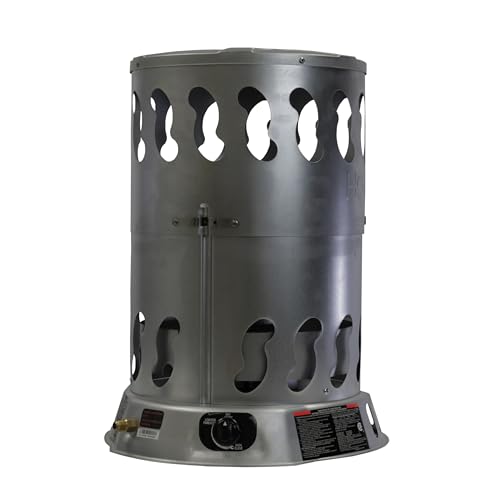
- Heats up to 2,000 sq. ft.
- 80,000 or 30,000 BTU settings
- 360-degree heat distribution
Best For: Large, well-ventilated work areas needing broad heat coverage
Ceiling-Mount Powerhouse
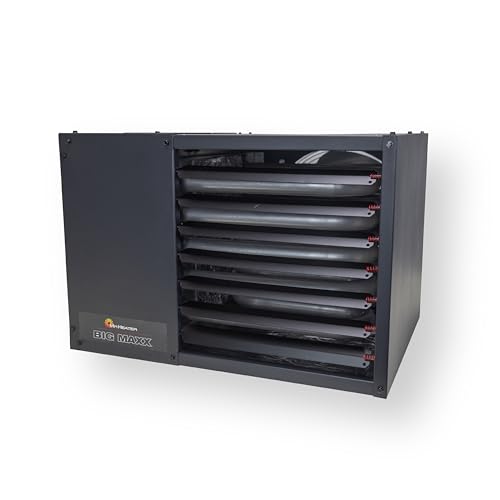
- 80,000 BTUs for up to 2,667 square feet
- Ceiling-mounted, low-profile design
- Thermostat compatible with safety shut-offs
Best For: Large garages and permanent workshop heating
Portable Shop Heat
MAXHEAT 85,000 BTU Torpedo Heater

- Adjustable 45,000-85,000 BTU output
- Portable with handle and adjustable heat angle
- Includes 10-foot hose and 4.9-foot power cord
Best For: Flexible heating in ventilated garages and job sites
Large-Space Workhorse
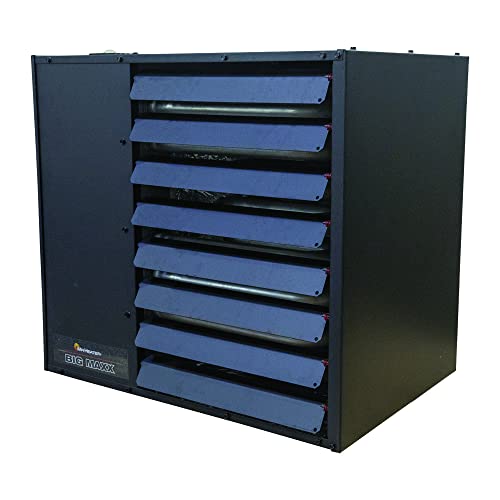
- 125,000 BTUs for high-output heating
- Space-saving ceiling-mount cabinet design
- Propane or natural-gas fuel flexibility
Best For: Large garages, barns, and workshops
Portable Power Pick – Garvee 50,000 BTU Forced-Air Heater
For shoppers comparing propane garage heaters, the Garvee 50,000 BTU model is a portable forced-air option for temporary heating in large, ventilated work areas. Its fan directs heat forward, while the compact body and top handle make it practical to move between a garage, workshop, or jobsite.
Best For: Portable heating in garages, workshops, warehouses, farms, and other large ventilated spaces.
Pros:
- Strong 50,000 BTU output with listed coverage up to 120 m² / 300 m³.
- Forced-air fan distributes heat quickly toward the work zone.
- Includes tip-over, overheat, and safety start protection.
- Compact 11.7-pound design with a built-in top handle.
Cons:
- Listed for outdoor use and requires a well-ventilated operating area.
- Uses approximately 2.36 pounds of propane per hour.
- Requires a 120-volt power source for the fan.
This Garvee heater suits buyers who value portability and direct forced-air warmth over permanent installation. Its safety features and simple controls add convenience, but propane consumption and ventilation requirements should be considered before choosing it for regular garage use.
Thermostat-Controlled Choice – InoKraft MAXHEAT MH125 125,000 BTU
Among propane garage heaters, the InoKraft MAXHEAT MH125 stands out for high output and thermostat control. It delivers up to 125,000 BTU for large, well-ventilated spaces and can automatically shut off or restart as temperatures change.
Best For: Large garages, workshops, construction areas, and outbuildings needing adjustable, automatic heating.
Pros:
- 125,000 BTU output is rated for spaces up to 3,200 square feet.
- 25–95°F thermostat supports automatic on/off operation.
- Adjustable heat angle helps direct warmth where needed.
- Includes overheat auto-shutoff and gas shutoff protection.
Cons:
- Designed for well-ventilated areas rather than sealed rooms.
- Requires a 115-volt outlet and a 20-pound propane tank or larger.
- Its larger pedestal form is less compact than smaller portable heaters.
Choose the MAXHEAT MH125 when coverage and reduced manual adjustment matter most. The thermostat and 10-foot hose add setup flexibility, while its substantial heat output makes it better suited to large spaces than compact garages.
Wall-Mount Convenience Pick – Dyna-Glo 30,000 BTU Blue Flame Heater
Dyna-Glo 30,000 BTU Blue Flame Thermostatic Garage Vent Free Wall Heater, Black
Check Price On AmazonThe Dyna-Glo 30,000 BTU is a wall-mounted alternative in the propane garage heaters category. Its blue flame convection design warms the air without electricity, and dual-fuel capability allows operation with liquid propane or natural gas.
Best For: Garages or homes that need a permanently mounted, thermostat-controlled backup heat source.
Pros:
- 30,000 BTU output is rated to heat up to 1,000 square feet.
- Blue flame convection spreads warmth through the surrounding air.
- Dual-fuel design supports liquid propane or natural gas.
- Thermostat control knob helps maintain the desired heat level.
Cons:
- Wall-mount installation is less portable than freestanding heaters.
- Provides less maximum output than the 50,000 and 125,000 BTU options.
- The supplied details identify the fuel type as natural gas, so fuel compatibility should be confirmed before purchase.
This Dyna-Glo model is a sensible fit when you want quiet, convection-style heating and no electrical power requirement. Its lower output and wall-mounted format favor smaller spaces and fixed installation rather than flexible jobsite use.
Permanent Overhead Solution – Mr. Heater 50,000 BTU Unit Heater
For a permanent approach to propane garage heaters, the Mr. Heater 50,000 BTU unit heater mounts to the ceiling and uses forced air to warm garages, barns, and workshops. It covers up to 1,667 square feet and works with standard 24-volt or Wi-Fi-enabled thermostats sold separately.
Best For: Larger garages or workshops with suitable ceiling height and room for a fixed overhead installation.
Pros:
- 50,000 BTU output is rated for up to 1,667 square feet.
- Ceiling mounting preserves floor and wall space.
- Compatible with standard 24-volt and Wi-Fi-enabled thermostats.
- Includes high-temperature and gas safety shutoff features.
Cons:
- Requires a minimum 10-foot ceiling and 8 feet of clearance from heater base to floor.
- Ceiling installation is less flexible than portable designs.
- Thermostat is sold separately.
This unit is best viewed as a dedicated garage heating system rather than a quick portable solution. It can keep the floor clear and cover a sizeable workspace, but the required ceiling height, installation, and separate thermostat add planning and setup considerations.
Best Vent-Free Option – 30,000 BTU Blue Flame Propane Heater
If you want propane garage heaters without exterior venting, this Mr. Heater model uses blue-flame convection to circulate warmth through spaces up to 750 square feet. Its thermostat, wall-mount or freestanding setup, and no-electricity operation make it a practical choice for garages, workshops, cabins, and other indoor areas with propane access.
Best For: Indoor garages and workshops needing steady, evenly distributed heat without electrical power or outdoor venting.
Pros:
- 30,000 BTU output is rated for spaces up to 750 square feet.
- Thermostat automatically cycles the heater to help maintain a consistent temperature.
- ODS low-oxygen safety shutoff adds an important protection feature.
- Can be wall-mounted or used freestanding with included legs and hardware.
Cons:
- Designed for indoor use and requires an appropriate propane supply line.
- Optional blower fan kit is sold separately.
- Its coverage is smaller than that of the higher-output portable heaters in this roundup.
Choose this model when convenience and even convection heat matter more than maximum output. The thermostat and flexible mounting options make it especially suitable for a regularly used garage or workshop.
Best Forced-Air Pick – 68,000 BTU Portable Torpedo Heater
For large garages, job sites, or work areas that need fast temperature increases, this InoKraft forced-air propane heater delivers adjustable output from 30,000 to 68,000 BTU. Its fan-driven airflow, adjustable heat angle, portable handle, and included 10-foot hose make it one of the more flexible propane garage heaters for temporary heating.
Best For: Large garages, construction areas, and workshops that need rapid, portable heat across spaces up to 1,600 square feet.
Pros:
- Variable 30,000-68,000 BTU output suits different heating demands.
- Forced-air fan distributes heat quickly across a broad area.
- Includes a 10-foot hose and adjustable tilt head for placement flexibility.
- Features overheat and gas-leak auto-cutoff protection and CSA certification.
Cons:
- Requires an AC outlet as well as a 20-pound propane tank or larger.
- Ventilation is required for clean and efficient operation.
- Fan-forced heat may be less suitable for users seeking silent, permanent room heating.
This is a strong fit when speed and coverage are priorities. It is portable and powerful, but the need for electricity and adequate ventilation makes it better suited to active workspaces than enclosed, finished rooms.
Best High-Output Heater – 80,000 BTU Portable Propane Convection Heater
This portable Mr. Heater is built for very large, well-ventilated work areas, with high and low settings of 80,000 and 30,000 BTU and coverage rated up to 2,000 square feet. Its cylindrical chamber provides 360-degree heat distribution, making it a high-output option among propane garage heaters for workshops, barns, warehouses, and construction sites.
Best For: Large, well-ventilated garages, workshops, barns, warehouses, and construction areas requiring broad heat coverage.
Pros:
- 80,000 BTU maximum output is rated for spaces up to 2,000 square feet.
- Cylindrical chamber provides 360-degree heat distribution.
- High and low heat settings offer basic output control.
- Includes a 10-foot hose, regulator, and built-in piezo lighter.
Cons:
- Intended for outdoor use or well-ventilated work areas.
- Floor-mounted design is less suitable for permanent indoor installation.
- Its high output may be excessive for smaller garages.
If you need maximum coverage in an open or well-ventilated workspace, this heater offers more output than the other two options. Its portable floor design and 360-degree heating are practical for temporary heating rather than finished-room use.
Ceiling-Mount Powerhouse – 80,000 BTU Unit Heater
For garages, barns, and workshops, this 80,000 BTU propane garage heater provides powerful forced-air heating for spaces up to 2,667 square feet. Its ceiling-mounted, low-profile design helps preserve floor space, while thermostat compatibility supports more convenient temperature control.
Best For: Large garages and workshops where permanent ceiling mounting and broad heat coverage are priorities.
Pros:
- 80,000 BTU output covers up to 2,667 square feet.
- Ceiling-mounted design keeps the floor clear.
- Works with standard 24-volt and compatible Wi-Fi thermostats, sold separately.
- Includes a natural-gas-to-propane conversion kit.
Cons:
- Requires a 10-foot minimum ceiling height and 8 feet of clearance from the heater base to the floor.
- Thermostat is sold separately.
- Installation is less flexible than a portable floor heater.
Choose this model when you want a powerful, space-saving heating setup for a sizable workspace and are prepared for ceiling installation. Its safety shut-off features and long parts and heat-exchanger warranty coverage add reassurance for a permanent installation.
Portable Shop Heat – MAXHEAT 85,000 BTU Torpedo Heater
This portable propane garage heater delivers adjustable forced-air heat from 45,000 to 85,000 BTUs for areas up to 2,000 square feet. Its handle, adjustable heat angle, included 10-foot hose, and longer power cord make it practical for garages, workshops, and job sites where placement flexibility matters.
Best For: Users who need movable, fast-heating warmth for garages, construction areas, workshops, or other ventilated spaces.
Pros:
- Adjustable 45,000-85,000 BTU output.
- Portable design with an adjustable heat angle.
- Includes a 10-foot hose and 4.9-foot power cord.
- Overheat and automatic cut-off protection; CSA certified.
Cons:
- Requires an electrical outlet and a 20-pound propane tank or larger.
- Must be used with adequate ventilation.
- Provides less coverage than the larger 125,000 BTU model.
The MAXHEAT is a strong fit when you value portability over a fixed installation. Variable output lets you adjust heating for the task, while the included hose and handle simplify setup and repositioning.
Large-Space Workhorse – 125,000 BTU Unit Heater
Designed for substantial workspaces, this 125,000 BTU propane garage heater uses forced air and a space-saving ceiling-mount format. It is suited to garages, barns, and workshops, with flexible propane or natural-gas operation and coverage listed for areas up to 4,167 square feet.
Best For: Large garages and utility buildings that need high-output, ceiling-mounted heating.
Pros:
- 125,000 BTU output for large-space heating.
- Ceiling-mount design saves valuable floor space.
- Supports propane or natural-gas operation.
- Compatible with standard 24-volt and Wi-Fi-enabled thermostats, sold separately.
Cons:
- Its cabinet design and 109.1-pound weight make installation more involved.
- Thermostat is sold separately.
- Coverage details in the specifications are inconsistent with the listed 4,167-square-foot bullet, so verify sizing for your space.
This model makes the most sense when a smaller heater will not provide enough output and you have the structure and installation setup for a ceiling-mounted unit. Its dual-fuel flexibility can also help accommodate an existing gas supply.
How We Picked These Propane Garage Heaters
We selected models that cover the main ways homeowners and tradespeople heat garages: portable forced-air and torpedo heaters, convection heaters, vent-free blue-flame wall heaters, and unit heaters that can run on propane or natural gas. We considered stated BTU output, portability, thermostat availability, operating flexibility, and whether a heater is better suited to occasional spot heating or more sustained use.
Because garage layouts and local regulations vary, product specifications should be checked against the manufacturer’s manual before purchase. Fuel type, required ventilation, clearance distances, and permitted indoor use are especially important.
Quick Comparison
| Heater type | Best use | Main advantage | Trade-off |
|---|---|---|---|
| Forced-air or torpedo | Fast temporary heating | Moves heated air quickly | Fan noise and ventilation requirements |
| Vent-free blue flame | Enclosed, regularly used spaces | Quiet, steady room heating | Installation and ventilation rules matter |
| Convection | Portable area heating | Radiant, circulating warmth without a blower | Slower heat distribution |
| Propane/natural-gas unit heater | Permanent or semi-permanent setups | High output and fuel flexibility | May require more involved installation |
Key Buying Factors for Propane Garage Heaters
BTU Output and Garage Size
Higher BTU ratings generally heat larger or draftier spaces faster, but maximum output is not automatically better. Oversizing can waste fuel and create uncomfortable temperature swings. Measure the garage, consider insulation and ceiling height, and use the manufacturer’s coverage guidance as a starting point.
Forced Air Versus Blue Flame
Forced-air heaters are useful when you need rapid heat at a jobsite or while opening and closing the garage door. Blue-flame vent-free models provide quieter, more even room heating, but they require careful attention to approved indoor use, ventilation, clearances, and installation requirements.
Portability, Controls, and Fuel
Look for a sturdy handle, stable base, accessible controls, and a thermostat if you want the unit to cycle automatically. A propane-only heater may be ideal for portability, while a dual-fuel unit can offer more flexibility where a natural-gas connection is available.
Safety and Operating Conditions
Never ignore the manual’s ventilation and clearance instructions. Keep heaters away from combustible materials, fuel containers, dust, and flammable vapors. Confirm that the model includes appropriate safety shutoffs, use a compatible regulator and hose, and install carbon-monoxide detection where recommended. Do not use a heater in an enclosed space unless it is specifically approved for that application.
Who Should Buy Which Propane Garage Heaters?
Choose a lower-output vent-free blue-flame model for quiet, steady warmth in a suitable enclosed garage. Pick a 50,000 to 68,000 BTU forced-air heater for quick heating in a typical workshop or intermittently opened garage. Larger 80,000 to 125,000 BTU forced-air or unit heaters make more sense for spacious, drafty garages, jobsites, or faster recovery after doors open. If you want less intense airflow, a portable convection heater is worth considering. Match the heater to your space and usage pattern rather than selecting solely by the largest BTU number.