Safe drinking water is one of the most important parts of emergency preparedness, but the best filtration setup depends on where and how you expect to use it. Portable reverse osmosis systems can support camping, evacuation kits, and off-grid use, while under-sink models offer higher everyday capacity at home.
This roundup compares 10 reverse osmosis options across portability, filtration stages, output, UV treatment, remineralization, and installation requirements so you can choose a system that fits your emergency water plan.
Best 10 Reverse Osmosis Systems for Emergencies Picks for 2026
Best Portable Manual Pick

- Chemical-free reverse osmosis filtration
- Up to 8,000-liter stated capacity
- Manual, compact design for outdoor use
Best For: Camping, hiking, travel, and emergency kits
Best Under-Sink High-Capacity Pick
Waterdrop G5P500A Alkaline RO System

- Eight-stage RO and alkaline filtration
- 500 GPD tankless capacity
- 2:1 purified-to-drain ratio
Best For: Household preparedness with dependable power and plumbing
Best Battery-Powered Emergency Pick
Purewell Portable Electric RO Purifier

- RO filtration plus dual UV treatment
- Up to 6.5 hours of battery use
- TDS display and emergency lighting
Best For: Camping, RVs, power outages, and off-grid preparedness
Best Traditional Under-Sink Value

- Five-stage RO and carbon filtration
- Manual water-pressure operation
- 90 GPD capacity with included tank
Best For: Fixed home installation and non-electric preparedness
Best Portable Emergency RO System
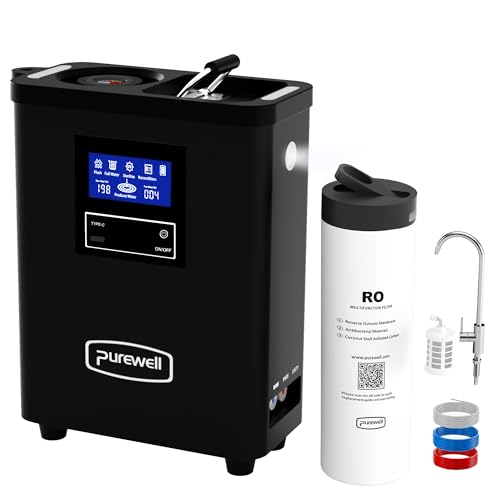
- Battery-powered portable RO system with dual UV light
- TDS display, self-cleaning, and Type-C reverse charging
- Designed for fresh or brackish water up to 300 ppm TDS
Best For: Camping, RV travel, and power-outage preparedness
Best Pump-Style Emergency RO System
Portable 3-Stage Survival Purifier

- Freestanding portable design for outdoor use
- Three-stage filtration with a 0.0001-micron RO membrane
- Listed capacity of 10,000 liters
Best For: Hiking, camping, and emergency survival kits
Best Under-Sink Emergency Backup

- Seven-stage under-sink RO system with LED UV and alkaline filter
- NSF/ANSI 58 and 372 certified as a complete system
- Supports source water up to 750 ppm TDS
Best For: Household preparedness and everyday drinking water
Fast Tankless Pick
Waterdrop WD-T4-A Alkaline pH+ RO
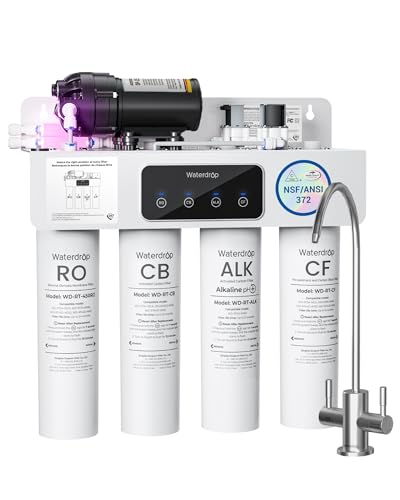
- 450 GPD tankless output
- Dual RO and alkaline water flows
- 2:1 pure-to-drain ratio
Best For: Fast, space-saving emergency filtration with alkaline water
Powered Purification Choice

- Booster pump supports RO performance
- UV and alkaline remineralization stages
- DIY installation with included components
Best For: Powered households wanting layered emergency filtration
No-Power Backup Option

- No power needed
- NSF/ANSI 58 certified system
- 75 GPD with alkaline remineralization
Best For: Emergency backup filtration without relying on electricity
Best Portable Manual Pick – Outdoor RO Water Filter Pump
For shoppers comparing reverse osmosis systems for emergencies, this compact pump is a straightforward, chemical-free option for camping, hiking, travel, and preparedness kits. It uses RO filtration, supports water with TDS up to 300 ppm, and is designed to treat water from sources such as creeks and streams.
Best For: Portable emergency kits, backpacking, and outdoor use where manual operation is practical.
Pros:
- Compact freestanding design measuring about 10.63 inches tall.
- RO filtration helps reduce small particles and impurities.
- Rated capacity of up to 8,000 liters with a flow rate of up to 300 ml per minute.
Cons:
- Designed for water up to 300 ppm TDS, limiting use with higher-TDS sources.
- Manual pumping may be slower and more effort-intensive than electric systems.
This is a useful lightweight choice when portability and independence from electricity matter most. Its stated capacity is generous, but users should confirm source-water conditions and be prepared for manual pumping.
Best Under-Sink High-Capacity Pick – Waterdrop G5P500A Alkaline RO System
Among reverse osmosis systems for emergencies, the Waterdrop G5P500A is better suited to a home preparedness setup with dependable electricity and plumbing. Its 8-stage filtration, alkaline mineralization, tankless form, and 500 GPD rating provide a high-volume under-sink option for everyday household water use.
Best For: Households wanting a compact, high-output RO system for normal use and power-on emergency preparedness.
Pros:
- Eight-stage filtration includes a 0.0001-micron RO membrane and alkaline mineralization.
- 500 GPD capacity and a stated 2:1 purified-to-drain ratio.
- Tankless design saves under-sink space and can connect to appliances such as ice makers and refrigerators.
Cons:
- Requires corded electricity and an under-sink installation.
- Faucet installation requires drilling through the countertop.
- Not a portable solution for outages without an appropriate backup power source.
The G5P500A makes sense for a permanently installed household system rather than a grab-and-go emergency filter. Its output and compact tankless build are strong advantages, provided electricity, water pressure, and installation requirements are available.
Best Battery-Powered Emergency Pick – Purewell Portable Electric RO Purifier
For reverse osmosis systems for emergencies that need to work away from household plumbing, the Purewell K8680/P01 combines battery operation, UV treatment, and portable construction. It is designed for fresh or brackish water, includes TDS monitoring, and is positioned for camping, RV travel, outdoor teams, and power outages.
Best For: Portable emergency water treatment when battery power, UV treatment, and water-quality monitoring are priorities.
Pros:
- Uses a 0.0001-micron RO membrane with a dual UV lamp system.
- Battery-powered design runs up to 6.5 hours and supports reverse charging through USB-C.
- Can fill a 2.1-liter bottle in about three minutes and includes TDS monitoring and emergency lighting.
Cons:
- Not designed for ocean seawater.
- Filters require replacement when their service life or water-quality readings indicate it.
- Battery operation requires charging before an extended outage or off-grid trip.
This is the most feature-rich portable option in the group for users who want electric operation and additional UV treatment. Its battery and monitoring features improve convenience, but emergency planners should maintain charging capability and replacement filters.
Best Traditional Under-Sink Value – APEC Water RO-90
The APEC RO-90 is a conventional under-sink choice for homeowners building a home water reserve around manual water pressure rather than electricity. Its five-stage filtration, 90 GPD rating, large-capacity filters, and included storage tank make it suitable for everyday drinking water and preparedness planning.
Best For: Homeowners seeking a durable, non-electric under-sink RO system for regular use and emergency readiness.
Pros:
- Five-stage RO and activated-carbon filtration is WQA Gold Seal certified according to the supplied notes.
- Uses manual water pressure rather than a powered pump.
- Includes a tank, faucet, tubing, filter set, and installation hardware; large filters are designed for fewer changeouts.
Cons:
- Its 90 GPD output is substantially lower than the 500 GPD Waterdrop system.
- Requires under-sink installation and compatible water pressure between 40 and 85 psi.
- At about 25 pounds, it is not intended for portable emergency use.
The RO-90 is a sensible fixed-home option when reliability, included components, and operation without electricity matter more than speed or portability. It remains dependent on household water pressure, so it should be paired with stored water for a complete outage plan.
Best Portable Emergency RO System – Purewell K8680/P01
For shoppers comparing reverse osmosis systems for emergencies, the Purewell K8680/P01 is a portable, battery-powered option for fresh or brackish water. It combines a 0.0001-micron RO membrane, dual UV light, TDS monitoring, and a rechargeable battery in a compact countertop design.
Best For: Camping, RV trips, off-grid use, and power-outage preparedness where portability and battery operation matter.
Pros:
- Portable design with a 5,200 mAh battery and 54W charger; runs for up to 6.5 hours.
- Uses RO filtration, dual UV light, and TDS monitoring for layered treatment and status checks.
- Includes a carry bag, emergency light mode, night-vision lighting, and Type-C reverse charging.
- Automatically self-cleans for 10 seconds and offers a listed 2:1 purified-to-waste-water ratio.
Cons:
- Designed for fresh or brackish water, not ocean seawater.
- Supports source water up to 300 ppm TDS according to the listed specifications.
- Filter life varies with water quality, and replacement components are required.
Its integrated battery and emergency lighting make it more suitable for mobile preparedness than a conventional under-sink unit. The main trade-off is its limited source-water specification and dependence on replacement filters.
Best Pump-Style Emergency RO System – Portable 3-Stage Survival Purifier
This portable 3-stage survival purifier is a straightforward candidate among reverse osmosis systems for emergencies. Its freestanding design uses a 0.0001-micron RO membrane and is positioned for hiking, camping, outdoor activities, and emergency water preparation.
Best For: Outdoor users who want a portable RO purification system for hiking, camping, and survival scenarios.
Pros:
- Portable freestanding format is suited to outdoor and emergency use.
- Uses three-stage filtration with a 0.0001-micron reverse osmosis membrane.
- Lists a 10,000-liter capacity for extended use.
Cons:
- The supplied specifications provide limited information about power requirements, flow rate, and included accessories.
- There is no supplied information about UV treatment or water-quality monitoring.
- Filter replacement timing and source-water limits are not specified in the provided details.
The K8190DB stands out for its compact survival-oriented positioning and stated capacity. Because the available information is less detailed than for the other options, verify operation, maintenance, and accessory requirements before relying on it for emergency planning.
Best Under-Sink Emergency Backup – iSpring RCC7AK-UV
For a home-based emergency water plan, the iSpring RCC7AK-UV provides a permanent under-sink setup rather than a grab-and-go purifier. This seven-stage system combines reverse osmosis, alkaline mineral filtration, activated carbon, and a mercury-free LED UV stage, with NSF/ANSI 58 and 372 certification for the complete system.
Best For: Households that want an installed drinking-water system as part of longer-term outage and preparedness planning.
Pros:
- Whole-system NSF/ANSI 58 and 372 certified, with listed reductions for numerous contaminants and TDS.
- Seven-stage filtration includes RO, alkaline mineral enhancement, carbon filtration, and LED UV protection.
- Top-mounted faucet design supports installation from above the counter, and a transparent first-stage housing helps monitor buildup.
- Supports source water up to 750 ppm TDS and includes access to replacement filter sets with different service intervals.
Cons:
- Requires under-sink installation and corded electric power, so it is not a portable emergency purifier.
- Its 75-gallon capacity and listed flow rate are better suited to household drinking water than high-volume emergency supply.
- Filter changes and installation add more maintenance than a self-contained portable unit.
The RCC7AK-UV is a strong fit when emergency readiness means maintaining a reliable household water source before an outage occurs. Its certification and layered filtration are advantages, but its fixed installation and need for electricity limit use during extended utility failures without backup power.
Fast Tankless Pick – Waterdrop WD-T4-A Alkaline pH+ RO
For emergencies where counter space and water efficiency matter, the Waterdrop WD-T4-A is a compact option among reverse osmosis systems for emergencies. Its 450 GPD tankless design provides on-demand filtration, while the dual-flow setup lets you choose standard RO water or an alkaline, mineral-enhanced stream.
Best For: Households seeking fast, tankless emergency water filtration with an alkaline option.
Pros:
- 450 GPD capacity and a 2:1 pure-to-drain ratio support faster, more efficient water production.
- 10-stage filtration reduces contaminants including PFOA, PFOS, chlorine, heavy metals, rust, and colloids.
- Tankless construction saves under-sink space and avoids water storage in a tank.
- Filter-life alerts help track replacement timing.
Cons:
- Requires an electrical connection to operate.
- Faucet installation requires drilling a countertop hole.
- Filter changes require tracking multiple replacement intervals.
The WD-T4-A is a strong fit when quick, on-demand output and space savings are priorities. Keep in mind that its powered design and drilling requirement may make installation less convenient in a temporary or off-grid emergency setup.
Powered Purification Choice – iSpring RCC1UP-AK 7-Stage RO
The iSpring RCC1UP-AK combines a booster pump, alkaline remineralization, and UV treatment for households that want layered filtration in an emergency-ready under-sink system. Its 100 GPD capacity is lower than the tankless Waterdrop model, but the pump is designed to maintain RO performance and improve efficiency compared with pumpless models.
Best For: Users who want booster-pump-assisted RO filtration with UV and alkaline stages.
Pros:
- Seven-stage filtration reduces up to 99% of more than 1,000 listed contaminants, including PFAS, lead, arsenic, and fluoride.
- Booster pump pressurizes water through the RO membrane and helps reduce wastewater compared with pumpless systems.
- UV filter activates through a smart flow sensor to help conserve power and extend bulb life.
- DIY installation includes fittings, tubing, faucet, instructions, and video guidance.
Cons:
- Requires corded electricity, which can limit use during outages without backup power.
- At 100 GPD, it has a lower stated capacity than some higher-output systems.
- Its 15.35-by-9.06-by-18.11-inch under-sink footprint requires available cabinet space.
For emergency preparedness at a powered home, the RCC1UP-AK offers an unusually broad feature set, including UV and remineralization. Consider backup power and cabinet clearance before relying on it during an outage.
No-Power Backup Option – iSpring RCC7AK-BN Alkaline RO
For emergency planning where electricity may be unavailable, the iSpring RCC7AK-BN stands out among reverse osmosis systems for emergencies because its supplied specifications list no power requirement. This 75 GPD, six-stage system adds alkaline remineralization, NSF/ANSI 58 certification for the full system, and a storage tank for treated water.
Best For: Households prioritizing no-power operation, certified filtration, and stored purified water.
Pros:
- No power is needed according to the supplied product specifications.
- NSF/ANSI 58 certification covers the entire RO system.
- Six-stage filtration reduces TDS and numerous listed contaminants, including PFAS, chlorine, lead, and fluoride.
- Top-mounted faucet hardware and quick-fitting connections support easier DIY installation.
Cons:
- Its 75 GPD capacity is lower than the 100 GPD and 450 GPD alternatives in this roundup.
- The included storage tank requires cabinet space and stores treated water rather than using a tankless design.
- Listed operating pressure is 70 psi, so suitable household pressure is important for performance.
The RCC7AK-BN is the most practical choice here for a home backup plan that cannot depend on an outlet. Its lower output and tank-based design are trade-offs for no-power operation and certified, mineral-enhanced filtration.
How We Picked These Reverse Osmosis Systems for Emergencies
We focused on systems that address practical emergency-preparedness needs rather than comparing stage counts alone. The selection includes compact pump-style purifiers for travel and outdoor use, portable electric units for flexible placement, and under-sink systems suited to maintaining a reliable household supply.
We also considered stated membrane performance, filtration design, flow rate, storage or tank requirements, UV treatment, alkaline remineralization, certifications, power needs, replacement-filter availability, and installation complexity. Product specifications can vary by configuration, so verify the current manufacturer listing before buying.
Quick Comparison
- Best for portability: Portable pump and electric RO systems that can be moved between locations or packed for travel.
- Best for home preparedness: Under-sink systems with larger daily outputs, dedicated faucets, and optional storage tanks.
- Best for microbial treatment support: Models with integrated UV lights, provided they receive the power and maintenance they require.
- Best for taste: Alkaline or remineralizing systems that add minerals after reverse osmosis filtration.
- Best for higher demand: High-GPD or tankless systems designed to reduce waiting time and conserve cabinet space.
Key Buying Factors for Reverse Osmosis Systems for Emergencies
Portability and Power
A portable unit is useful for evacuation, camping, and temporary water sources, but check its battery, outlet, or generator requirements. A household system may be more dependable during normal use but is harder to relocate and may stop working during a prolonged power outage.
Water Source and Contaminant Coverage
Reverse osmosis can reduce many dissolved contaminants, but no system treats every hazard equally. Confirm the listed contaminant claims, input-water limits, and whether sediment-heavy or untreated water needs prefiltration. UV is an additional treatment step, not a substitute for proper source-water handling or sanitation.
Capacity and Waste
Compare gallons per day, actual flow speed, tank size, and recovery ratio. Emergency users should plan for rejected water, storage containers, and enough treated water for drinking, cooking, and pets. Higher output is valuable for families, but it may involve greater power, space, or installation demands.
Maintenance and Certification
Replacement schedules, filter costs, membrane availability, sanitizing instructions, and leak protection matter as much as initial price. Look for relevant independent certifications where available, and do not assume that a stage count alone proves performance.
Who Should Buy Which Reverse Osmosis Systems for Emergencies?
Choose a portable pump system if you need a compact backup for camping, travel, or evacuation. Choose a portable electric model if convenience and integrated features such as UV treatment matter more than manual operation.
Choose a tankless or high-output under-sink system for a prepared household that wants fast access to treated water without a large storage tank. Choose a conventional under-sink RO system if you prefer a familiar installation, dedicated faucet, and established replacement routine. An alkaline model may suit households prioritizing taste, while a UV-equipped model adds another treatment layer when reliable electricity and maintenance are available.
Whichever system you select, keep spare filters, compatible fittings, clean storage containers, and a non-electric backup water option. A complete emergency plan should not depend on one powered appliance alone.