Choosing the right crawl space fan can make a big difference in moisture control, odor reduction, and overall air quality. The best models balance airflow, durability, and smart controls for your space.
Below, we break down the top options for different crawl space sizes, humidity levels, and installation needs so you can buy with confidence.
Best 10 Ventilation Fans for Crawl Spaces Picks for 2026
Smart Crawlspace Exhaust Fan
AC Infinity AIRTITAN T8 Smart Crawlspace Fan

- 240 CFM exhaust airflow for crawl spaces and basements
- WiFi/Bluetooth app control with alerts and scheduling
- IP55-rated with 32 dBA noise and 10-speed control
Best For: Automated crawlspace moisture control with smart app features
Dual-Fan Stainless Vent Fan
Durablow 220 CFM Crawl Space Vent Fan

- 220 CFM dual-fan exhaust airflow
- 304 stainless steel housing resists corrosion
- Built-in dehumidistat and freeze protection
Best For: Humid crawl spaces needing durable automatic exhaust ventilation
Classic Crawlspace Moisture Ventilator
Tjernlund V2D 220 CFM Crawlspace Fan

- 220 CFM exhaust fan for crawlspace moisture control
- Thermostat and dehumidistat included
- Quiet 25 dB operation through existing vents
Best For: Existing crawlspace vents needing simple moisture reduction
High-Airflow Crawlspace Fan
ALORAIR 570CFM Crawl Space Fan

- 570 CFM output for larger crawl spaces
- 10%–80% humidistat with antifreeze thermostat
- IP55 stainless steel design with isolation mesh
Best For: Large damp crawl spaces needing maximum airflow
Compact Humidity Control
Abestorm Crawlspace Ventilation Fan with Humidistat
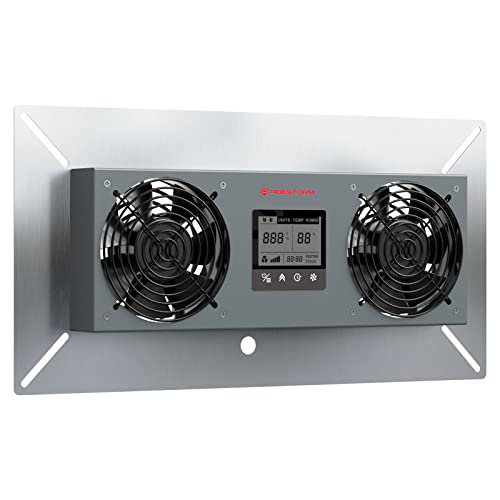
- 240 CFM air-out airflow for moisture reduction
- Digital panel with humidistat, timer, and temperature settings
- 48 dB noise level with stainless steel body
Best For: Smaller crawl spaces needing automatic humidity control
High-Flow Auto Venting
ALORAIR 540CFM Crawl Space Ventilator Fan

- 540 CFM airflow for stronger exhaust performance
- Built-in dehumidistat with freeze protection thermostat
- IP-55 rated housing with isolation mesh for humid areas
Best For: Larger crawl spaces needing higher airflow and automatic control
Durable Steel Build
ALORAIR 540 CFM Stainless Steel Crawl Space Fan

- 540 CFM airflow for crawl space moisture control
- Stainless steel shell with IP-55 rated fan
- Humidistat regulates 10% to 80% humidity range
Best For: Humid spaces where rust resistance and strong airflow matter
Compact Humidity-Controlled Option
CADPXS Crawlspace Vent Fan with Humidistat
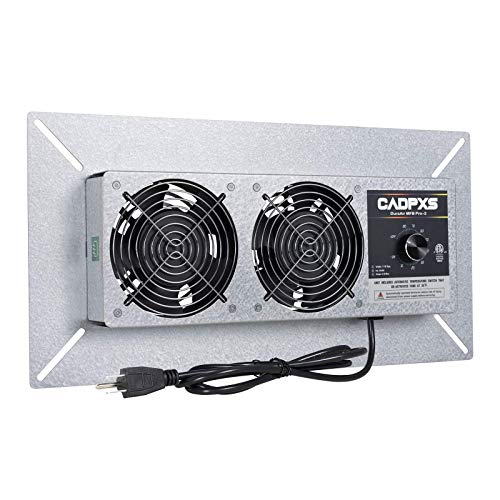
- 220 CFM airflow for crawl space exhaust
- Built-in dehumidistat with 20%–80% RH range
- Freeze protection thermostat for cold weather
Best For: Crawl spaces needing automatic humidity control and basic exhaust
Heavy-Duty Stainless Steel Pick
Abestorm 260CFM Crawl Space Fan

- 260 CFM airflow for stronger exhaust
- IP-55 stainless steel shell for damp areas
- Isolation mesh helps block reptile access
Best For: Rugged crawl spaces needing higher airflow and weather resistance
High-Flow Commercial Vent Choice
Abestorm 260CFM Crawlspace Vent Fan

- 260 CFM high-flow exhaust fan
- IP-55 aluminum zinc shell with trim-to-fit faceplate
- Humidity control plus freeze protection
Best For: High-moisture crawl spaces needing flexible installation and strong airflow
Smart Crawlspace Exhaust Fan – AC Infinity AIRTITAN T8 Smart Crawlspace Fan
If you want ventilation fans for crawl spaces that can run automatically, the AC Infinity AIRTITAN T8 is built to manage airflow, humidity, and stale air with very little manual oversight. It uses exhaust ventilation, includes WiFi and Bluetooth app control, and offers timer, cycle, scheduling, and minimum-speed programming for more precise crawlspace management.
Best For: Homeowners who want a smart, automated crawlspace exhaust fan with climate monitoring and app control.
Pros:
- 240 CFM airflow for crawl spaces and basements
- WiFi/Bluetooth app control with climate alerts
- Dynamic temperature, humidity, and VPD programming
- IP55-rated design with 32 dBA noise level
Cons:
- Exhaust-only design may not suit buyers wanting intake ventilation
- Smart features may be more than needed for simple installs
The AIRTITAN T8 stands out if you want a modern, connected solution rather than a basic plug-in fan. Its automation features and solid 240 CFM output make it a strong fit for crawl spaces where moisture control matters.
Dual-Fan Stainless Vent Fan – Durablow 220 CFM Crawl Space Vent Fan
Among ventilation fans for crawl spaces, the Durablow 220 CFM model is aimed at buyers who want strong exhaust airflow and simple humidity-based operation. Its dual-fan design, stainless steel 304 construction, and built-in dehumidistat make it a practical option for venting crawl spaces, basements, and other damp areas.
Best For: Damp crawl spaces where you want a stainless steel exhaust fan with automatic humidity control.
Pros:
- 220 CFM dual-fan airflow for air-out ventilation
- Built-in dehumidistat with 20%–80% RH operating range
- 304 stainless steel housing for corrosion resistance
- Includes freeze protection thermostat and grounded power cord
Cons:
- 55 dB noise level is louder than some alternatives
- Requires matching the crawl space vent opening before purchase
This Durablow fan focuses on durability and straightforward automatic control rather than smart features. If your priority is reliable moisture control in a humid environment, its stainless build and humidity-triggered operation are the main draws.
Classic Crawlspace Moisture Ventilator – Tjernlund V2D 220 CFM Crawlspace Fan
The Tjernlund V2D is a straightforward choice if you need ventilation fans for crawl spaces that work through existing passive vents. It delivers 220 CFM of exhaust airflow, includes both a thermostat and dehumidistat, and is designed to reduce moisture in crawl spaces with standard brick or block foundation openings.
Best For: Crawl spaces with existing foundation vents that need a simple moisture-reducing exhaust fan.
Pros:
- 220 CFM exhaust with two fans for crawlspace ventilation
- Includes thermostat and dehumidistat
- Designed for standard brick and block foundation openings
- Low 25 dB noise level for quieter operation
Cons:
- Single-speed operation offers less control than newer models
- Less feature-rich than app-connected or higher-airflow options
This model is best if you want a proven, no-frills crawlspace ventilator that fits existing openings. It covers the essentials well: moisture reduction, automatic control, and a compact exhaust setup.
High-Airflow Crawlspace Fan – ALORAIR 570CFM Crawl Space Fan
If you need ventilation fans for crawl spaces with higher output, the ALORAIR 570CFM model is built for larger air movement and humidity balancing. It combines a stainless steel body, adjustable 10%–80% humidistat, and IP55-rated protection to help manage damp crawl spaces, basements, garages, and similar areas.
Best For: Larger crawl spaces or damp areas that need stronger airflow and adjustable humidity control.
Pros:
- 570 CFM airflow for larger ventilation needs
- Adjustable 10%–80% humidistat for automatic control
- IP55-rated stainless steel build for moisture resistance
- Built-in antifreeze thermostat and isolation mesh
Cons:
- 55 dBA noise level may be noticeable in quieter spaces
- Size and output may be more than needed for small crawl spaces
This is the strongest airflow option in the group, so it makes sense when coverage area and moisture management are the priorities. If you want a plug-in crawlspace fan with robust output and adjustable automation, it is a compelling pick.
Compact Humidity Control – Abestorm Crawlspace Ventilation Fan with Humidistat
If you’re comparing ventilation fans for crawl spaces, this Abestorm model is a compact air-out unit built to move stale, damp air through existing vents. With 240 CFM airflow, a humidistat, and a digital control panel, it’s aimed at reducing moisture, odors, and condensation in crawl spaces and basements without taking up much room.
Best For: Smaller crawl spaces or basements that need automatic humidity control and quiet exhaust ventilation.
Pros:
- 240 CFM air-out ventilation helps reduce moisture and stale air.
- Humidistat plus digital panel supports speed, timer, temperature, and humidity settings.
- Quiet 48 dB operation is suitable for spaces where low noise matters.
- Metal fan cage and stainless steel body add durability in humid environments.
Cons:
- Designed for wall-mount installation in the crawl space, so fit needs to be measured carefully.
- Lower airflow than the 540 CFM options in this roundup.
- Factory pre-installed thermostat stops operation below 35°F.
This is a practical pick if you want a lower-capacity fan with automatic humidity control and a straightforward feature set. It makes the most sense for smaller or moderately damp spaces where quiet exhaust and simple monitoring are more important than maximum airflow.
High-Flow Auto Venting – ALORAIR 540CFM Crawl Space Ventilator Fan
For ventilation fans for crawl spaces that need more moving power, this ALORAIR model delivers 540 CFM of air-out airflow. It’s built for damp crawl spaces, basements, attics, and garages, and combines automatic humidity control with freeze protection so it can manage airflow without constant attention.
Best For: Larger damp spaces that benefit from higher airflow and automatic humidity-based operation.
Pros:
- 540 CFM airflow offers stronger exhaust performance for damp areas.
- Built-in dehumidistat automatically turns the fan on and off at the set humidity level.
- Freeze protection thermostat prevents operation below 35°F.
- IP-55 rated construction and isolation mesh help resist dust and liquids.
Cons:
- Noise is listed at under 55 dB, so it is not as quiet as the 48 dB model here.
- Only one speed is listed in the product details.
- Wall-mount installation still requires checking the opening size first.
This is the stronger all-around option if airflow is your priority and you want automatic humidity control built in. It’s a solid fit for more demanding crawl space ventilation jobs where durability and set-and-forget operation matter.
Durable Steel Build – ALORAIR 540 CFM Stainless Steel Crawl Space Fan
This ALORAIR option is another strong choice among ventilation fans for crawl spaces, with 540 CFM airflow and a stainless steel shell designed for humid environments. It focuses on durable construction, moisture reduction, and easy installation, making it a practical pick for crawl spaces, basements, attics, garages, and other damp areas.
Best For: Buyers who want 540 CFM airflow with a stainless steel body for long-term use in humid spaces.
Pros:
- 540 CFM air-out airflow helps reduce moisture and improve circulation.
- Stainless steel construction is built for humid environments and rust resistance.
- IP-55 rated fan and back isolation mesh help protect against dust and liquids.
- Humidistat control supports 10% to 80% humidity regulation.
Cons:
- Noise is listed at under 55 dB, which may be noticeable in quiet areas.
- Measure the crawl space vent carefully before buying, as fit matters.
- Factory pre-installed thermostat stops fan operation below 35°F.
If you want the same 540 CFM class of performance but prefer a stainless steel build, this model stands out for durability. It is best suited to humid spaces where corrosion resistance and steady exhaust ventilation are key concerns.
Compact Humidity-Controlled Option – CADPXS Crawlspace Vent Fan with Humidistat
If you want a straightforward pick among ventilation fans for crawl spaces, the CADPXS model focuses on automatic humidity control and basic exhaust performance. With 220 CFM airflow, a built-in dehumidistat, and freeze protection, it is aimed at keeping damp crawl spaces, basements, and similar enclosed areas moving air without constant manual adjustment.
Best For: Crawl spaces and other small enclosed areas where you want plug-in humidity control with freeze protection.
Pros:
- 220 CFM airflow is suitable for exhausting stale, damp air from a crawl space.
- Built-in dehumidistat covers a 20% to 80% RH range for automatic operation.
- Freeze protection thermostat helps prevent operation in low outdoor temperatures.
- Quiet, waterproof design with a grounded power cord and easy knob control.
Cons:
- Lower airflow than the 260 CFM Abestorm models.
- Uses a basic knob control rather than a more advanced interface.
This is a practical, set-it-and-forget-it crawl space fan if your priority is humidity response rather than maximum airflow. It is also a versatile choice for garages, attics, and hydroponics areas where controlled exhaust matters.
Heavy-Duty Stainless Steel Pick – Abestorm 260CFM Crawl Space Fan
Among ventilation fans for crawl spaces, the Abestorm 260CFM model stands out for its stainless steel shell, IP-55 rating, and built-in isolation mesh. It is designed to move a solid amount of air while handling damp, dusty areas, making it a strong fit for crawl spaces, basements, and garages where durability matters.
Best For: Damp crawl spaces that need a tougher, weather-resistant fan with automatic humidity control.
Pros:
- 260 CFM airflow provides stronger exhaust than the 220 CFM CADPXS unit.
- Stainless steel shell with IP-55 protection is built for damp, dusty environments.
- Built-in isolation mesh helps keep reptiles out of the crawl space.
- Dehumidistat and freeze protection thermostat support automatic operation.
Cons:
- Heavier than the smaller CADPXS option.
- Button control and 3-speed setup may be more than some users need for basic ventilation.
If your crawl space sees regular moisture or harsher conditions, this fan offers a more rugged build than lighter-duty options. It combines high airflow with automatic humidity management, which makes it a practical choice for active moisture control.
High-Flow Commercial Vent Choice – Abestorm 260CFM Crawlspace Vent Fan
This Abestorm crawlspace ventilation fan is built for users who want the same 260 CFM airflow as a high-output exhaust fan but with a slightly different construction approach. Its IP-55 rated shell, adjustable faceplate, isolation mesh, and humidity-based automatic control make it a solid fit for crawl spaces, basements, attics, and garages where dependable ventilation is the goal.
Best For: Crawl spaces and foundations that need a high-flow fan with adjustable installation and automatic moisture control.
Pros:
- 260 CFM airflow supports efficient active ventilation in damp spaces.
- IP-55 rated aluminum zinc shell is designed to resist liquids and dust.
- 5.5 mm isolation mesh helps prevent reptiles from entering the crawl space.
- Faceplate can be trimmed for different installation needs, and the fan includes freeze protection.
Cons:
- Like other automatic units, it will stop operating when outdoor temperatures fall below 35°F.
- Its commercial build may be more fan than needed for very small, lightly damp spaces.
For buyers comparing ventilation fans for crawl spaces, this model is appealing if installation flexibility and higher airflow matter. It is built to help reduce moisture, exhaust odors and gases, and maintain more stable air movement in difficult areas.
How We Picked These Ventilation Fans for Crawl Spaces
We focused on airflow capacity, humidity and thermostat controls, build quality, noise considerations, and suitability for damp enclosed spaces. We also looked for models that make sense for real crawl space use, not just general-purpose ventilation.
Because crawl spaces vary widely, the best choice depends on square footage, moisture level, and whether you need a simple exhaust fan or a more automated setup.
Quick Comparison: What Matters Most
Higher-CFM Ventilation Fans for Crawl Spaces move more air and can help in larger or more humid areas, while lower-CFM units may be better for tighter spaces or targeted ventilation. Stainless steel housings, sealed components, and isolation features are useful in damp environments.
If you want less manual upkeep, look for humidistats and thermostats. If you want a straightforward solution, a basic exhaust fan may be enough.
Key Buying Factors for Ventilation Fans for Crawl Spaces
Airflow and Crawl Space Size
Match airflow to the job. Small or moderately damp crawl spaces can often do well with mid-range CFM, while larger or more moisture-prone spaces may benefit from higher-output models.
Humidity and Temperature Controls
Humidistat and thermostat controls help the fan run only when needed. That can improve efficiency and reduce wear compared with always-on operation.
Durability and Weather Resistance
Crawl spaces are harsh environments. Look for corrosion-resistant materials, sealed construction, and ratings that support humid or dusty conditions.
Installation and Fit
Check dimensions, vent compatibility, and whether the fan is designed for crawlspace mounting. A unit that fits cleanly and installs securely is usually worth prioritizing over extra features you may not use.
Who Should Buy Which Ventilation Fans for Crawl Spaces?
Choose a higher-CFM fan if you’re dealing with persistent dampness, musty odors, or a larger crawl space. Pick a smart-control model if you want automated moisture management with less monitoring.
If your priority is value and simplicity, a basic crawlspace ventilator can be a practical choice. If you want long-term reliability in a tough environment, focus on stainless steel construction and protective ratings first, then compare airflow and controls.
In short, the best Ventilation Fans for Crawl Spaces are the ones that match your space, your moisture problem, and how hands-on you want the system to be.