Reliable drinking water can make or break a camping trip. The best water purifiers for camping help reduce exposure to bacteria, parasites, sediment, and other common contaminants without adding unnecessary bulk to your pack.
This roundup compares personal straw filters, squeeze systems, hand pumps, and electric purifiers so you can choose the right balance of portability, flow rate, capacity, and treatment capability for your next outdoor adventure.
Best 10 Water Purifiers for Camping Picks for 2026
Best Ultralight Pack
LifeStraw Personal Water Filter 5-Pack
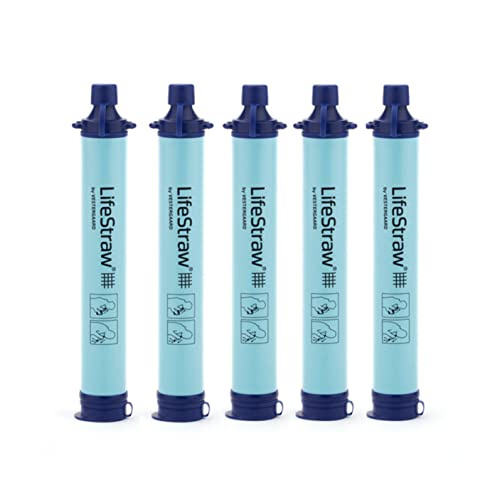
- 1.6 ounces per filter
- Removes bacteria, parasites, and microplastics
- 4,000-liter rated capacity
Best For: Group camping, emergency kits, and ultralight hiking
Best High-Capacity Squeeze System
Sawyer Squeeze with Cnoc 2L Bladder

- Less than 6 ounces
- Includes a wide-mouth 2-liter bladder
- Filter rated up to 100,000 gallons
Best For: Backpackers seeking a reusable filter and large collection bladder
Best Pump for Clear-Tank Monitoring
Katadyn Hiker Pro Transparent Hand Pump

- Pumps 1 liter per minute
- Transparent cartridge housing
- Includes carbon granules and pre-filter
Best For: Campers filling bottles or hydration packs by hand
Best Versatile Squeeze Kit
Sawyer SP129 Squeeze Water Filtration System

- 2-ounce inline filter
- Includes two 32-ounce collapsible pouches
- Supports bottles, straw, and hydration adapters
Best For: Campers wanting flexible carry and drinking options
High-Volume Choice
Trailgo Pro Hand-Pump Purifier

- Pumps up to 1.5 liters per minute
- Three-stage filtration for outdoor water sources
- Rated for up to 3,000 liters
Best For: Group camping, base camps, and emergency water storage
Ultra-Light Pick
Sawyer MINI Water Filtration System

- Weighs about 2 ounces
- Attaches to bottles, pouches, and hydration packs
- Rated for up to 100,000 gallons
Best For: Solo hikers, backpackers, and lightweight emergency kits
Multi-Pack Value
LifeStraw Personal Water Filter 4-Pack

- Includes four personal filters
- Removes listed bacteria, parasites, and microplastics
- Each filter is rated for up to 4,000 liters
Best For: Families, group trips, and distributing emergency-kit filters
Fast-Charge Trail Purifier

- 700 ml/min electric pumping
- Six-stage, 0.01-micron filtration
- Filters up to 168,000 ml per charge
Best For: Long camping trips, groups, and emergency kits
Power-Free Gravity Pick

- Manual, electricity-free operation
- Up to 1 liter per minute
- Hollow fiber membrane filtration
Best For: Car camping, off-grid setups, and emergency storage
Best Ultralight Pack – LifeStraw Personal Water Filter 5-Pack
For hikers who want simple water purifiers for camping, the LifeStraw Personal Water Filter is a lightweight, no-electricity option for drinking directly from a water source. This five-pack uses a hollow-fiber membrane to reduce bacteria, parasites, microplastics, dirt, sand, and cloudiness.
Best For: Group camping, emergency kits, and ultralight hikers who need individual drinking filters.
Pros:
- Weighs just 1.6 ounces per filter and requires no batteries or electricity.
- Rated to remove 99.999999% of bacteria and 99.999% of parasites.
- Filters up to 4,000 liters with proper use and maintenance.
- Five-pack provides individual filters for a group or multiple kits.
Cons:
- Designed as a personal straw rather than a container-filling pump or gravity system.
- Does not list activated carbon for improving taste.
The LifeStraw is a compact choice when low weight and individual use matter most. Its long rated filter life and five-filter format also make it practical for shared camping supplies.
Best High-Capacity Squeeze System – Sawyer Squeeze with Cnoc 2L Bladder
The Sawyer Squeeze with Cnoc bladder is a versatile pick among water purifiers for camping, especially when you want to collect and filter water into a bottle or pouch. Its reusable hollow-fiber filter pairs with a durable, wide-mouth 2-liter bladder for easier filling.
Best For: Backpackers and campers who want a reusable filter with a large collection bladder and long service life.
Pros:
- The system weighs less than 6 ounces and operates manually.
- The 2-liter TPU bladder has a wide mouth for faster filling.
- Reusable filter is cleanable and rated for up to 100,000 gallons.
- Includes a cleaning coupling and plunger for maintenance.
Cons:
- Requires manual squeezing rather than pump-free gravity operation.
- The supplied notes do not specify a filter flow rate.
This system balances packability with water-carrying flexibility. It is particularly appealing for longer trips where a reusable, backwashable filter and larger bladder can reduce the need for replacement cartridges.
Best Pump for Clear-Tank Monitoring – Katadyn Hiker Pro Transparent Hand Pump
The Katadyn Hiker Pro is a practical pump-style option for water purifiers for camping when you prefer a controlled flow into a bottle or hydration pack. Its transparent body lets you inspect the cartridge, while the included pre-filter helps protect it from debris.
Best For: Campers and backpackers who want a hand pump with visible cartridge condition and direct bottle or hydration-pack connections.
Pros:
- Pumps about 1 liter per minute and weighs 11.2 ounces.
- 0.2-micron glass-fiber cartridge filters up to 1,150 liters.
- Activated carbon granules help improve water taste.
- Includes hoses, quick-connect fittings, an Easy Fill adapter, and a pre-filter.
Cons:
- Heavier than the personal straw and squeeze-filter options in this roundup.
- Requires continuous manual pumping.
- Its cartridge capacity is lower than the rated capacity of the Sawyer squeeze systems.
The Hiker Pro makes sense for users who value pump control, a visible filter housing, and taste improvement. Its included connectors also make it more convenient for filling hydration equipment than a direct-drinking straw.
Best Versatile Squeeze Kit – Sawyer SP129 Squeeze Water Filtration System
The Sawyer SP129 is a flexible choice among water purifiers for camping, combining a compact inline filter with two collapsible 32-ounce pouches, a drinking straw, and hydration-pack adapters. It can be used directly from a pouch, with compatible bottles, or in a gravity setup.
Best For: Campers who want multiple ways to collect, drink, and carry filtered water without adding much pack weight.
Pros:
- The 2-ounce filter is highly packable.
- Removes bacteria, protozoa, cysts, sediment, and 100% of microplastics according to the supplied specifications.
- Includes two reusable, collapsible 32-ounce pouches.
- Works with standard 28 mm-threaded water bottles and includes hydration adapters.
Cons:
- The included pouches hold 32 ounces each, smaller than the 2-liter bladder in the other Sawyer kit.
- Manual squeezing is required for the included pouch setup.
- The notes list an AC/DC power source, but the described use is manual.
The SP129 stands out for its broad compatibility and included accessories. Choose it when drinking directly, filling bottles, or connecting to a hydration pack are all useful priorities on camp trips.
High-Volume Choice – Trailgo Pro Hand-Pump Purifier
For groups and base camps, the Trailgo Pro is a practical option among water purifiers for camping. Its hand-operated pump delivers up to 1.5 liters per minute and uses three filtration stages for treating water from sources such as streams, lakes, and rain barrels.
Best For: Group camping, base camps, off-grid use, and emergency preparedness.
Pros:
- High flow rate suitable for 4–6 hikers or campers.
- Three-stage filtration includes a 5-micron pre-filter and ultrafiltration membrane rated at 0.01 micron.
- Complete kit includes tubing, clamps, carry bag, and reusable pre-filter.
- Filter is rated for up to 3,000 liters, with replacement cartridges available.
Cons:
- At 4 pounds, it is substantially heavier than personal straw filters.
- Hand pumping requires more effort than gravity-fed or direct-drinking designs.
- Designed for water with a maximum supported TDS level of 100 ppm.
The Trailgo Pro makes the most sense when several people need treated water and portability still matters. It is less compact than a personal filter, but its higher output and included pump setup are useful for sustained camp use.
Ultra-Light Pick – Sawyer MINI Water Filtration System
The Sawyer MINI is a compact choice for hikers seeking lightweight water purifiers for camping. Weighing about 2 ounces, it can attach to the included pouch, compatible 28 mm bottles, or a hydration pack, and it can also be used with the included straw.
Best For: Solo hiking, backpacking, travel, and emergency kits where minimal weight is important.
Pros:
- Very light and compact for backpacking.
- 0.1-micron absolute hollow-fiber filtration removes listed bacteria, protozoa, and microplastics.
- Versatile attachment options include the pouch, standard 28 mm bottles, hydration packs, and straw use.
- Manufacturer rates the filter for up to 100,000 gallons.
Cons:
- The included pouch holds only 16 ounces.
- Manual squeezing or direct drinking is better suited to personal use than group water production.
- It is a filter rather than a powered purifier, so no battery-assisted flow is provided.
Choose the Sawyer MINI when pack weight and flexibility matter more than fast, high-volume processing. Its multiple connection options make it adaptable, while the small pouch means larger groups may need additional containers or repeated fills.
Multi-Pack Value – LifeStraw Personal Water Filter 4-Pack
The LifeStraw Personal four-pack is a simple option for campers who want individual water purifiers for camping. Each hollow-fiber filter is designed for direct personal use without electricity or batteries and is rated to provide up to 4,000 liters with proper use and maintenance.
Best For: Families, groups, travel companions, and distributing individual filters across emergency kits.
Pros:
- Four personal filters provide one unit per camper or a convenient supply for multiple kits.
- Removes listed bacteria, parasites, microplastics, dirt, sand, and cloudiness.
- No electricity or battery power is required.
- Each filter is rated for up to 4,000 liters with proper maintenance.
Cons:
- Personal straw format is intended for individual drinking rather than filling large containers quickly.
- It does not include a pouch, bottle, pump, or other water-storage container.
- Direct-use straw designs may be less convenient when preparing water for cooking or a whole camp.
This four-pack is a practical way to equip several people with independent drinking filters. It is especially appealing for shared preparedness, but campers who need to process and store larger volumes should consider a pump-based system instead.
Fast-Charge Trail Purifier – BKLES BK2000
If you want water purifiers for camping that can handle repeated use on longer trips, the BKLES BK2000 is a compact electric option. Its pump delivers up to 700 ml per minute, while the six-stage, 0.01-micron system is designed for water from streams, ponds, lakes, and rivers. A built-in emergency light adds useful nighttime functionality.
Best For: Long-duration camping, group hydration, backpacking, and emergency preparedness where rechargeable electric operation is practical.
Pros:
- Filters up to 168,000 ml on a single charge, according to the supplied specifications.
- Six-stage filtration combines ultrafiltration, PP cotton, KDF, and activated carbon.
- Lightweight 350 g design includes a storage bag, belt attachment option, and 1.5-meter hose.
- Built-in emergency light and high-torque pump improve outdoor convenience.
Cons:
- Requires battery charging and is less suitable when you want a completely manual system.
- Replacement pre-filters and internal filters must be purchased separately.
- The listed maximum supported TDS level is 300 ppm.
The BK2000 stands out for its combination of speed, capacity, and portability. Choose it when powered convenience matters more than eliminating battery dependence.
Power-Free Gravity Pick – Uzima UZ-2
The Uzima UZ-2 is a straightforward choice for shoppers comparing water purifiers for camping without batteries, charging cables, or solar panels. This gravity-fed system uses a hollow fiber membrane, assembles without complicated installation, and provides a manual way to process water at camp or in an emergency kit.
Best For: Car camping, off-grid use, hunting, van life, and emergency preparedness where electricity-free operation is a priority.
Pros:
- Gravity-fed design operates manually without electricity.
- Hollow fiber filtration is specified to protect against 99.999% of bacteria.
- Delivers up to 1 liter per minute and includes a filter cleaner.
- Compatible with water purification tablets for added flexibility.
Cons:
- Its 1-liter capacity and 10-by-10-by-17-inch dimensions may be less convenient for minimalist backpacking.
- Gravity filtration may require more setup time than an electric pump.
- The supplied specifications list a maximum supported TDS level of 500 ppm.
With no power requirements and a stated 10-year shelf life, the UZ-2 is especially appealing as a dependable base-camp or emergency option. It is a practical fit for users who value simplicity over compact, handheld operation.
Solar-Ready Water Station – ITEHIL YN18650-2P
The ITEHIL YN18650-2P brings rechargeable and solar charging to the water purifiers for camping category. Its dual filtration setup is rated at 0.01 microns, while the 5200 mAh battery, integrated hook, emergency light, and power-bank function make it a versatile piece of outdoor equipment.
Best For: Solar-supported camping, hiking, power outages, and survival situations where portability and multifunction features are useful.
Pros:
- Supports both USB-C and solar charging.
- Filters at up to 700 ml per minute with a cartridge life listed at up to 1,000 liters.
- Compact design includes a backpack hook and carrying case.
- Combines water purification with an emergency light and power bank.
Cons:
- The cartridge is recommended for replacement every six months, with timing dependent on water quality.
- Solar charging performance depends on available sunlight.
- The listed flow rate is lower in the detailed specifications at 0.18 gallons per minute.
The ITEHIL is a strong match for campers who want more than a basic filter and appreciate alternative charging options. Its multifunction design adds utility, though ongoing cartridge replacement and charging conditions should be part of your planning.
How We Picked the Best Water Purifiers for Camping
We focused on the factors that matter most outdoors: filtration performance, portability, ease of use, treatment capacity, durability, and power requirements. The selection includes compact options for solo hikers, versatile squeeze filters for backpackers, pump-style systems for convenient filling, and electric models for campers who need faster or higher-volume treatment.
We also considered whether each design is practical around natural water sources, how easily it can be cleaned or maintained, and whether its included bottles, pouches, adapters, or charging features add useful value. Always check the manufacturer’s specifications for the exact contaminants removed; a filter and a purifier are not interchangeable in every situation.
Quick Comparison
- Best for ultralight solo trips: Personal straw and mini filters with minimal pack weight.
- Best for flexibility: Squeeze systems that work with pouches, bottles, and hydration reservoirs.
- Best for easier water collection: Hand-pump filters that draw water directly from a source.
- Best for groups or base camps: Higher-capacity systems that can process more water with fewer refills.
- Best when power is available: Electric models that reduce manual effort and may offer faster operation.
Key Buying Factors for Water Purifiers for Camping
Filter Performance
Look for clear information about pore size and the contaminants the device addresses. Microbial protection, sediment reduction, taste improvement, and chemical treatment are different capabilities. If you may encounter viruses, agricultural runoff, or questionable emergency water, choose a system specifically rated for those concerns or pair filtration with an appropriate disinfection method.
Capacity and Flow Rate
A personal straw is convenient for drinking directly from a source, but it may be slow for filling bottles or cooking. Squeeze and pump systems are more practical when multiple people need water. Consider daily volume, not just the advertised maximum flow rate.
Weight, Size, and Durability
Backpackers should prioritize compact construction and low weight, while car campers can usually trade a few extra ounces for faster filling, larger capacity, or easier operation. Transparent housings and replaceable parts can also make maintenance simpler.
Power and Maintenance
Electric purifiers can be convenient, but batteries, charging, and solar input introduce additional dependencies. For remote trips, confirm runtime and carry a backup plan. Any filter should be backflushed, cleaned, dried, or replaced according to its instructions to prevent clogging and contamination.
Who Should Buy Which Water Purifiers for Camping?
Solo hikers and emergency-kit users should choose a lightweight personal filter that is simple to carry and use. Backpackers and couples will generally get more versatility from a squeeze system with a pouch or hydration adapter. Families and small groups should look for better flow, larger reservoirs, or a pump that can fill several containers efficiently.
Base-camp campers may prefer an electric unit when charging is practical and manual pumping is undesirable. For extended or uncertain trips, prioritize a system with documented treatment performance, replaceable components, and a dependable backup method rather than choosing solely by price or weight.