Reliable drinking water can be difficult to find at campsites, RV parks, and remote cabins. The best reverse osmosis systems for camping help reduce dissolved solids and many common contaminants while giving you more control over questionable water sources.
We compared portable RO pumps, countertop systems, and multi-stage purifiers for filtration performance, portability, power needs, waste-water handling, capacity, and ease of maintenance.
Best 10 Reverse Osmosis Systems for Camping Picks for 2026
Trail Pump RO
Compact Outdoor Water Purifier

- Chemical-free reverse osmosis filtration
- Up to 8,000-liter capacity
- Manual flow up to 300 ml/min
Best For: Lightweight camping, hiking, and emergency preparedness
Purewell K8680
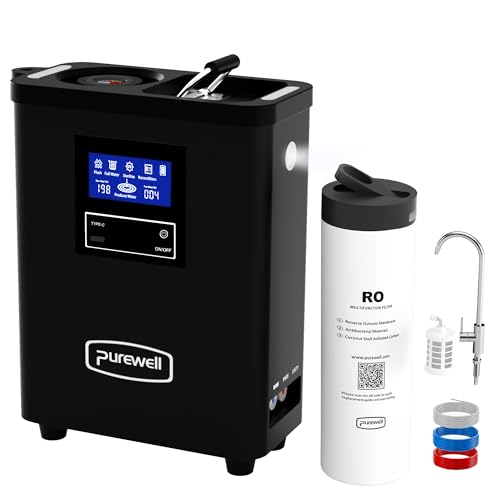
- 0.0001-micron RO plus dual UV
- Rechargeable battery and TDS display
- Fills 2.1 liters in about three minutes
Best For: RV trips, group camping, and emergency preparation
Survival Pump RO

- 0.0001-micron RO membrane
- Three-stage purification
- Rated for up to 10,000 liters
Best For: Outdoor survival, hiking, and high-capacity camping use
Smart Self-Cleaning Pick

- Built-in TDS and filter-life indicators
- 3-liter autofill pitcher and touch controls
- Compact, installation-free countertop design
Best For: Powered campers wanting simple monitoring and automatic filling
High-Output Travel System

- Faucet-connected design needs no plumber
- DI postfilter targets close to 0 ppm
- Approximately 3 gallons per hour of purified water
Best For: RV and travel use with a compatible faucet and low-TDS source water
Best Glass-Carafe Pick

- No plumbing or installation required
- Five-stage RO filtration with remineralization
- Glass carafe plus power-saving standby
Best For: Campers wanting a countertop RO system with a glass water container
Best Hot-and-Cold Option
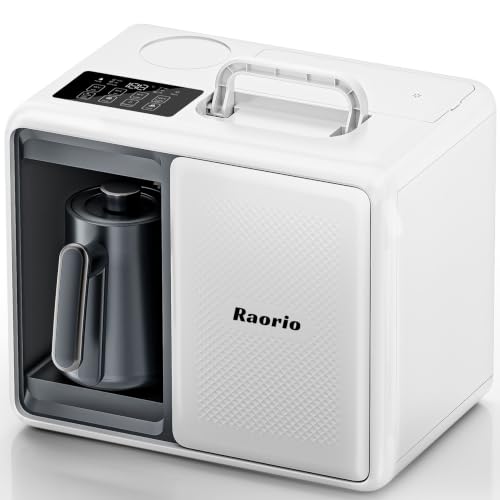
- Hot and cold purified water on demand
- Nine adjustable temperature options
- No plumbing plus boil-dry protection
Best For: RV and campsite kitchens with access to corded power
Trail Pump RO – Compact Outdoor Water Purifier
For campers who need a lightweight way to improve water from creeks and streams, this portable reverse osmosis system for camping uses high-precision RO filtration without chemicals. Its freestanding pump design is suited to hiking, backpacking, travel, and emergency preparedness.
Best For: Lightweight camping, hiking, and emergency water treatment where the source water has a TDS level up to 300 ppm.
Pros:
- Reverse osmosis filtration helps reduce small particles and impurities.
- Portable, chemical-free design is practical for outdoor use.
- Rated for up to 8,000 liters with a flow rate of up to 300 ml per minute.
Cons:
- Requires manual pumping rather than electric operation.
- Its supported maximum TDS level is 300 ppm.
This is a straightforward choice when packability and independence from electrical power matter most. Its modest flow rate is better suited to personal or small-group use than high-volume camp water production.
Purewell K8680 – Electric RO Purifier With UV
The Purewell K8680 is a feature-rich option among reverse osmosis systems for camping, combining a 0.0001-micron RO membrane with dual UV treatment and TDS monitoring. Its rechargeable battery, carry bag, lighting, and brackish-water capability make it suitable for off-grid trips and emergency use.
Best For: RV trips, camping groups, and emergency preparation when powered purification and water-quality monitoring are priorities.
Pros:
- RO and dual UV filtration are designed to reduce TDS and numerous listed contaminants.
- Runs for up to 6.5 hours and can fill a 2.1-liter bottle in about three minutes.
- Includes a 5,200 mAh battery, 54W charger, storage bag, and emergency lighting.
- Displays water quality and supports automatic self-cleaning.
Cons:
- It is larger and heavier than a simple manual pump.
- Designed for fresh or brackish water, not ocean seawater.
- Requires filter replacement as water quality and usage affect filter life.
This is the most capable and equipment-heavy option in the group. Choose it if your camping setup can accommodate charging and you value speed, monitoring, UV treatment, and extra emergency features.
Bluevua Travel RO – Countertop Camping Purifier
Bluevua’s ROPOT-Travel is a countertop choice for campers with access to an outlet, such as RV travelers or campsite cabins. This reverse osmosis system for camping combines six-stage filtration, UV treatment, a glass bottle, and plug-and-play operation without plumbing.
Best For: Powered camping, RV use, road trips, and travelers who want countertop convenience with less bottled-water waste.
Pros:
- Six-stage RO filtration with UV is designed to reduce TDS and several listed contaminants.
- Produces water in less than three minutes with no installation or plumbing.
- Uses a 3:1 filtered-to-waste water ratio and includes a borosilicate glass bottle.
- Self-cleaning, filter-life alerts, and twist-and-lock filter replacement simplify maintenance.
Cons:
- Corded electric operation limits use away from power outlets.
- At 10 by 5 by 13.5 inches and about 5 kg, it is less suitable for backpacking.
- Its listed capacity is 2,000 liters.
For powered camps, this model emphasizes convenience rather than rugged backcountry portability. The compact countertop format and included bottle make it a practical alternative to carrying disposable water bottles.
Survival Pump RO – High-Capacity Outdoor Filter
This portable three-stage pump is a simple candidate for reverse osmosis systems for camping when you want a freestanding, non-countertop design. Its 0.0001-micron RO membrane and 10,000-liter stated capacity target hiking, camping, emergency survival, and other outdoor activities.
Best For: Campers and hikers seeking a high-capacity manual-style RO purification system for outdoor or emergency use.
Pros:
- Uses a 0.0001-micron reverse osmosis membrane.
- Three-stage purification adds multi-stage filtration.
- Rated for up to 10,000 liters.
- Freestanding format is intended for hiking, camping, and survival scenarios.
Cons:
- The supplied details do not specify flow rate, power source, or supported TDS level.
- Only the purifier is listed among the included product details, so accessory contents may be limited.
The high stated capacity is its main differentiator, but the limited specifications make it harder to compare on speed and source-water compatibility. Consider it when capacity matters more than detailed operating information.
Mineral-Packed Convenience – SimPure Y7T-A Countertop RO
The SimPure Y7T-A is a convenient option for anyone comparing reverse osmosis systems for camping, RV use, or other locations with a power supply. This countertop unit requires no plumbing, uses a glass pitcher with alkaline remineralization, and dispenses room-temperature purified water.
Best For: Campers and RV users who want portable countertop purification with remineralized water.
Pros:
- No installation required; plug it in and fill the unit.
- Glass pitcher and alkaline filter add calcium, magnesium, and potassium.
- Removes 99.99% of more than 1,000 listed contaminants, according to supplied SGS testing details.
- 4:1 pure-to-drain ratio and quick-change filters rated for approximately 528 gallons.
Cons:
- Requires corded power, which may limit use at remote campsites.
- Only dispenses room-temperature water.
- Needs up to 22 inches of vertical clearance when opening the lid fully.
For powered camping setups, the Y7T-A balances easy operation with a mineral-enhancing pitcher. Check your available counter space and power source before choosing it.
Smart Self-Cleaning Pick – DREO Countertop RO Filter
The DREO countertop unit is a practical choice among reverse osmosis systems for camping when you want straightforward monitoring in a compact package. Its 3-liter capacity, built-in TDS meter, filter-life indicator, autofill pitcher, and installation-free design suit powered campsites and RV counters.
Best For: Campers who prioritize water-quality monitoring, automatic filling, and a compact countertop footprint.
Pros:
- Installation-free countertop design with a 3-liter capacity.
- Built-in TDS meter and filter-change indicator simplify upkeep.
- Autofill pitcher and touch controls add convenience.
- Rated to filter 99.9% of possible contaminants listed in the supplied notes and supports source water up to 1,200 ppm TDS.
Cons:
- Requires electrical power for operation.
- Its ABS construction may be less appealing than a glass pitcher for some users.
- The supplied notes do not provide a gallons-per-day output figure.
DREO is a strong fit for organized, powered camping setups where quick status checks matter. Its compact dimensions also make it easier to place on a limited counter than many larger systems.
High-Output Travel System – Universal 5-Stage Portable RO
This Universal 5-Stage system is a different type of option among reverse osmosis systems for camping: it connects to a kitchen faucet rather than using a self-contained countertop reservoir. The portable unit includes DI postfiltration, produces about 3 gallons per hour, and is designed for apartments, RVs, and travel.
Best For: RV travelers and campers with a compatible faucet who need higher-volume purification and very low-TDS output.
Pros:
- Portable faucet-connected design requires no plumber.
- Five-stage RO filtration includes DI postfiltration targeting close to 0 ppm.
- 75 GPD membrane and approximately 3 gallons of purified water per hour.
- Made in the USA and supplied with broad contaminant-reduction figures.
Cons:
- Requires a compatible faucet connection and a water source.
- Listed maximum source-water TDS is 50 ppm, limiting use with higher-TDS water.
- Does not appear to include an integrated storage pitcher or built-in monitoring display.
This system makes the most sense where a faucet is available and output volume matters. Confirm faucet compatibility and source-water TDS before taking it on the road.
Best Glass-Carafe Pick – Bluevua RO100ROPOT
The Bluevua RO100ROPOT is a practical countertop option for campers with access to a power source and space for a compact filtration unit. As one of the reverse osmosis systems for camping, it requires no plumbing, uses five filtration stages, and includes remineralization for a more balanced-tasting result.
Best For: Campers who want a portable, no-installation RO system with a glass carafe and filter-life monitoring.
Pros:
- No plumbing or installation required; simply fill it and plug it in.
- Five-stage filtration includes a remineralization filter and reduces TDS.
- High-borosilicate glass carafe helps avoid relying on a traditional plastic container.
- 2:1 pure-to-drain ratio and automatic standby mode help conserve water and power.
Cons:
- Requires corded electricity, so it is not suitable for off-grid use without a compatible power source.
- The 12-liter capacity and glass construction may be less convenient when space or weight is limited.
Choose this model if a premium carafe and simple countertop operation matter more than minimizing pack weight. Its display and stated 12- to 24-month filter life also make ongoing maintenance easier to track.
Best Hot-and-Cold Option – Portable 5-Stage RO Purifier
This countertop purifier stands out among reverse osmosis systems for camping by combining five-stage filtration with on-demand hot and cold water. It is designed for convenient use in an RV, camping kitchen, or other location with a suitable electrical outlet, without requiring plumbing.
Best For: Campers and RV users who want purified water for drinking, coffee, tea, and cooking at adjustable temperatures.
Pros:
- No plumbing required; fill the feed tank and plug in the unit.
- Five-stage RO filtration uses a 0.0001μm membrane and reduces several listed contaminants.
- Provides instant hot and cold purified water with nine temperature options.
- Auto shut-off and boil-dry protection help protect the heating element.
Cons:
- Corded operation limits use where reliable electricity is unavailable.
- Its hot-water capability adds functions that may be unnecessary for campers seeking a basic cold-water filter.
This is a strong convenience-focused choice when hot beverages and cooking are part of the camping setup. The 304 stainless-steel interior components and safety shutoffs further support everyday countertop use.
Best Water-Saving Design – CT910 7-Stage Countertop RO
The CT910 is a feature-rich countertop choice for campers who value measured dispensing and water efficiency. Among reverse osmosis systems for camping, it offers no-installation operation, a detachable 1.2-liter pitcher, real-time TDS and filter-life information, and five volume settings.
Best For: Campers, renters, and RV users who want a compact pitcher-based system with programmable portions and a long stated filter capacity.
Pros:
- No installation required; fill the tank and plug it in for automatic water production.
- Seven-stage filtration and listed NSF/ANSI certifications support its filtration and material-safety claims.
- 3:1 pure-to-drain ratio is designed to reduce water waste.
- Detachable 1.2-liter pitcher, five volume settings, and LED status display improve convenience.
Cons:
- Corded electric operation still requires a compatible power source at camp.
- The 1.2-liter pitcher may require frequent refilling for groups or extended stays.
The CT910 is a sensible pick when water conservation and controlled dispensing are priorities. Its twist-and-lock filter design and stated 528-gallon or 12-month service life can also simplify maintenance during regular use.
How We Picked the Best Reverse Osmosis Systems for Camping
We focused on the practical demands of outdoor use rather than treating every countertop purifier as equally portable. Our comparison considered filtration stages, RO membrane performance, rated capacity, source-water requirements, power options, tank and pitcher design, drain-water management, and replacement-filter availability.
We also looked for useful camping features such as built-in pumps, UV treatment, mineral stages, TDS displays, filter-life indicators, autofill functions, and compact footprints. Product listings can change, so verify current specifications, certifications, included accessories, and operating instructions before purchase.
Quick Comparison
| Best For | Look For | Main Trade-Off |
|---|---|---|
| Car camping and RVs | Countertop tank, fast dispensing, high capacity | Needs reliable power and counter space |
| Backcountry preparedness | Portable pump, rugged construction, flexible intake | Usually slower and more hands-on |
| Convenient daily use | Autofill, TDS display, filter-life monitoring | More electronics and maintenance points |
| Maximum contaminant reduction | RO plus UV, carbon, and optional DI stages | Higher water waste and replacement costs |
Key Buying Factors for Reverse Osmosis Systems for Camping
Portability and Power
Check the unit’s packed size, weight, carrying handle, and power input. Countertop models work well in RVs, vans, and cabins with dependable electricity. Pump-style systems may be better for emergency kits or remote camps, but confirm whether they require a wall outlet, battery, USB power bank, or manual operation.
Water Source Compatibility
RO systems are generally designed for treated or relatively clear water. Sediment-heavy lake, river, or well water may require prefiltration, and untreated water can still pose biological risks unless the system specifically includes effective disinfection. UV can add protection, but it typically requires clear water and power.
Capacity, Speed, and Recovery
Compare purified-water output with your group’s daily needs. A small travel pitcher may suit one or two people, while larger tanks are more convenient for families. Review the pure-to-drain ratio, because RO systems produce wastewater as part of the process. A drain container or suitable gray-water plan is important when camping.
Filtration and Upkeep
Look for clearly identified carbon, sediment, RO, UV, mineral, or DI stages rather than relying only on a high stage count. Replacement filters should be easy to find and reasonably priced. Follow sanitizing, storage, and membrane-replacement instructions to prevent stagnant-water odors and performance loss.
Who Should Buy Which Reverse Osmosis Systems for Camping?
Choose a compact countertop RO purifier if you camp with an RV, vehicle, or cabin and want simple dispensing with minimal setup. A model with a built-in reservoir, TDS readout, and filter-life indicator is especially convenient for frequent use.
Choose a portable RO pump or survival-style purifier for emergency preparedness, remote travel, and situations where packability matters more than speed. Add appropriate sediment and biological-water treatment when using natural sources.
For households or larger camping groups, prioritize tank size, output rate, wastewater handling, and replacement-filter cost. If dissolved solids are a particular concern, consider RO with UV or DI only when the added power, maintenance, and consumables fit your routine. Regardless of the model, test the treated water as recommended and never assume RO alone makes every untreated outdoor source safe.