Plastic welders can make cracked bumpers, bins, panels, and household parts repairable without replacing the entire piece. The right kit can also help hobbyists reinforce damaged plastic with hot staples or reshape and join compatible materials.
This roundup compares 10 plastic welders for hobbyists across power levels, temperature controls, included accessories, portability, and ease of use. Whether you need occasional DIY repairs or a more capable bench tool, use the guide below to narrow your options.
Best 10 Plastic Welders for Hobbyists Picks for 2026
Versatile Starter Pick

- 1,000 stainless-steel staples in six styles
- Rapid 1–2-second staple heating
- Front light, ergonomic grip, and carry case
Best For: Hot-staple repairs on automotive and household plastics
Most Versatile 2-in-1

- Hot staple, cutting, and smoothing functions
- 800 staples and 38 welding rods included
- Overheating protection with UL-certified cord
Best For: Mixed plastic repair and DIY fabrication tasks
Best Temperature Control
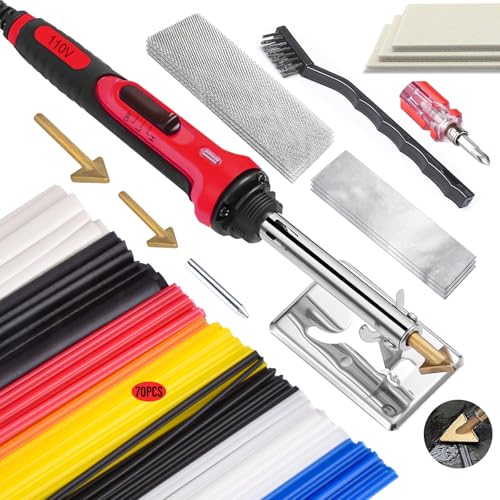
- Low and high temperature modes
- Three tips for detailed surface work
- Ceramic heating chip and safety stand
Best For: Precise hobby repairs across varied plastic surfaces
Highest-Power Repair Kit

- 220W output with overheat protection
- 1,002 staples plus 100 plastic rods
- LED headlamp and dual repair methods
Best For: Broad automotive and household plastic repairs
Best Adjustable-Temperature Pick
GNI 150W Digital Plastic Welder

- 150W rapid-heating design
- LCD temperature control from 200°C to 600°C
- 106 rods and multi-purpose accessories included
Best For: DIY users needing precise heat control for varied repairs
Best Hot-Stapler Value
SONNLER 2-in-1 Plastic Repair Kit

- 100W ceramic heating element
- Heats to 400°C in about 2–3 seconds
- Includes 900 hot staples and repair accessories
Best For: Crack reinforcement on bumpers and plastic parts
Best Certified Deluxe Kit
JOUNJIP UL-Certified Plastic Welder

- UL-certified 80W plastic welding iron
- Boot and triangle tips for different repairs
- Includes rods, mesh, tape, and maintenance tools
Best For: Automotive, recreational, and household thermoplastic repairs
Best Hot-Staple Pick

- 200 assorted hot staples included
- Built-in LED for low-light repairs
- Includes pliers, cutters, and overheating protection
Best For: DIY automotive and household crack repairs
Best Versatile Kit

- Three adjustable temperature settings
- Includes seven plastic rod types
- Functions as a plastic welder and soldering iron
Best For: Multi-material DIY repair and soldering projects
Best Cordless Option
Portable Hot-Staple Welding Gun
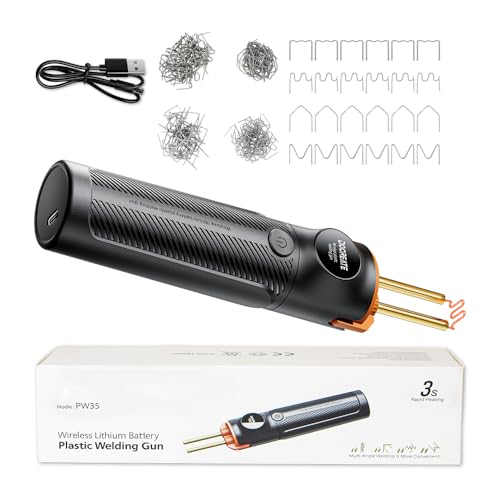
- 4000mAh cordless battery design
- Heats in about three seconds
- Includes 400 assorted hot staples
Best For: Portable bumper repairs and outlet-free DIY work
Versatile Starter Pick – ATOLS Plastic Welder Kit
For hobbyists comparing plastic welders for hobbyists, the ATOLS kit is a practical hot-stapling option for reinforcing cracked plastic. It includes six staple styles, rapid 1–2-second heating, a front light, pliers, and a carry case.
Best For: DIY repairs on bumpers, dashboards, light holders, radiators, spoilers, handles, and other plastic parts.
Pros:
- Includes 1,000 stainless-steel staples in six shapes and sizes.
- Heats staples quickly and includes a front operating light.
- Rubberized ergonomic handle and portable case support comfortable use.
- Wavy staples are designed to improve load resistance after repair.
Cons:
- This is a corded AC tool, so it requires access to a suitable outlet.
- The supplied notes emphasize staple repairs rather than a broader rod-welding setup.
Choose this model if your hobby projects mainly involve crack reinforcement with hot staples and you want a generous assortment ready to use.
Most Versatile 2-in-1 – Allturn Plastic Welder
The Allturn is a strong option for hobbyists who want more than staple reinforcement. This 100W plastic welder combines hot-staple repair with hot cutting and smoothing accessories, while its 800 staples and 38 welding rods cover a range of DIY projects.
Best For: Hobbyists repairing thermoplastics while also needing hot cutting, smoothing, and rod-welding accessories.
Pros:
- Includes an M8 hot cutting tip and two M6 smoothing tips.
- Provides 800 staples in four patterns plus 38 plastic welding rods.
- Staples reach their stated maximum temperature in 1–2 seconds.
- Internal overheating protection and a UL-certified power cord add useful safeguards.
Cons:
- The cutting and smoothing tips should not be used continuously for more than five minutes at a time.
- At 100W, it has lower listed wattage than the 150W and 220W alternatives.
Its broader accessory set makes it a flexible choice for makers who expect to switch between reinforcement, smoothing, cutting, and basic plastic fabrication.
Best Temperature Control – 150W 3-in-1 Plastic Welder
Among plastic welders for hobbyists, this 150W kit stands out for adjustable heat and a pen-shaped design. Its low and high settings are intended for more controlled work, while three interchangeable tips address corners, curved surfaces, and larger gaps.
Best For: Hobbyists who value temperature adjustment, detailed surface work, and a compact repair tool.
Pros:
- Uses low-temperature mode for precise work and high-temperature mode for tougher plastics.
- Advanced ceramic heating chip reaches about 1,112°F in 15–20 seconds.
- Three soldering tips support corners, curves, and larger gaps.
- Includes rods, wire mesh, foil tape, sandpaper, cleaning tools, and a safety stand.
Cons:
- The supplied notes do not specify the power source or voltage.
- Its compact mini format may be less suited to extended heavy-duty repairs.
This is a thoughtful pick for detail-oriented users who want a more controlled approach than a single-temperature staple gun provides.
Highest-Power Repair Kit – Upgraded 220W Plastic Welder
This 220W kit is aimed at hobbyists who want both hot-staple reinforcement and plastic-rod repairs in one corded tool. It combines rapid heating, overheat protection, 1,000 hot staples, and rods intended for several common plastic types.
Best For: Larger automotive, recreational, and household plastic repairs requiring both staples and welding rods.
Pros:
- 220W output is designed for rapid heating and higher current.
- Includes 1,002 hot staples across six shapes and sizes.
- Supplies 100 plastic rods, stainless-steel mesh, foil, sponges, and smoothing tips.
- Non-slip handle, LED headlamp, and overheat protection support easier operation.
Cons:
- Its 110V corded design limits use to a compatible outlet.
- The higher-power format may be more than needed for small, delicate hobby repairs.
Consider this model when repair versatility and a large supply of consumables matter more than having the smallest or simplest tool.
Best Adjustable-Temperature Pick – GNI 150W Digital Plastic Welder
For hobbyists who want precise control, this 150W model stands out among plastic welders for hobbyists with rapid heating, an LCD temperature display, and a broad 200°C–600°C adjustment range. Its kit includes welding rods, tips, mesh, sanding supplies, and basic tools for starting household, automotive, and craft repairs.
Best For: DIY users who need adjustable heat for varied plastic repairs and occasional electronics or soldering work.
Pros:
- Reaches working temperature in about 15 seconds.
- LCD display, adjustable temperature, and temperature-locking function improve control.
- Includes 106 welding rods, four tips, mesh, sandpaper, tape, and maintenance tools.
- UL-certified construction includes ventilation holes and an ergonomic, non-slip handle.
Cons:
- The broad accessory assortment may be more than beginners need for simple repairs.
- Its 150W design and high maximum temperature call for careful handling.
The GNI is the most feature-rich option here for hobbyists who value temperature control and an all-in-one setup. It is especially practical when projects range from bumper and kayak repairs to smaller soldering tasks.
Best Hot-Stapler Value – SONNLER 2-in-1 Plastic Repair Kit
This 100W kit combines plastic welding with hot-staple reinforcement, making it a practical choice among plastic welders for hobbyists repairing cracks and breaks. It heats to 400°C/752°F in roughly 2–3 seconds and includes a large supply of staples plus tools for automotive and household projects.
Best For: Hobbyists focused on reinforcing cracked bumpers, plastic panels, and other broken plastic parts with hot staples.
Pros:
- Heats quickly, reaching approximately 400°C in 2–3 seconds.
- Includes 900 staples along with rods, mesh, abrasive paper, and aluminum tape.
- Front indicator light supports more convenient operation.
- Rubber or plastic handle and portable design suit home repairs.
Cons:
- The 400°C upper temperature is less adjustable than the digital model’s range.
- The kit is geared toward staple repairs rather than precision temperature-controlled welding.
- Its listed weight is about 2.05 kg, making it less lightweight than some hobby tools.
If your priority is fast crack reinforcement rather than fine heat adjustment, the SONNLER offers a generous staple supply and a straightforward 2-in-1 format. It is a sensible fit for repeated bumper and plastic-part repairs.
Best Certified Deluxe Kit – JOUNJIP UL-Certified Plastic Welder
The JOUNJIP Deluxe kit is a straightforward option for plastic welders for hobbyists who want a UL-certified tool with targeted accessories for automotive and recreational repairs. Its 80W iron works with multiple tip styles and includes rods, reinforcing mesh, tape, sandpaper, and a stand.
Best For: DIY repairs on bumpers, headlight tabs, kayaks, containers, outdoor furniture, and other thermoplastic items.
Pros:
- UL-certified welder and factory provide an added safety credential.
- Includes boot and triangle tips for different repair tasks.
- Comes with PP rods, PolyPlaz rods, stainless steel reinforcing mesh, tape, and cleaning tools.
- 80W professional-grade iron heats to a listed maximum of 525°F.
Cons:
- It has lower listed wattage than the 100W and 150W alternatives.
- No digital temperature display or adjustment range is specified.
- The kit includes fewer welding rods than the GNI and fewer staples than the SONNLER.
This deluxe kit favors focused plastic repair over extensive temperature controls or hot-staple capacity. Its UL certification, specialized tips, and reinforcement materials make it a solid choice for routine automotive and outdoor-equipment fixes.
Best Hot-Staple Pick – WEP 960-V Plastic Welder Kit
For hobbyists who want a straightforward option among plastic welders for hobbyists, the WEP 960-V uses heated staples to reinforce cracks in ABS plastic. Its included pliers, cutters, staple assortment, and built-in LED make it well suited to basic automotive and household repairs.
Best For: DIY bumper, dashboard, gas tank, motorcycle, and household plastic repairs where hot-staple reinforcement is appropriate.
Pros:
- Includes 200 staples in four shapes for different crack types.
- Built-in LED helps illuminate the weld point in low-light areas.
- Overheating protection and a 1-year USA technical-support program are included.
- Comes with pliers and cutters for handling and trimming staples.
Cons:
- Requires a 110–127V USA power outlet and is not suitable for 220V sockets.
- Hot-staple repair can leave excess staple material that must be trimmed.
- Plastic welding produces fumes, so appropriate respiratory protection is advised.
This is a practical choice if you prefer a dedicated hot-stapler design over melting plastic rods. The LED and included accessories add convenience, while the corded 110V format makes it better for a workshop or garage than remote repairs.
Best Versatile Kit – 100W 2-in-1 Plastic Welder
This 100W model stands out among plastic welders for hobbyists who want to melt repair rods and handle light soldering tasks with one tool. Three temperature settings, interchangeable tips, and rods covering several plastic types give it a broad DIY focus.
Best For: Hobbyists repairing car bumpers, dashboards, kayaks, and assorted plastic parts with rod-based welding or soldering work.
Pros:
- 100W heating system reaches working temperature quickly.
- Three adjustable temperature settings provide control for different projects.
- Includes rods for ABS, PP, PE, TPE, PC, PUR, and PA plastics.
- 2-in-1 design includes plastic-welding and soldering tips.
Cons:
- It is corded, so use is tied to access to an outlet.
- Users must change and secure tips with the locking screws before switching tasks.
- The manufacturer notes that a small amount of smoke may appear during the first use.
Choose this kit if flexibility matters more than the simplicity of a hot-staple gun. Its assortment of rods and tips supports varied repairs, although the extra setup and temperature selection may require a little more hands-on practice.
Best Cordless Option – Portable Hot-Staple Welding Gun
For hobbyists who need mobility, this cordless model offers a convenient alternative among plastic welders for hobbyists. Its 4000mAh lithium-ion battery, three-second heat-up time, adjustable welding angles, and 400 included staples support portable bumper and DIY repairs.
Best For: On-the-go bumper repairs and projects in locations where a power outlet is inconvenient or unavailable.
Pros:
- Cordless battery-powered design supports portable use.
- Heats in approximately three seconds for quick repairs.
- Includes 400 staples in M, wave, arch, and U shapes.
- Adjustable welding angles help reach awkward repair areas.
Cons:
- Uses hot staples rather than included plastic welding rods.
- Operation depends on the rechargeable battery and included USB charging cable.
- The notes do not specify a charging time or operating runtime.
This is the most convenient pick for repairs away from the bench. The large staple supply and flexible angles are useful for repeated crack repairs, while the cordless format avoids the outlet limitations of the two corded alternatives.
How We Picked These Plastic Welders for Hobbyists
We focused on kits suited to home workshops, garage repairs, crafts, and automotive plastic work rather than industrial equipment. Our comparison considered heating power, temperature adjustment, included staple and welding-rod supplies, tip variety, handling, and the practical value of each package. We also looked for meaningful differences between corded and cordless designs, hot-staple tools, and kits that combine welding with cutting or soldering functions.
Because product bundles and specifications can change, verify the latest wattage, voltage, accessories, and safety certifications before ordering. A larger accessory count is useful only when the kit includes staples or rods compatible with the materials and repairs you expect to handle.
Quick Comparison
Lower-wattage models with three-speed controls can be a sensible choice for light household projects and beginners. Kits rated around 150W offer a useful middle ground for repeated repairs, while 220W models generally favor faster heating and heavier-duty work. Hot-stapler packages are particularly practical for cracked bumpers and panels because they reinforce a split instead of relying only on melted surface plastic.
Digital temperature displays can make settings easier to repeat, whereas simple power levels keep operation straightforward. Cordless kits provide mobility for outdoor or vehicle-side repairs, but corded models are usually better for longer sessions because they do not depend on battery charge.
Key Buying Factors for Plastic Welders for Hobbyists
Power and Temperature Control
Choose enough output for your typical material thickness, but avoid assuming that the highest wattage is automatically best. Adjustable heat helps prevent scorching, excess melting, and weak joints, especially when working with different plastic types.
Staple and Tip Selection
Look for a broad assortment of hot staples if you repair cracks, corners, or long splits. Welding rods and interchangeable tips add flexibility for filling gaps, joining edges, smoothing surfaces, or cutting plastic. Confirm replacement staple availability before buying a proprietary kit.
Controls, Visibility, and Comfort
LED work lights, digital readouts, ergonomic grips, and quick heating can improve control. A stable cord, accessible controls, and a manageable handle matter during detailed repairs more than a large accessory count.
Safety and Workspace Needs
Use ventilation, eye protection, and heat-resistant surfaces. Check voltage compatibility and prefer clearly documented safety features, especially for kits used regularly. Keep hot staples, tips, and melted plastic away from children and flammable materials.
Who Should Buy Which Plastic Welders for Hobbyists?
Choose a basic 100W or three-speed kit for occasional household repairs, crafts, and first-time use. Choose a 150W adjustable model if you want a versatile everyday tool with more control. Choose a 220W kit for frequent repairs or thicker automotive components where faster heating is valuable. Choose a hot-stapler-focused kit for cracked bumpers, tabs, brackets, and panels. Choose a cordless model when portability is more important than unlimited runtime, such as roadside or outdoor repairs.