The best portable deep cycle batteries deliver dependable power for RVs, boats, fish finders, solar systems, mobility devices, and emergency backup. The right choice depends on more than amp-hour capacity: battery chemistry, weight, charging requirements, terminals, and safety features all matter.
We’ve selected 10 lithium and AGM options across several capacities and price ranges, making it easier to match a battery to your runtime needs, available space, and charging equipment.
Best 10 Portable Deep Cycle Batteries Picks for 2026
Best Compact Lithium Pick
ECO-WORTHY 12V 20Ah LiFePO4 Battery
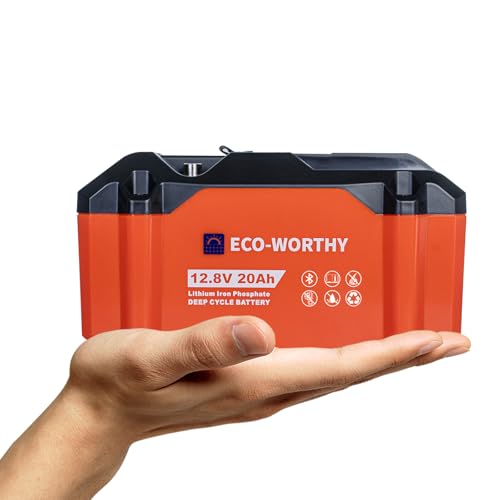
- Lightweight 5.4-pound portable design
- Bluetooth 5.1 monitoring and 20A BMS
- Rated for 4,000+ deep cycles
Best For: Camping, fishing, fishfinders, and small electronics
Best High-Capacity AGM

- Large 100Ah capacity
- Sealed, low-maintenance AGM design
- Supports appliances and RV power systems
Best For: RVs, cabins, solar setups, and backup power
Best Marine AGM for Small Boats

- Designed for trolling motors and marine electronics
- Sealed AGM construction
- Compact fit for kayaks and small boats
Best For: Small watercraft, fishing, and trolling motors
Lightweight Lithium Pick

- 1.2kg battery with 128Wh capacity
- 2000+ claimed cycles and built-in BMS
- Designed for small 12V and backup applications
Best For: Fish finders, lighting, routers, small UPS units, and camping
Mobility Power Choice
12V 35Ah AGM Deep Cycle Battery

- 35Ah sealed AGM construction
- Maintenance-free and spill-proof design
- Made for mobility equipment and compatible 12V devices
Best For: Wheelchairs, scooters, trolling motors, and compatible RV applications
High-Capacity RV Option

- 100Ah capacity for RV and off-grid energy storage
- 100A BMS with temperature-related protections
- Expandable to 4S4P configurations
Best For: RV house power, marine systems, solar storage, and off-grid use
Compact AGM Value

- Compact 20Ah AGM form factor
- Maintenance-free and leak-proof
- Up to 600 deep-cycle cycles
Best For: Small UPS, solar, standby, and mobility applications
Long-Life Lithium Pick

- 6000+ cycles at 80% DOD
- Lightweight 5-pound design
- 20A BMS and parallel expansion
Best For: Portable solar, RV, marine, and backup storage
High-Capacity AGM Workhorse

- 40Ah capacity for extended runtime
- 400A five-second discharge current
- Maintenance-free AGM construction
Best For: Mobility devices and light electric vehicles
Best Compact Lithium Pick – ECO-WORTHY 12V 20Ah LiFePO4 Battery
For shoppers comparing portable deep cycle batteries, this ECO-WORTHY model stands out as a compact LiFePO4 option with Bluetooth monitoring, built-in protection, and a convenient carrying design. Its 20Ah capacity suits smaller electronics and lightweight outdoor setups.
Best For: Camping, fishing, kayaks, amateur radio equipment, fishfinders, and small emergency-power applications.
Pros:
- Compact 5.4-pound design with an ergonomic grip.
- Bluetooth 5.1 provides phone-based voltage, current, and capacity monitoring.
- Built-in 20A BMS protects against overcharge, deep discharge, overload, overheating, and short circuits.
- Rated for more than 4,000 deep cycles, with product notes citing 5,000+ cycles and a lifespan exceeding 10 years.
Cons:
- The 5.5 x 2.5mm DC output should remain within a 5A limit.
- The DC port adapter wiring is not included.
- Its 20Ah capacity is intended for smaller loads rather than high-demand appliances.
This is a practical choice when portability, monitoring, and long cycle life matter more than maximum capacity. The low-temperature charging cutoff also adds protection for cold-weather use.
Best High-Capacity AGM – Renogy 12V 100Ah AGM Battery
Among portable deep cycle batteries, the Renogy 100Ah AGM model is designed for users who need substantial reserve capacity and stable power from a sealed lead-acid battery. It can support common appliances and larger off-grid or RV setups.
Best For: RVs, cabins, solar systems, backup power, and users who need to run appliances such as refrigerators, CPAP machines, or coffee makers.
Pros:
- Large 100Ah capacity for extended-use applications.
- Sealed AGM construction offers a low-maintenance design.
- Supports series connections without limitation and parallel connections up to 4P.
- Specified 1100A maximum discharge current for five seconds and less than 3% monthly self-discharge at 77°F.
Cons:
- At 63.9 pounds, it is substantially heavier than the lithium options in this roundup.
- Lead-acid chemistry generally offers fewer cycles than the listed LiFePO4 batteries.
- The warranty is a two-year prorated material and workmanship warranty.
The Renogy is a capacity-focused AGM choice rather than an ultralight battery. Its sealed construction, temperature range, and appliance support make it a strong fit for stationary or vehicle-based power systems where weight is manageable.
Best Portable Monitoring Features – 12V 22Ah LiFePO4 Battery
This 22Ah LiFePO4 battery is a useful option for buyers seeking portable deep cycle batteries with an onboard display. Its compact form, LCD voltmeter, and 30A BMS make it suitable for mobile electronics and modest backup-power needs.
Best For: Camping, ham radio, fishfinders, portable speakers, lights, UPS systems, and RV electronics.
Pros:
- Compact 5.5-pound body can be positioned vertically, flat, or sideways.
- Built-in LCD voltmeter offers at-a-glance voltage information.
- 30A BMS protects against overcharge, over-discharge, over-current, and short circuits.
- Supports expansion up to 4P4S, with 4,000+ stated cycles.
Cons:
- It must be charged with a LiFePO4 charger rated at 14.6V, not a lead-acid charger.
- The manufacturer recommends disconnecting it when not in use to prevent power drain.
- It should not be used as a starter battery for cars, ATVs, motorcycles, or other large vehicles.
Choose this model when a built-in display and flexible mounting are priorities. Its moderate capacity is best matched with electronics and accessories rather than large household appliances.
Best Marine AGM for Small Boats – Newport 12V 50Ah AGM Battery
For marine-focused shoppers comparing portable deep cycle batteries, this Newport 50Ah AGM battery is built around steady 12V power for trolling motors and boat electronics. Its sealed construction and manageable format suit smaller watercraft.
Best For: Trolling motors, kayaks, inflatable boats, jon boats, and small-boat electronics.
Pros:
- 50Ah capacity provides sustained power for compatible 12V marine equipment.
- Sealed AGM lead-acid construction is designed for low-maintenance use.
- Compact format is suited to kayaks, inflatable boats, jon boats, and other small craft.
- Newport provides USA-based customer support and a one-year limited warranty.
Cons:
- At 32 pounds, it is heavier than the comparable lithium batteries.
- Its 50Ah capacity is lower than the 100Ah Renogy AGM battery.
- It is optimized for 12V marine applications rather than vehicle starting.
This Newport battery makes the most sense for anglers and boaters who want straightforward sealed AGM power for a trolling motor. Confirm the motor and electronics’ power requirements before choosing the 50Ah capacity.
Lightweight Lithium Pick – Compact 12V LiFePO4 Battery
For shoppers comparing portable deep cycle batteries, the NERMAK 12V 10Ah LiFePO4 model is a compact option for smaller backup and outdoor power setups. It delivers 128Wh, weighs about 1.2kg, and includes built-in protection for common charging and discharge issues.
Best For: Fish finders, 12V routers, emergency lighting, small UPS systems under 200W, ride-on toys, camping, and backup power.
Pros:
- Lightweight design with 2000+ claimed recharge cycles.
- Built-in BMS helps protect against overcharge, over-discharge, over-current, and short circuits.
- Can be connected with up to four identical batteries in series or parallel.
- Supports heavy-duty output up to 10A continuous, with 6A quick charging noted by the manufacturer.
Cons:
- Its 10Ah capacity is intended for smaller loads rather than large RV or marine systems.
- Not suitable as a motorcycle starter battery.
- Requires a LiFePO4-compatible charger; some SLA chargers may not fully charge it.
This battery makes sense when portability and long cycle life matter more than maximum capacity. Its compact size is convenient, but buyers should match the 10A output and 128Wh capacity to their device requirements.
Mobility Power Choice – 12V 35Ah AGM Deep Cycle Battery
Among portable deep cycle batteries, the Interstate DCM0035 is a maintenance-free AGM option built for mobility equipment and other 12V applications. Its 35Ah capacity and sealed, spill-proof construction make it practical for replacement use where compatibility and dependable deep-discharge performance are priorities.
Best For: Electric wheelchairs, mobility scooters, trolling motors, RVs, and compatible devices using a Group U1 or GT9L battery with insert terminals.
Pros:
- 35Ah sealed lead-acid AGM design is rechargeable, maintenance-free, and spill-proof.
- Developed for deep-discharge use in wheelchairs, scooters, and similar equipment.
- Includes insert-terminal hardware and fits the listed 12V Group U1 or GT9L format.
- Backed by a 12-month performance warranty.
Cons:
- At 10.4kg, it is substantially heavier than the compact lithium option in this roundup.
- Compatibility depends on the device’s dimensions and insert-terminal configuration.
- Not intended as a golf-cart battery replacement.
The DCM0035 is a sensible replacement battery for supported mobility equipment and other compatible 12V systems. Confirm the terminal style, size, and device requirements before buying, especially if portability is a major concern.
High-Capacity RV Option – 12V 100Ah LiFePO4 Battery
For larger portable deep cycle batteries, this 12.8V 100Ah SUPER EMPOWER LiFePO4 model provides a substantial 1,280Wh-class energy platform for RV, marine, solar, and off-grid systems. Its Group 24 format, integrated 100A BMS, and expandable configuration support make it suited to demanding house-power applications.
Best For: RV house systems, boats, trolling motors, solar storage, off-grid setups, and auxiliary power applications requiring higher capacity.
Pros:
- 100Ah LiFePO4 capacity with Grade A cells for deep-cycle energy storage.
- 100A BMS provides protection against overcharge, over-discharge, overcurrent, short circuits, and temperature issues.
- Group 24 dimensions and M8 terminals are designed as a drop-in replacement for many lead-acid, AGM, or SLA setups.
- Supports up to 4 batteries in series and 4 in parallel, with a stated 5-year warranty.
Cons:
- At 21.6lb, it is less portable than smaller-capacity batteries.
- Not designed for engine starting or cranking.
- Requires a suitable LiFePO4 charging profile; charging pauses below 32°F.
This is the strongest fit for buyers who need extended runtime and system expandability rather than minimum weight. Check available space, terminal compatibility, and charger settings, particularly for cold-weather installations.
Compact AGM Value – UPLUS LP12-20 12V 20Ah
The UPLUS LP12-20 is a compact AGM option for portable deep cycle batteries applications where a sealed, maintenance-free 12V power source is needed. Its 20Ah capacity, standard F3 nut-and-bolt terminals, and relatively light 12.46-pound build make fit and installation straightforward, but confirm the compartment dimensions before ordering.
Best For: UPS systems, emergency lighting, alarm systems, small solar setups, portable power stations, scooters, wheelchairs, and other standby or light-duty applications.
Pros:
- Compact 7.14 x 3.01 x 6.59-inch form factor.
- Maintenance-free, leak-proof AGM construction.
- Designed for deep-cycle use with up to 600 charge and discharge cycles.
- Includes a 15-month warranty and 60-day refund window.
Cons:
- Lower 20Ah capacity than larger deep-cycle batteries.
- Lead-acid construction is heavier than comparable lithium options.
- Compatibility depends on matching the compartment and terminal type.
This is a practical replacement-style battery for compact backup and light electric equipment. Its sealed AGM design reduces upkeep, while the modest capacity keeps it best suited to smaller loads.
Long-Life Lithium Pick – 12V 20Ah LiFePO4 Battery
This 12V 20Ah LiFePO4 battery is a lightweight choice among portable deep cycle batteries, delivering 256Wh in a roughly 5-pound package. Its built-in 20A BMS, IP65 rating, and expandable parallel design suit portable energy storage, though it is not intended for starting batteries, golf carts, or jacks.
Best For: Fish finders, solar systems, RVs, marine equipment, home backup, lighting, UPS setups, and other deep-cycle energy-storage applications.
Pros:
- Grade-A LiFePO4 cells rated for 6000+ cycles at 80% depth of discharge.
- About 5 pounds, providing substantial weight savings over lead-acid batteries.
- 20A BMS protects against overcharge, over-discharge, short circuits, and overheating.
- Up to four batteries can be connected in parallel for an 80Ah system.
Cons:
- Not designed for engine starting, golf carts, or jacks.
- Only a 1-year replacement warranty is specified.
- Requires compatibility with bolt terminals and suitable charging equipment.
Choose this model when low weight, long cycle life, and expandable storage matter more than starting power. Its BMS and wide operating range add practical protection for off-grid and backup uses.
High-Capacity AGM Workhorse – VEVOR 12V 40Ah AGM Battery
The VEVOR 12V 40Ah AGM battery offers twice the stated capacity of the smaller 20Ah models, making it a useful option when portable deep cycle batteries need longer runtime. It weighs 24.7 pounds and measures 7.8 x 6.5 x 6.7 inches, so check both available space and lifting requirements before purchase.
Best For: Mobility scooters, electric wheelchairs, go-karts, e-bikes, small motorcycles, bicycles, and other light electric vehicles.
Pros:
- 40Ah capacity can extend runtime for compatible light-duty devices.
- Sealed AGM design requires no liquid top-ups or routine maintenance.
- Provides up to 400A of discharge current for five seconds.
- Rechargeable and designed for multiple deep-cycle applications.
Cons:
- At 24.7 pounds, it is substantially heavier than the LiFePO4 option.
- Professional charging equipment is recommended for safe use.
- High self-discharge is listed among the product specifications.
This VEVOR battery is best when capacity and short-duration discharge performance take priority over portability in the strictest sense. Its AGM construction limits maintenance, but its larger size and weight make device compatibility especially important.
How We Picked the Best Portable Deep Cycle Batteries
We compared these Portable Deep Cycle Batteries by usable capacity, battery chemistry, portability, expected cycle life, protection features, terminal design, and intended application. Lithium iron phosphate (LiFePO4) models generally offer lower weight, deeper usable discharge, and longer cycle life, while AGM batteries provide a familiar, sealed lead-acid design that works with many existing chargers and systems.
We also considered the range of capacities represented, from compact 10Ah and 20Ah batteries for small electronics to 100Ah models for RV, marine, and solar applications. Always verify current specifications, included accessories, and compatibility before purchasing.
Quick Comparison
- Best for lightweight portability: Compact LiFePO4 batteries in the 10Ah–22Ah range.
- Best for extended runtime: 100Ah AGM or LiFePO4 batteries.
- Best for marine use: Sealed AGM or LiFePO4 batteries with suitable terminal connections.
- Best for small backup loads: 20Ah–40Ah batteries.
- Best for long-term cycling: LiFePO4 models with an integrated battery management system.
Key Buying Factors for Portable Deep Cycle Batteries
Capacity and Runtime
Amp-hours indicate how much energy a battery can store, but actual runtime depends on the device’s wattage, inverter losses, temperature, and allowable depth of discharge. A 20Ah battery suits modest loads such as fish finders, lights, and small electronics; 100Ah models are better for larger RV, solar, or trolling-motor demands.
Battery Chemistry and Weight
AGM batteries are sealed, durable, and often simpler to integrate into older systems, but they are heavier and typically should not be discharged as deeply. LiFePO4 batteries cost more initially but usually weigh less, provide more usable energy, and support substantially more cycles.
Charging and Compatibility
Check whether your charger, solar controller, alternator, or trolling-motor system supports the selected chemistry. Lithium batteries may require a LiFePO4-compatible charging profile. Also confirm voltage, terminal style, physical dimensions, and wiring requirements.
Safety and Durability
A built-in battery management system can help protect lithium batteries against overcharge, over-discharge, excess current, and temperature issues. For AGM models, look for sealed construction and appropriate ventilation and installation practices. Never exceed the manufacturer’s discharge or charging limits.
Who Should Buy Which Portable Deep Cycle Batteries?
Choose a compact LiFePO4 battery if you prioritize low weight and easy transport for portable electronics, camping, fish finders, or small solar systems. Choose a 20Ah–40Ah AGM battery if you want an economical sealed battery for backup equipment, mobility devices, or moderate marine loads.
Choose a 50Ah AGM battery for a practical middle ground in kayaks, small boats, and trolling-motor setups. Choose a 100Ah battery when extended runtime is the priority for an RV, larger trolling motor, solar bank, or emergency power system. LiFePO4 is the better fit for frequent cycling and weight-sensitive installations, while AGM remains attractive for lower upfront cost and broad system compatibility.