Finding dependable power on a budget is easier when you compare chemistry, capacity, size, and real-world use together. The best deep cycle batteries under $300 can support RV appliances, trolling motors, marine electronics, solar storage, and emergency backup systems.
This roundup includes lithium iron phosphate and AGM options in several common group sizes, helping you match battery performance, runtime, charging needs, and installation constraints to your setup.
Best 10 Deep Cycle Batteries Under 300 Picks for 2026
Best Lightweight Lithium Upgrade
12V 100Ah LiFePO4 Group 24 Battery

- 21.6-pound Group 24 form factor
- 100A BMS with temperature protection
- Expandable up to 4S4P
Best For: RV, marine, solar, and off-grid energy storage
Best Dual-Purpose Marine AGM
Interstate 12V 100Ah Group 31 AGM Battery
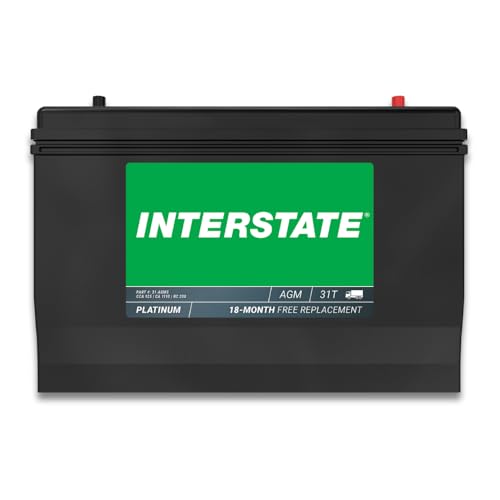
- 925 CCA and 1110 CA starting output
- Thick plates for repeated deep cycling
- Designed for marine and RV accessories
Best For: Boats needing starting and accessory power
Best Maintenance-Free AGM Capacity
UPLUS 12V 100Ah Group 27 Battery

- 80% recommended depth of discharge
- Maintenance-free AGM construction
- Up to 45A continuous discharge
Best For: RV, marine, solar backup, and leisure loads
Compact Marine AGM Pick
Newport 12V 50Ah Deep Cycle Battery

- 50Ah capacity for 12V marine electronics
- Sealed AGM construction
- Compact 32-pound design
Best For: Small boats, kayaks, and trolling motors
Long-Life Lithium Upgrade
MARSENERGY 12V 100Ah LiFePO4 Battery

- 100Ah capacity at just 21 pounds
- Up to 4,500 full-depth cycles claimed
- 100A BMS and five-year service
Best For: Marine, RV, solar, and trolling-motor systems
Dual-Purpose Marine Power
Mighty Max 12V 100Ah AGM Battery
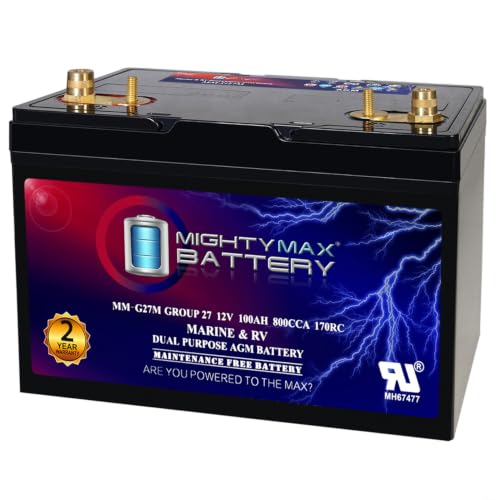
- 100Ah deep-cycle capacity
- 800 CCA and 850 MCA starting output
- Maintenance-free, spill-proof AGM design
Best For: Boats needing starting and accessory power
High-Capacity Pick
ECIENWELL 12V 300Ah LiFePO4 Battery

- 300Ah capacity with 3,840Wh of energy
- 200A BMS and IP65 water resistance
- Expandable up to 48V and 61.44kWh
Best For: High-demand RV, marine, solar, and off-grid systems
Lightweight Group 31 Choice
12V 100Ah LiFePO4 Deep Cycle Battery

- 24-pound Group 31 replacement design
- 100A Smart BMS with low-temperature cutoff
- Supports up to 51.2V and 400Ah configurations
Best For: RV, marine, golf cart, and compact solar setups
Smart Protection Pick
12V 100Ah Group 31 LiFePO4 Battery

- 1,280Wh capacity in a 24-pound package
- 100A Smart BMS with low-temperature protection
- 15,000+ claimed cycles at 60% depth of discharge
Best For: Group 31 RV, marine, solar, and off-grid upgrades
Best Lightweight Lithium Upgrade – 12V 100Ah LiFePO4 Group 24 Battery
If you want deep cycle batteries under 300 for an RV, boat, trolling motor, or off-grid setup, this 12.8V 100Ah LiFePO4 model offers a lightweight alternative to lead-acid. Its Group 24 form factor, integrated 100A BMS, and expandable configuration make it practical for energy storage applications.
Best For: RV house power, marine energy storage, trolling motors, solar systems, and off-grid use where a lighter battery is preferred.
Pros:
- Lightweight 21.6-pound Group 24 design with M8 terminals.
- Built-in 100A BMS helps protect against overcharge, over-discharge, overcurrent, short circuits, and temperature issues.
- Supports up to 4 batteries in series and 4 in parallel for larger systems.
- Includes low-temperature charging and discharge protection.
Cons:
- Designed for energy storage, not engine starting or cranking.
- Requires a compatible LiFePO4 charging profile; charging pauses below 32°F.
This is a strong fit when weight, usable deep-cycle storage, and system expandability matter more than starting power. Confirm your charger and battery-box dimensions before buying.
Best Dual-Purpose Marine AGM – Interstate 12V 100Ah Group 31 AGM Battery
Interstate Batteries Marine/RV Battery 12V 100Ah 925CCA 1110CA Group 31 AGM (31-AGM5)
Check Price On AmazonAmong deep cycle batteries under 300, this Interstate Group 31 AGM stands out for buyers who need both sustained accessory power and strong starting performance. It is built for marine and RV use, with thick plates designed for repeated discharge and recharging.
Best For: Boats and marine setups needing power for motors, trolling motors, appliances, audio systems, finders, and other accessories.
Pros:
- Combines deep-cycle capability with 925 CCA and 1110 CA starting power.
- Thick-plate AGM construction supports repeated discharge and recharging.
- Designed to power a wide range of marine accessories.
- Maintenance-free AGM battery construction.
Cons:
- At 60 pounds, it is substantially heavier than the listed lithium options.
- It is specifically noted as not intended to replace automotive or mobility-device batteries.
Choose this model if your boat needs one battery to handle both cranking and extended accessory loads. Its lead-acid construction makes weight a consideration, but the dual-purpose output is useful for marine applications.
Best Long-Life Lithium Value – CHITOLI 12V 100Ah TM LiFePO4 Battery
For shoppers comparing deep cycle batteries under 300, the CHITOLI 12V 100Ah TM LiFePO4 battery emphasizes long cycle life and reduced weight. Its Group 24 format is intended as a drop-in-style upgrade for many lead-acid, AGM, and SLA energy-storage applications.
Best For: RVs, camping, marine systems, trolling motors, solar storage, and home energy systems that need a lightweight replacement battery.
Pros:
- Weighs 22.57 pounds and is described as smaller and lighter than ordinary lead-acid batteries.
- Automotive-grade LiFePO4 cells are rated for 4,000+ cycles at 100% DOD and up to 15,000 cycles at 60% DOD.
- Built-in smart BMS helps protect against overcharging, over-discharging, overcurrent, and short circuits.
- Group 24 sizing supports compatibility with common battery boxes.
Cons:
- Designed for energy storage rather than engine starting.
- Requires charging at the recommended 14.6V profile and is not a direct choice for users seeking a starting battery.
This is an appealing option for buyers prioritizing cycle life and portability. Verify the available clearance, terminal arrangement, and charging setup before replacing a lead-acid battery.
Best Maintenance-Free AGM Capacity – UPLUS 12V 100Ah Group 27 Battery
This UPLUS Group 27 battery is a practical pick among deep cycle batteries under 300 for buyers who prefer maintenance-free AGM construction. It provides 100Ah of capacity, supports up to 80% recommended depth of discharge, and is designed for RV, marine, solar, backup, and off-grid equipment.
Best For: RV appliances, trolling motors, CPAP machines, refrigerators, microwaves, laptops, solar backup, and other 12V leisure loads.
Pros:
- Maintenance-free AGM design requires no water refilling and is described as leak-free.
- Recommended maximum depth of discharge is 80%.
- Can continuously discharge at up to 45A, with a stated 710A maximum discharge current for five seconds.
- Supports operation from -4°F to 131°F and has a monthly self-discharge rate below 3%.
Cons:
- At 60 pounds, it is heavier than the supplied lithium alternatives.
- Charging current is limited to 25A, and it requires an AGM-compatible charger.
- Warranty coverage is two years, shorter than the listed lithium batteries’ five-year warranties.
Consider this battery when familiar AGM charging, broad temperature capability, and maintenance-free use are priorities. Its Group 27 dimensions and 60-pound weight should be checked against your available compartment.
Compact Marine AGM Pick – Newport 12V 50Ah Deep Cycle Battery
If you need deep cycle batteries under 300 for a small boat or trolling motor, this Newport AGM model offers a straightforward 12V, 50Ah setup. Its sealed lead-acid construction is designed for low-maintenance marine use, while the compact form is easier to carry to a kayak, dock, or shoreline.
Best For: Kayaks, inflatable boats, jon boats, small boats, and compatible 12V trolling motors.
Pros:
- 50Ah deep-cycle capacity for steady trolling-motor and marine-electronics power.
- Sealed AGM design provides a low-maintenance, spill-resistant-style battery format.
- Compact, portable design weighs 32 pounds.
- Includes a one-year limited warranty and USA-based customer support.
Cons:
- At 50Ah, it provides less capacity than the 100Ah options in this roundup.
- Lead-acid construction is heavier than the comparable lithium battery.
This is a practical choice when portability and simple marine operation matter more than maximum capacity. Verify that your trolling motor or electronics require a 12V battery and that 50Ah meets your expected runtime.
Long-Life Lithium Upgrade – MARSENERGY 12V 100Ah LiFePO4 Battery
Among deep cycle batteries under 300, the MARSENERGY 12V 100Ah LiFePO4 model stands out for its low weight and extended cycle-life claims. It weighs 21 pounds, fits the BCI Group 24 size, and includes a 100A battery-management system for protection against several abnormal operating conditions.
Best For: Marine applications, trolling motors, RVs, solar systems, and other compatible 12V to 48V setups.
Pros:
- 100Ah capacity in a 21-pound lithium-iron-phosphate battery.
- Designed for up to 4,500 cycles at 100% depth of discharge under stated conditions.
- 100A BMS provides protection for short circuit, over-voltage, and abnormal temperature conditions.
- Includes a five-year manufacturer after-sales service period.
Cons:
- The BMS can stop charging below 32°F and discharging below -4°F.
- Requires activation if the battery enters sleep mode after detecting an abnormal condition.
This is the strongest fit for buyers prioritizing runtime, portability, and long-term cycling. Check your charger for LiFePO4 compatibility and confirm the Group 24 dimensions or available battery-box space before upgrading.
Dual-Purpose Marine Power – Mighty Max 12V 100Ah AGM Battery
For shoppers comparing deep cycle batteries under 300, the Mighty Max MM-G27M combines 100Ah deep-cycle capacity with strong engine-starting output. Its Group 27M AGM design is maintenance-free and spill-proof, making it suited to boats that need both starting power and energy for onboard electronics.
Best For: Boat owners who need one battery for engine starting and extended accessory power.
Pros:
- 100Ah capacity supports deep discharge and accessory use.
- Provides 800 CCA, 850 CA, and 850 MCA for starting performance.
- Maintenance-free AGM construction is designed to handle vibration and marine conditions.
- Rugged ABS housing and a stated two-year limited warranty add practical durability.
Cons:
- At 70.5 pounds, it is substantially heavier than the lithium option.
- Its dual-purpose design may be unnecessary if you only need trolling-motor power.
- Confirm the available compartment space; the listed dimensions are approximately 12.06 by 6.62 by 9.25 inches.
This model makes sense when reliable starting power is as important as deep-cycle operation. Its high weight is the main tradeoff, so confirm your boat’s battery tray, terminal setup, and lifting requirements before purchase.
High-Capacity Pick – ECIENWELL 12V 300Ah LiFePO4 Battery
For shoppers comparing deep cycle batteries under 300, this ECIENWELL model stands out with 300Ah of capacity and 3,840Wh of energy. Its lithium construction keeps weight to 54.45 pounds while the 200A BMS adds protection for demanding marine, RV, solar, and off-grid applications.
Best For: RVs, trolling motors, off-grid systems, and users who need substantial 12V energy capacity.
Pros:
- 300Ah capacity and 3,840Wh energy output provide substantial runtime.
- 4000+ cycles at 100% depth of discharge, with up to 15,000 cycles at 60% depth of discharge.
- 200A BMS protects against overcharge, over-discharge, overload, overheating, and short circuits.
- Supports expansion into systems up to 48V and 61.44kWh.
Cons:
- At 54.45 pounds, it is lighter than comparable lead-acid batteries but still substantial to install.
- Its larger 300Ah capacity may be more than needed for smaller portable setups.
This is a strong capacity-focused option when you want long service life and expansion potential in one 12V battery. The IP65 rating and maintenance-free design add flexibility for indoor and outdoor use.
Lightweight Group 31 Choice – 12V 100Ah LiFePO4 Deep Cycle Battery
Among deep cycle batteries under 300, this 12V 100Ah LiFePO4 battery is a practical Group 31 replacement for RV and marine setups. It weighs 24 pounds, includes a 100A Smart BMS, and offers low-temperature charging protection for more dependable seasonal use.
Best For: Group 31 battery compartments, RV house banks, trolling motors, golf carts, and compact solar systems.
Pros:
- 24-pound design is about 70% lighter than comparable lead-acid batteries.
- Group 31 dimensions are designed as a drop-in replacement for compatible battery boxes.
- Automatic cutoff prevents charging below 32°F, helping protect the cells in cold conditions.
- Supports configurations up to 51.2V and 400Ah.
Cons:
- Its 100Ah capacity provides less stored energy than a 300Ah battery.
- Cold-temperature cutoff means charging below 32°F requires attention to the battery’s operating conditions.
Choose this model when easy handling and a familiar Group 31 footprint matter more than maximum capacity. Its long claimed cycle life, maintenance-free chemistry, and expansion capability make it adaptable for both weekend and recurring energy use.
Smart Protection Pick – 12V 100Ah Group 31 LiFePO4 Battery
This Group 31 battery is a useful choice among deep cycle batteries under 300 when you want a compact 12V power source with built-in monitoring and protection. Its 100Ah capacity, 1,280Wh rating, 100A Smart BMS, and low-temperature cutoff suit RV, marine, solar, and off-grid applications.
Best For: Users upgrading compatible Group 31 compartments for RV, trolling motor, home backup, or solar use.
Pros:
- Built-in 100A Smart BMS protects against overcharge, over-discharge, over-current, and short circuits.
- Automatic low-temperature charging cutoff helps prevent charging-related cell damage below 32°F.
- 24-pound, maintenance-free design is substantially lighter than comparable lead-acid options.
- Can be configured in up to 4S4P arrangements for systems reaching 51.2V and 400Ah.
Cons:
- 100Ah capacity may require multiple batteries for high-demand or extended off-grid loads.
- Charging below 32°F is restricted by the low-temperature protection feature.
This battery balances manageable size with smart protection and system flexibility. It is especially compelling for a straightforward Group 31 replacement where low maintenance, cold-weather safeguards, and future expansion are priorities.
How We Picked the Best Deep Cycle Batteries Under 300
We focused on batteries priced below $300 that offer useful capacity, practical form factors, and features suited to repeated discharge. The selection includes 12V models from 50Ah to 300Ah, with emphasis on RV, marine, trolling motor, camping, golf cart, and solar applications.
We compared battery chemistry, rated capacity, starting capability where applicable, built-in battery management systems, group size, cycle-life claims, charging requirements, and likely ownership demands. Because specifications can vary by seller and production revision, verify the current listing, dimensions, terminals, warranty, and charger compatibility before ordering.
Quick Comparison
| Battery type | Typical strengths | Best suited for |
|---|---|---|
| LiFePO4 lithium | Lower weight, usable capacity, long cycle life | RV, solar, trolling motors, frequent cycling |
| AGM lead-acid | Sealed design, familiar charging, strong surge output | Marine starting, occasional use, replacement installations |
| Dual-purpose AGM | Starting power plus moderate deep-discharge capability | Boats and vehicles needing one battery for both jobs |
Key Buying Factors for Deep Cycle Batteries Under $300
Capacity and Usable Energy
A 100Ah battery is a common middle ground, while a 50Ah model may suit compact kayaks or small electronics. A 300Ah battery provides substantially more stored energy but is heavier, larger, and more demanding to install. Lithium batteries generally provide more usable capacity before voltage drops than similarly rated lead-acid batteries.
Chemistry and Cycle Life
LiFePO4 batteries are usually the better choice for frequent cycling, portable power, and weight-sensitive installations. AGM batteries remain practical when upfront simplicity, high surge current, or compatibility with an existing lead-acid system matters. Do not mix lithium and lead-acid batteries in the same bank without equipment specifically designed for that arrangement.
Fit, Charging, and Protection
Check group size, case dimensions, terminal placement, and cable reach before buying. Lithium models need a compatible charging profile and should include appropriate BMS protections for overcharge, over-discharge, temperature, and short circuit. In cold climates, confirm whether low-temperature charging protection is included. AGM batteries also require a charger profile suited to sealed lead-acid chemistry.
Starting Current and Application Demands
Deep-cycle capacity does not automatically mean strong engine-starting performance. For boats or vehicles, review CCA or MCA ratings if the battery must crank an engine. For trolling motors and inverters, sustained discharge capability, wiring, fuse protection, and the motor’s voltage requirements are more important.
Who Should Buy Which Deep Cycle Batteries Under 300?
- Choose a 100Ah LiFePO4 battery for RVs, solar storage, camping, and trolling motors where low weight and frequent cycling are priorities.
- Choose a Group 31 LiFePO4 model when you need a common larger form factor and more reserve for demanding marine or RV loads.
- Choose AGM for straightforward replacement, sealed lead-acid compatibility, or applications that benefit from strong starting output.
- Choose a 50Ah AGM battery for smaller boats, kayaks, compact electronics, and installations with limited space.
- Choose a 300Ah lithium battery for high-demand golf cart, solar, or off-grid systems, provided the enclosure, charger, cabling, and weight capacity can accommodate it.
Before checkout, confirm the battery’s current price, warranty, dimensions, terminal style, charger requirements, and return policy. Those details often determine whether an otherwise attractive option is truly the right fit.