The right battery can keep essential home devices running when the grid goes down. This roundup compares 10 deep-cycle options across lithium iron phosphate and AGM technologies, with different capacities, form factors, and backup use cases.
Whether you need dependable solar storage, sump-pump protection, or a larger emergency power bank, focus on usable capacity, safety features, recharge performance, and system compatibility—not just the advertised amp-hour rating.
Best 10 Deep Cycle Batteries for Home Backup Picks for 2026
Cold-Weather Smart Pick
12V 300Ah Self-Heating LiFePO4 Battery

- Self-heating charging support below 0°C
- APP monitoring and 200A BMS protection
- Charges by lithium charger, solar, or generator
Best For: Home backup and off-grid users needing cold-weather features and battery monitoring
Proven AGM Choice
Renogy 12V 200Ah Deep Cycle AGM Battery

- Maintenance-free sealed AGM construction
- Below 3% monthly self-discharge at 77°F
- High discharge capability and cold-temperature performance
Best For: Stationary solar, RV, and backup systems favoring traditional AGM technology
High-Capacity Lithium Value
Power Queen 12V 300Ah LiFePO4 Battery

- 3,840Wh energy with 2,560W stated load power
- 200A BMS and Grade-A LiFePO4 cells
- Expandable up to 4P4S for larger systems
Best For: Expandable off-grid, RV, solar, and home backup battery banks
Best High-Capacity Lithium Pick
Renogy 300Ah LiFePO4 Mini Battery
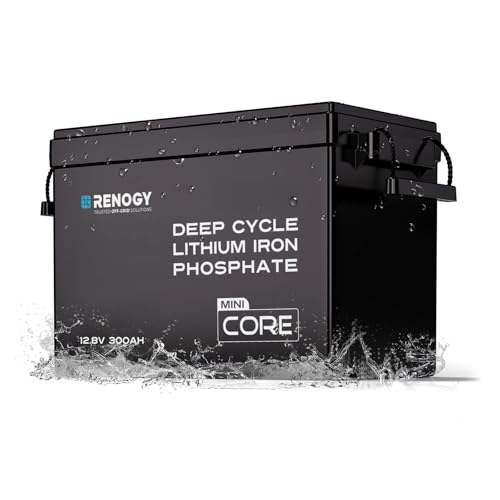
- 3,840Wh real storage capacity
- Compact 55.1-pound lithium design
- Supports up to 4S4P expansion
Best For: High-capacity home backup and off-grid solar systems
Best AGM Value
ExpertPower EXP200 12V 200Ah Battery

- Maintenance-free sealed AGM design
- Works with solar, UPS, and backup systems
- Rugged 132-pound lead-acid construction
Best For: Stationary standby and emergency backup applications
Best Compact Drop-In Lithium Battery

- Group 24 drop-in replacement size
- Lightweight 21.6-pound construction
- Expandable up to 20.48kWh in 4S4P
Best For: Compact backup, RV, marine, and auxiliary power systems
Best with Extra Features

- 110Ah sealed AGM capacity
- Spill-proof, maintenance-free design
- Built for demanding deep-discharge use
Best For: Solar, wind, and mobility-related backup applications
Versatile AGM Standby

- 100Ah sealed AGM storage
- Non-spillable, maintenance-free design
- M8 threaded insert terminals
Best For: UPS, sump-pump, solar, security, and emergency-lighting backup
Cold-Weather Smart Pick – 12V 300Ah Self-Heating LiFePO4 Battery
For shoppers comparing deep cycle batteries for home backup, this 12V 300Ah LiFePO4 model stands out for its self-heating system, app monitoring, and substantial capacity. It can support household backup loads through an inverter and offers charging from a lithium charger, solar power, or a generator.
Best For: Home backup systems, off-grid solar setups, RVs, and users who want battery data visible through an app.
Pros:
- Self-heating activates below 0°C while charging with more than 10A.
- Built-in 200A BMS provides protection against overcharge, over-discharge, overcurrent, short circuits, temperature extremes, and voltage abnormalities.
- APP displays capacity, voltage, current, power, alerts, and temperature.
- Supports charging through a 14.6V lithium charger, solar, or generator.
Cons:
- The self-heating function requires a charger connection and charging current above 10A.
- It is not suitable for golf cart use when batteries are connected in series.
- At approximately 54.7 lb, it may be demanding to install or move.
This is a feature-rich option when cold-weather charging and remote status checks matter. Confirm inverter, charger, and installation compatibility before building a home backup setup.
Proven AGM Choice – Renogy 12V 200Ah Deep Cycle AGM Battery
This Renogy AGM battery is a straightforward choice among deep cycle batteries for home backup, especially for buyers who prefer sealed lead-acid technology. Its 200Ah rating, low self-discharge, and maintenance-free design suit solar, RV, and emergency power applications.
Best For: Stationary backup, solar systems, and RV installations where a sealed, maintenance-free AGM battery is preferred.
Pros:
- Sealed AGM construction and valve-regulated design require no routine water maintenance.
- Self-discharge is rated below 3% per month at 77°F.
- Designed for high discharge currents, up to 10 times the rated battery capacity.
- Provides stable capacity and discharge performance at temperatures below 32°F.
Cons:
- At 127.9 lb, it is considerably heavier than the listed lithium alternatives.
- The manufacturer recommends upright installation; upside-down installation is not allowed.
- Its reference capacity varies by discharge rate, reaching 200Ah at C20.
Choose this model for a familiar, low-maintenance AGM setup rather than minimum weight. Upright mounting and suitable charging equipment are important considerations for a reliable backup installation.
High-Capacity Lithium Value – Power Queen 12V 300Ah LiFePO4 Battery
For deep cycle batteries for home backup, the Power Queen 12V 300Ah LiFePO4 battery offers 3,840Wh of stated energy and a scalable design. Its lithium chemistry, 200A BMS, and support for up to 4P4S expansion make it suited to larger off-grid, RV, and solar battery banks.
Best For: Off-grid homes, RVs, solar banks, and backup users planning to expand storage over time.
Pros:
- Provides 3,840Wh of stated energy and up to 2,560W load power.
- Grade-A LiFePO4 cells and a 200A BMS protect against overcharge, over-discharge, overcurrent, and short circuits.
- Supports expansion up to 4P4S, with stated system potential of 40.96kW and 61.44kWh.
- Rated for a 10+ year design life and 4,000 cycles at 100% depth of discharge.
Cons:
- It weighs approximately 59.9 lb, so installation may require planning.
- The supplied notes do not identify a self-heating function for cold-weather charging.
- Series-parallel expansion requires careful system design and compatible equipment.
This battery is a strong fit when capacity, cycle life, and future expandability are more important than the lightest possible installation. Verify charging, inverter, and expansion requirements before combining multiple units.
Heavy-Duty AGM Backup – VEVOR 12V 200Ah Deep Cycle AGM Battery
This VEVOR 12V 200Ah AGM battery is a practical candidate among deep cycle batteries for home backup when sealed lead-acid construction and substantial storage are priorities. It is designed for solar, UPS, RV, marine, and other energy-storage applications, but it requires professional charging equipment.
Best For: UPS backup, solar energy storage, RVs, boats, and stationary applications needing a sealed 12V AGM battery.
Pros:
- Sealed valve-controlled AGM design requires no added water during operation.
- 200Ah capacity is intended to extend runtime for light-duty electrical devices.
- Offers low self-discharge and stable conductivity for reduced power loss.
- Provides a stated 1,400A five-second peak discharge current.
Cons:
- Professional charging equipment is required for safe use.
- At 116.8 lb, it is heavy for a single battery installation.
- It is an energy-storage battery, not a power or vehicle-starting battery.
This model makes sense for a fixed backup or energy-storage installation where weight is less important than sealed AGM operation. Use the proper charger and do not treat it as a car-starting battery.
Best High-Capacity Lithium Pick – Renogy 300Ah LiFePO4 Mini Battery
For shoppers comparing deep cycle batteries for home backup, the Renogy 300Ah LiFePO4 battery stands out for its substantial 3,840Wh capacity, compact footprint, and lightweight lithium design. Its built-in 200A BMS provides protection for solar storage and backup applications.
Best For: Home backup solar systems, off-grid energy storage, RVs, and users who need high capacity in a space-efficient battery.
Pros:
- 3,840Wh capacity can run a 1kWh device for nearly four hours.
- 55.1-pound design is lighter and more compact than comparable lead-acid options.
- Supports up to 4S4P configurations for larger battery banks.
- Grade-A cells support more than 5,000 cycles at 80% depth of discharge.
Cons:
- Requires compatible lithium charging equipment and system configuration.
- Charging pauses below 32°F, while battery use pauses below -4°F.
- Its large capacity may be more than needed for smaller backup systems.
This is a strong choice when usable capacity, long service life, and efficient use of installation space matter more than the lower upfront cost typically associated with lead-acid batteries. The five-year prorated warranty and multiple safety certifications add reassurance for permanent or off-grid setups.
Best AGM Value – ExpertPower EXP200 12V 200Ah Battery
The ExpertPower EXP200 is a sealed AGM option for shoppers seeking deep cycle batteries for home backup without moving to lithium equipment. Its 12V, 200Ah format is designed for solar, UPS, sump pump backup, RV, and other standby applications.
Best For: Stationary backup systems, solar installations, sump pump support, RVs, and buyers who prefer maintenance-free sealed lead-acid technology.
Pros:
- Sealed, non-spillable AGM construction requires no routine maintenance.
- Suitable for solar and wind energy storage systems.
- Rugged valve-regulated construction supports a wide temperature range.
- Can serve UPS, emergency lighting, security, and mobility-device applications.
Cons:
- At 132 pounds, it is substantially heavier than the listed lithium batteries.
- The supplied notes list a one-year manufacturer warranty.
- Its stated dimensions require adequate installation space and support.
Choose this battery when dependable standby storage and simple sealed operation are priorities. It is a practical fit for fixed backup equipment, but the heavy lead-acid construction makes it less convenient for portable or frequently moved systems.
Best Compact Drop-In Lithium Battery – SUPER EMPOWER 100Ah LiFePO4
For smaller backup setups, this SUPER EMPOWER 12V 100Ah LiFePO4 battery offers a compact alternative to lead-acid. Its Group 24 form factor, integrated 100A BMS, and support for solar, generator, and lithium-charger inputs make it flexible for auxiliary and off-grid energy storage.
Best For: Compact home backup systems, RVs, boats, trolling-motor setups, and users replacing a Group 24 lead-acid battery.
Pros:
- Lightweight 21.6-pound design fits many standard Group 24 battery boxes.
- Built-in 100A BMS protects against overcharge, over-discharge, overcurrent, short circuits, and temperature issues.
- Supports solar controllers, lithium chargers, and generator charging with the appropriate equipment.
- Can expand to a 4S4P system with up to 20.48kWh capacity.
Cons:
- Its 100Ah capacity is lower than the larger batteries in this roundup.
- Non-lithium chargers are not recommended.
- It is intended for energy storage and is not suitable for engine starting.
This battery makes sense when installation compatibility and low weight are more important than maximum single-battery capacity. Its five-year warranty and expandable design also leave room to build a larger storage bank later.
Best with Extra Features – Interstate 12V 110Ah SLA/AGM
For deep cycle batteries for home backup, the Interstate DCM0100 offers maintenance-free AGM construction and 110Ah capacity in a sealed, spill-proof design. It can suit solar and wind storage setups, though its mobility-focused design and 71.5-pound weight are important considerations.
Best For: Solar, wind, medical equipment, mobility devices, and other demanding 12V deep-discharge applications.
Pros:
- 110Ah capacity supports long-duration deep-discharge use.
- AGM and VRLA construction is maintenance-free, sealed, and spill-proof.
- Includes insert-terminal hardware and a one-year manufacturer performance warranty.
Cons:
- Heavy at 71.5 pounds.
- Designed specifically for mobility applications and is not a golf-cart replacement.
- Large 12.99-by-6.81-by-8.35-inch footprint may require careful installation planning.
This is a practical choice when sealed lead-acid durability and high deep-cycle capacity matter more than low weight. Confirm the terminal style, available space, and intended application before building a home backup bank.
Long-Life Lithium Value – CHITOLI 12V 100Ah LiFePO4
Among deep cycle batteries for home backup, the CHITOLI 12V 100Ah LiFePO4 model stands out for its low 22.57-pound weight, integrated 100A BMS, and high cycle-life ratings. It is intended for energy storage rather than engine starting and requires the recommended charging setup.
Best For: Home energy storage, solar systems, RVs, camping, marine use, and lead-acid replacement projects where lighter weight is valuable.
Pros:
- Lightweight Group 24 format weighs about 22.6 pounds.
- Rated for 4,000+ cycles at 100% depth of discharge and up to 15,000 cycles at 60%.
- Built-in smart BMS helps protect against overcharging, over-discharging, over-current, and short circuits.
- Includes a five-year manufacturer warranty and stated 10-year lifespan.
Cons:
- Not suitable for startup applications.
- Recommended charging parameters may require a compatible charger or system.
- Its 12V, 100Ah capacity may require multiple batteries for larger backup loads.
Choose this battery when reducing system weight and extending cycle life are priorities. Its Group 24 form factor can simplify replacement, but verify charger compatibility and total storage requirements first.
Versatile AGM Standby – ExpertPower 12V 100Ah AGM
For shoppers comparing deep cycle batteries for home backup, the ExpertPower EXP100 provides 100Ah of sealed AGM storage for solar, wind, UPS, sump-pump, security, and emergency-lighting systems. Its maintenance-free construction is convenient, but the 65-pound weight makes it less portable than lithium alternatives.
Best For: UPS systems, sump-pump backup, residential solar or wind storage, RVs, security equipment, and emergency lighting.
Pros:
- 100Ah, 12V capacity supports standby and deep-cycle applications.
- AGM separators and valve-regulated construction provide a non-spillable, maintenance-free design.
- M8 threaded insert terminals support secure connections.
- Works across residential, commercial, industrial, RV, security, and mobility applications.
Cons:
- Heavy at approximately 59.5 to 65 pounds.
- Lead-acid chemistry is less weight-efficient than the listed LiFePO4 alternative.
- Covered by a one-year limited warranty.
This ExpertPower battery is a sensible all-purpose AGM option for fixed backup installations where rugged sealed construction matters. Check the enclosure dimensions and terminal clearance before pairing it with an inverter or UPS.
How We Picked the Best Deep Cycle Batteries for Home Backup
We compared these batteries by chemistry, capacity, expected cycle life, maintenance needs, protection features, terminal design, and suitability for common backup systems. We also considered practical use cases such as solar storage, UPS backup, RV power, sump pumps, and emergency loads.
LiFePO4 models generally offer longer service life, lower weight, and more usable capacity than traditional lead-acid batteries. AGM batteries remain appealing where lower upfront cost, straightforward installation, and broad compatibility matter most.
Quick Comparison
| Battery type | Typical strengths | Best suited for |
|---|---|---|
| LiFePO4 | Long cycle life, lightweight design, deeper usable discharge | Frequent cycling, solar storage, portable and whole-home backup banks |
| AGM lead-acid | Lower initial cost, sealed construction, familiar charging requirements | Occasional backup, UPS systems, RVs, and budget installations |
Key Buying Factors for Deep Cycle Batteries for Home Backup
Capacity and Usable Energy
Battery capacity is listed in amp-hours, but watt-hours provide a clearer comparison. Multiply volts by amp-hours to estimate nominal energy: a 12V 100Ah battery stores about 1,200Wh before conversion losses. AGM batteries typically should not be discharged as deeply as LiFePO4 batteries, so compare usable—not merely rated—capacity.
Battery Chemistry and Cycle Life
Choose LiFePO4 when the battery will be cycled regularly or weight and longevity are important. AGM can make sense for occasional outages or systems already designed around lead-acid charging profiles. Never assume a charger or inverter is compatible with both chemistries.
System Compatibility and Safety
Check your inverter’s voltage range, maximum charging current, low-temperature charging limits, terminal style, and available installation space. Built-in battery-management systems can provide protection against overcharge, over-discharge, short circuits, and excessive temperature. Heating functions may be valuable for cold installations, but confirm how they affect charging and power consumption.
Expansion and Installation
If you plan to connect batteries in parallel or series, verify the manufacturer’s requirements and use matching batteries. Include suitable fuses, cables, disconnects, ventilation where required, and a properly configured charger or solar controller.
Who Should Buy Which Deep Cycle Batteries for Home Backup?
- Choose LiFePO4 for frequent outages, daily solar cycling, portable backup, or the best long-term value.
- Choose AGM for a lower initial price, occasional emergency use, or an existing lead-acid-compatible UPS or solar system.
- Choose 200Ah to 300Ah models for longer runtimes and higher-demand loads, provided your inverter and charging equipment support them.
- Choose 100Ah to 110Ah models for smaller backup systems, networking equipment, lights, electronics, or a single appliance.
Before buying, calculate the wattage and expected runtime of your essential loads, then add a reserve for inverter losses and battery aging. That simple check will help you select the right deep cycle battery instead of paying for capacity your system cannot use.