The best deep cycle batteries provide dependable, repeatable power for RVs, boats, solar systems, mobility equipment, and other demanding applications. The right choice depends on capacity, battery chemistry, available space, charging equipment, and how often you need to recharge.
We compare 10 deep cycle batteries across lithium iron phosphate and AGM designs, including compact marine options, high-capacity RV batteries, and versatile Group 31 models.
Best 10 Deep Cycle Batteries Picks for 2026
Trusted AGM Value

- Sealed, maintenance-free AGM construction
- 100Ah capacity with series and parallel support
- -4°F to 140°F stated discharge range
Best For: RV, cabin, and solar backup systems needing simple AGM storage
Lightweight Group 31 Upgrade
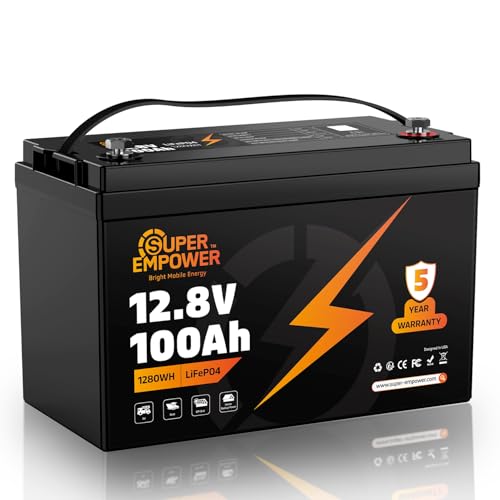
- 20.94-pound Group 31 drop-in design
- 100A smart BMS and 1,280Wh capacity
- Supports up to 4P4S expansion
Best For: RV, marine, trolling motor, and solar energy storage
High-Capacity AGM Bank

- Large 200Ah 12V storage capacity
- Sealed, maintenance-free AGM construction
- Low self-discharge below 3% monthly at 77°F
Best For: Large RV and solar storage systems with room for a heavy AGM battery
Long-Life Lithium Power

- Claims 15,000+ cycles at 60% depth of discharge
- 24-pound Group 31 drop-in format
- 100A smart BMS with low-temperature cutoff
Best For: Frequent-cycle RV, solar, marine, and off-grid power systems
Compact AGM Pick
VEVOR 12V 40Ah Deep Cycle Battery

- Maintenance-free AGM construction
- 400A maximum five-second discharge current
- Compact fit for mobility and recreational devices
Best For: Mobility scooters, wheelchairs, e-bikes, and go-karts
Long-Life Lithium Upgrade
12V 100Ah LiFePO4 Group 31 Battery

- 24-pound Group 31 drop-in design
- Smart BMS with low-temperature cutoff
- Up to 15,000 cycles at 60% depth of discharge
Best For: RV, marine, golf cart, solar, and off-grid applications
High-Capacity AGM Storage
VEVOR 12V 100Ah Deep Cycle Battery

- 100Ah maintenance-free AGM capacity
- 800A maximum five-second discharge current
- Suitable for RV, solar, marine, and UPS storage
Best For: Energy storage and backup power—not vehicle ignition
Best Compact Marine Pick

- 50Ah capacity for steady trolling-motor power
- Sealed, low-maintenance AGM construction
- Compact 32-pound design for small boats
Best For: Kayaks, small boats, and trolling motors
Best Dual-Purpose Marine Pick
Mighty Max 12V 100Ah AGM Battery
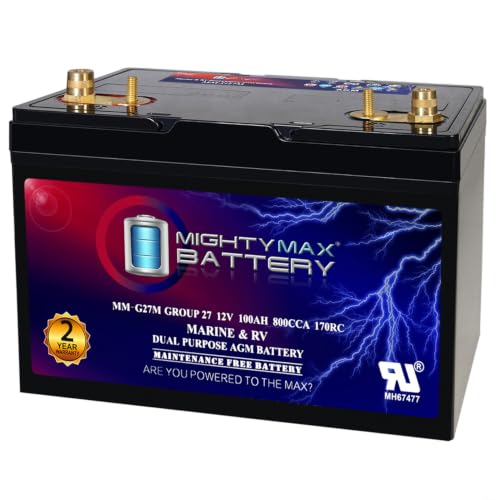
- 100Ah deep-cycle capacity
- 800 CCA and 850 MCA starting output
- Maintenance-free, spill-proof AGM construction
Best For: Boats needing starting and accessory power
Best Lightweight Lithium Pick
NERMAK 12V 50Ah LiFePO4 Battery

- Only about 11 pounds
- Rated for 4,000-plus cycles
- Built-in 100A BMS protection
Best For: Portable solar, marine, RV, and off-grid systems
Trusted AGM Value – Renogy 12V 100Ah AGM Battery
For dependable deep cycle batteries in an RV, cabin, or solar setup, this Renogy AGM model offers 100Ah of sealed, maintenance-free lead-acid storage. Its stable discharge and broad operating range make it a practical choice when simple installation and minimal upkeep matter.
Best For: RVs, cabins, solar backup, and users who prefer sealed AGM chemistry over lithium.
Pros:
- Sealed AGM design requires minimal troubleshooting and maintenance.
- Supports series connections and up to four batteries in parallel.
- Operates effectively across a stated -4°F to 140°F discharge range.
- Low monthly self-discharge rate of below 3% at 77°F.
Cons:
- At 63.9 pounds, it is considerably heavier than the listed lithium alternatives.
- Includes a two-year prorated warranty rather than the longer coverage listed for some lithium models.
- Lead-acid AGM chemistry is not intended for the same cycle-life expectations as LiFePO4.
This is a sensible deep cycle battery for straightforward, low-maintenance power storage. Choose it when sealed lead-acid reliability and broad temperature performance are more important than minimizing weight.
Lightweight Group 31 Upgrade – 12.8V 100Ah LiFePO4 Battery
This 12.8V 100Ah LiFePO4 battery is one of the more portable deep cycle batteries for RV, marine, trolling motor, and off-grid use. Its Group 31 form factor, built-in 100A BMS, and 1,280Wh capacity are aimed at users upgrading from lead-acid without changing their battery compartment.
Best For: RV house power, boats, trolling motors, solar storage, and drop-in lithium upgrades.
Pros:
- Weighs 20.94 pounds while retaining a 100Ah rating.
- Built-in BMS protects against overcharge, over-discharge, overcurrent, short circuits, and temperature issues.
- Group 31 dimensions and M8 terminals support straightforward installation.
- Supports up to 4P4S expansion for systems up to 20.48kWh.
Cons:
- Designed for energy storage and is not suitable for engine starting or cranking.
- Charging is disabled below 32°F by the BMS.
- Requires a lithium-compatible charger or properly configured solar controller.
For buyers ready to move beyond AGM weight, this battery combines a familiar Group 31 footprint with lithium portability. Confirm your charger settings and intended use before replacing a starting battery or installing it in cold-weather conditions.
High-Capacity AGM Bank – Renogy 12V 200Ah AGM Battery
When your setup needs more reserve than a standard 100Ah unit, this Renogy 200Ah AGM battery provides a larger lead-acid storage option. It uses sealed AGM construction, low self-discharge, and plates designed for high discharge currents, making it suitable for substantial RV or solar battery banks.
Best For: Larger RV systems, solar storage, and stationary applications that benefit from 200Ah capacity.
Pros:
- Provides 200Ah of rated capacity at 12 volts.
- Maintenance-free AGM design helps prevent acid leakage and routine servicing.
- Monthly self-discharge is stated below 3% at 77°F.
- Reference capacities are provided for C3, C5, C10, and C20 discharge rates.
Cons:
- At 127.9 pounds, it is difficult to move and install.
- Its large 20.5-by-9.4-by-8.8-inch footprint requires careful compartment measurement.
- Renogy recommends upright installation and prohibits upside-down mounting.
This is a capacity-focused AGM choice for buyers who want fewer batteries in a larger 12V bank. Its weight and installation orientation make planning especially important, but the 200Ah rating can simplify high-demand storage setups.
Long-Life Lithium Power – 12V 100Ah LiFePO4 Battery
This 12V 100Ah LiFePO4 battery is built for buyers seeking lightweight deep cycle batteries with extensive cycle-life claims. A 100A smart BMS, automatic low-temperature charging cutoff, Group 31 dimensions, and 4S4P expansion make it suitable for mobile, marine, solar, and backup applications.
Best For: Daily solar storage, RV house banks, marine trolling motors, off-grid systems, and backup power.
Pros:
- Claims 15,000+ cycles at 60% depth of discharge and a 10-year service life.
- Weighs 24 pounds and fits standard Group 31 battery compartments.
- 100A smart BMS includes overcharge, over-discharge, over-current, short-circuit, and low-temperature protection.
- Supports up to 4S4P expansion for systems reaching 51.2V and 400Ah.
Cons:
- Charging is automatically cut off below 32°F.
- Its lithium chemistry requires compatible charging equipment.
- The extensive expansion capability may be unnecessary for small, occasional-use setups.
Choose this model when long service life, low weight, and scalable energy storage are priorities. It is particularly compelling for frequent cycling, though cold-weather charging limits and lithium-compatible equipment should be part of the installation plan.
Compact AGM Pick – VEVOR 12V 40Ah Deep Cycle Battery
For smaller mobility and recreational devices, this 12V 40Ah AGM battery is a practical deep cycle batteries option. Its sealed, maintenance-free design and compact footprint make it easier to install than traditional flooded lead-acid batteries, while the 400A maximum five-second discharge current supports startup demands.
Best For: Mobility scooters, electric wheelchairs, go-karts, e-bikes, and other light electric vehicles.
Pros:
- Maintenance-free AGM construction requires no electrolyte top-ups.
- Compact 7.8 x 6.5 x 6.7-inch size and 24.7-pound weight suit smaller installations.
- 400A maximum discharge current can support device startup.
- Rechargeable 40Ah capacity provides extended runtime for light-duty equipment.
Cons:
- Professional charging equipment is recommended for safe use.
- Its 40Ah capacity is better suited to light-duty applications than larger energy-storage systems.
This VEVOR model is a sensible choice when you need a compact AGM replacement for a mobility or recreational device. Confirm the dimensions, charging setup, and required capacity before buying.
Long-Life Lithium Upgrade – 12V 100Ah LiFePO4 Group 31 Battery
This 12V 100Ah LiFePO4 battery is designed for shoppers upgrading from lead-acid deep cycle batteries. It combines a Group 31 drop-in footprint with a 24-pound weight, smart battery-management protections, and a stated cycle life of up to 15,000 cycles at 60% depth of discharge.
Best For: RV house banks, trolling motors, golf carts, solar storage, and off-grid backup systems.
Pros:
- LiFePO4 chemistry is substantially lighter than comparable lead-acid batteries.
- Smart BMS protects against overcharge, over-discharge, over-current, and short circuits.
- Automatic low-temperature charging cutoff helps protect the cells below 32°F.
- Supports up to 4S4P expansion for systems as large as 51.2V and 400Ah.
Cons:
- A compatible 14.6V LiFePO4 charger is needed for the stated five-hour charging time.
- Charging is restricted below 32°F by the low-temperature cutoff.
- As a lithium battery, it may require a higher upfront investment than lead-acid alternatives.
Choose this model when low weight, long service life, and expandable capacity matter more than the simplicity of a conventional lead-acid battery. Its Group 31 dimensions also make it a convenient upgrade for compatible compartments.
High-Capacity AGM Storage – VEVOR 12V 100Ah Deep Cycle Battery
For stationary or backup applications that need more capacity, this 12V 100Ah AGM battery provides a maintenance-free deep cycle batteries solution. It is intended for energy storage rather than vehicle starting, with an 800A maximum five-second discharge current and compatibility across RV, marine, solar, and UPS setups.
Best For: RV power, marine systems, solar and wind storage, off-grid installations, and UPS backup power.
Pros:
- 100Ah capacity offers more stored energy than the smaller 40Ah model.
- AGM construction eliminates routine electrolyte maintenance.
- 800A maximum five-second discharge current supports high-demand equipment startup.
- Designed for diverse storage uses, including RV, marine, solar, and UPS systems.
Cons:
- It is an energy-storage battery, not a car-ignition or starting battery.
- Professional charging equipment is recommended for safe operation.
- Its listed dimensions and lead-acid construction may make installation and handling less convenient than a lightweight lithium option.
This VEVOR battery is a good fit when you want straightforward, maintenance-free AGM storage at 100Ah. Verify the available space and charging equipment, and do not select it for automotive engine starting.
Best Compact Marine Pick – Newport 12V 50Ah AGM Battery
If you need dependable deep cycle batteries for a trolling motor or small boat, the Newport 12V 50Ah AGM model is a practical option. Its sealed lead-acid construction is low maintenance, while the compact 32-pound design suits kayaks, inflatable boats, jon boats, and other small watercraft.
Best For: Anglers and boaters who want a portable 12V battery for trolling motors and compatible marine electronics.
Pros:
- 50Ah capacity provides steady power for extended outings.
- Sealed AGM design offers a low-maintenance marine power solution.
- Compact, portable form factor fits smaller boats and kayaks.
- Includes a one-year limited warranty and USA-based support.
Cons:
- At 50Ah, it offers less capacity than the 100Ah marine option in this roundup.
- Lead-acid construction is substantially heavier than the comparable LiFePO4 battery.
The Newport is a straightforward choice when portability and dependable trolling-motor power matter more than maximum capacity or minimum weight.
Best Dual-Purpose Marine Pick – Mighty Max 12V 100Ah AGM Battery
For shoppers comparing deep cycle batteries that can also start an engine, the Mighty Max MM-G27M combines 100Ah deep-cycle capacity with strong marine cranking output. Its maintenance-free, spill-proof AGM design is built for boats and demanding conditions, though its 70.5-pound weight is worth planning for.
Best For: Boaters who need one battery for engine starting, electronics, and longer-duration onboard power.
Pros:
- 100Ah capacity supports extended accessory and electronics use.
- Delivers 800 CCA, 850 CA, and 850 MCA for strong starting performance.
- Spill-proof, maintenance-free AGM construction absorbs vibration.
- Rugged ABS casing and up to 700 cycles at 50% depth of discharge add durability.
Cons:
- At 70.5 pounds, it is the heaviest battery in this selection.
- Its larger Group 27M format may be less convenient for compact watercraft.
- The supplied details list differing warranty periods, so verify coverage before purchase.
The Mighty Max stands out for dual-purpose marine use, giving boaters both substantial deep-cycle capacity and robust engine-starting capability in one heavy-duty AGM battery.
Best Lightweight Lithium Pick – NERMAK 12V 50Ah LiFePO4 Battery
The NERMAK 12V 50Ah LiFePO4 is one of the more portable deep cycle batteries for solar, marine, RV, and off-grid setups. It weighs about 11 pounds, includes a built-in 100A battery management system, and is rated for 4,000-plus cycles, but it requires a LiFePO4-compatible charger.
Best For: Users prioritizing low weight, long cycle life, and flexible use in solar, marine, camping, or backup-power systems.
Pros:
- Lightweight design weighs about one-third as much as a comparable lead-acid battery.
- Rated for 4,000-plus cycles for extended service life.
- Built-in 100A BMS helps protect against overcharge, over-discharge, over-current, and short circuits.
- Can be connected in series or parallel for expanded setups.
Cons:
- Requires a LiFePO4-specific charger; a standard SLA charger may not fully charge it.
- Its 50Ah capacity is lower than the Mighty Max 100Ah battery.
- Includes a one-year warranty, shorter than the claimed cycle-life rating might suggest.
Choose the NERMAK when portability and long-term cycling are priorities. Its lithium chemistry is especially appealing for mobile and off-grid applications where every pound matters.
How We Picked the Best Deep Cycle Batteries
We evaluated these Deep Cycle Batteries by comparing their chemistry, rated voltage, amp-hour capacity, physical format, intended use, and practical compatibility. We also considered features that affect ownership, including built-in battery management systems, low-temperature protection, recharge-cycle ratings, sealed construction, starting-current capability, and suitability for solar, RV, marine, and mobility applications.
Because a battery’s best use depends on the system around it, this roundup includes both AGM and LiFePO4 models rather than ranking every option by capacity alone. Always confirm the manufacturer’s charging requirements, terminal layout, dimensions, and load limits before buying.
Quick Comparison
| Battery type | Typical strengths | Best suited to |
|---|---|---|
| LiFePO4 | Low weight, long cycle life, usable capacity | RVs, solar, trolling motors, frequent cycling |
| AGM | Sealed, simple, proven, usually easier to match with older systems | Marine use, backup power, moderate cycling |
| 50Ah models | Compact size and lower upfront cost | Small boats, portable systems, light loads |
| 100Ah models | Balanced capacity and broad compatibility | RVs, off-grid systems, trolling motors |
| 200Ah models | More stored energy with fewer batteries | Large RV and solar installations |
Key Buying Factors for Deep Cycle Batteries
Capacity and Usable Energy
Amp-hour capacity indicates how much current a battery can provide over time, but usable energy also depends on chemistry and recommended depth of discharge. A 100Ah LiFePO4 battery will generally provide more usable capacity per charge than a similarly rated lead-acid battery. Calculate your daily watt-hour demand, then add reserve for cloudy weather, temperature, inverter losses, and unexpected loads.
Battery Chemistry
AGM batteries are sealed, maintenance-free, and often a straightforward replacement for lead-acid systems. They are heavier and typically tolerate fewer full cycles than LiFePO4 batteries. Lithium iron phosphate batteries cost more initially but usually weigh less, recharge faster, deliver more usable capacity, and offer a longer cycle life. They require compatible charging equipment and should not be charged below the manufacturer’s specified temperature.
Fit, Charging, and Electrical Compatibility
Check the battery’s Group size, dimensions, terminal orientation, maximum continuous discharge, and charger profile. RV solar systems may need a lithium-compatible controller, while some trolling motors require specific voltage, physical clearance, or battery-box arrangements. Do not connect different chemistries or mismatched batteries in series or parallel unless the manufacturer explicitly permits it.
Protection and Durability
A smart BMS can protect a lithium battery from overcharge, over-discharge, excessive current, and temperature problems. For marine or outdoor installations, sealed construction, secure mounting, corrosion-resistant terminals, and protection from water intrusion are equally important.
Who Should Buy Which Deep Cycle Batteries?
- Choose LiFePO4 if you cycle the battery frequently, need lower weight, or want long-term performance for an RV, solar array, or trolling motor.
- Choose AGM if you prefer a simpler drop-in solution, have compatible lead-acid charging equipment, or need dependable backup and marine power.
- Choose 50Ah for compact kayaks, small boats, mobility equipment, and lower-demand portable systems.
- Choose 100Ah for the best all-around balance of capacity, size, and application flexibility.
- Choose 200Ah when your RV or off-grid system has high energy demand and enough room for a larger, heavier battery.