The best rotary pipe cutters make clean, controlled cuts without the crushing and uneven edges often caused by saws or bulky powered tools. The right model can save time on plumbing repairs, HVAC work, automotive projects, and general fabrication.
This roundup compares 10 options ranging from compact close-quarters cutters to heavy-duty tools for larger pipe and tubing. Use the buying guide below to match cutting capacity, materials, access, and durability to your work.
Best 10 Rotary Pipe Cutters Picks for 2026
Best Compact Pick
RIDGID Model 101 Close Quarters Cutter

- Fits tight spaces and small tubing
- Cuts copper, aluminum, brass, and plastic
- Includes spare cutter wheel
Best For: Close-quarters tubing work
Best Heavy-Duty Pick
Godora 1–3 Inch Steel Pipe Cutter
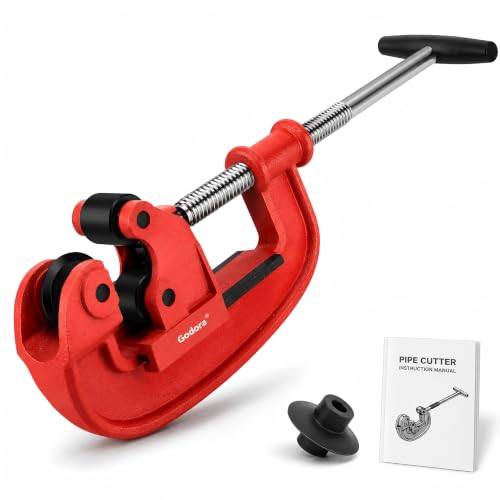
- Cuts 1- to 3-inch iron and steel pipe
- Ball-bearing feed promotes smooth rotation
- Includes an extra cutting wheel
Best For: Large steel and iron pipe
Best Wide-Range Pick
RIDGID Model 152 Quick-Acting Cutter

- Covers 1/4 to 2-5/8 inches
- Quick-acting design for faster setup
- Includes a fold-away reamer
Best For: Mixed-size tubing projects
Best Versatile Set
Ultimate Tube Cutter and Deburring Kit

- Includes large and mini cutters
- Covers 1/8- to 2-inch tube sizes
- Adds a high-speed steel deburring tool
Best For: Multi-size, multi-material tube work
Best for Easy Setup
RIDGID 32985 Close Quarters Tubing Cutter

- Made for restricted spaces
- Cuts 3/16- to 15/16-inch tubing
- Lightweight with lifetime defect coverage
Best For: Small-diameter tubing repairs in tight areas
Best for Everyday Use
Heavy Duty 3/16- to 2-Inch Tube Cutter

- Covers a broad 3/16- to 2-inch range
- Uses dual roller rows for tube stability
- Includes a replaceable blade
Best For: Plumbing, HVAC, and DIY jobs involving varied tube sizes
Best Auto-Feed Design
RIDGID Model 118 2-in-1 Tubing Cutter

- Compact close-quarters format
- Includes AUTOFEED functionality
- Cuts 1/4- to 1-1/8-inch tubing
Best For: Professional copper, brass, and aluminum tubing work
Best with Extra Features

- Cuts 3–28 mm soft tubing
- Compact for confined spaces
- Not for PVC or heavy-wall tubing
Best For: Small copper, aluminum, and brass tube projects
Best for Close Quarters

- Handles 6–23 mm tubing
- Works alone or with a ratchet
- Includes gloves and spare blades
Best For: Tight-space copper, PVC, and soft-metal cutting
Best Versatile Range

- Cuts 1/8–1-1/8 inch tubing
- Designed for restricted spaces
- Listed for several metal types
Best For: Small plumbing, mechanical, and general tubing work
Best Compact Pick – RIDGID Model 101 Close Quarters Cutter
For tight-access plumbing work, this rotary pipe cutter is designed to fit around small-diameter tubing where a larger tool may be difficult to use. Its 1/4- to 1-1/8-inch capacity covers several common metal and plastic tube materials.
Best For: Close-quarters cuts on copper, aluminum, brass, and plastic tubing.
Pros:
- Compact design for tight spaces and small tubing
- Works with hard and soft copper, aluminum, brass, and plastic
- Knurled feed screw knob helps control cutting pressure
- Includes a spare cutter wheel and lifetime defect warranty
Cons:
- Limited to tubing up to 1-1/8 inches
- Not intended for larger pipe-cutting jobs
The Model 101 is a practical choice when access is restricted and portability matters. Choose it for smaller tubing rather than heavy-duty steel or large-diameter pipe.
Best Heavy-Duty Pick – Godora 1–3 Inch Steel Pipe Cutter
This heavy-duty rotary pipe cutter is built for 1- to 3-inch iron and steel pipe. Its smooth ball-bearing feed and extra-long handle are aimed at jobs that require controlled rotation and added leverage.
Best For: Larger iron and steel pipe used in plumbing, heating repair, construction, automotive work, and DIY projects.
Pros:
- Handles 1- to 3-inch outside diameters
- Ball-bearing feed supports smooth, accurate rotation
- Extra-long handle provides leverage for cutting
- Includes an extra alloy steel cutting wheel
Cons:
- Designed for iron and steel, not copper or aluminum
- Weighs 6.25 pounds, making it less portable than compact cutters
With its broad capacity and long handle, this is the better fit for larger steel-pipe work. It is less versatile for mixed-material tubing applications because the supplied notes exclude copper and aluminum.
Best Wide-Range Pick – RIDGID Model 152 Quick-Acting Cutter
For users who need one rotary pipe cutter to cover small tubing through larger 2-5/8-inch sizes, the RIDGID Model 152 offers a wide 1/4- to 2-5/8-inch range. Its quick-acting design and fold-away reamer add useful convenience for plumbing and related work.
Best For: Plumbing, HVAC, electrical work, DIY projects, and professional users handling varied tube sizes.
Pros:
- Wide 1/4- to 2-5/8-inch cutting capacity
- Quick-acting design supports faster setup
- Fold-away reamer helps clean tubing ends
- Tool-free wheel changes with the X-cel wheel pin
Cons:
- Larger and heavier than a close-quarters mini cutter
- The supplied notes do not specify compatible tube materials
The Model 152 stands out for range and workflow features rather than compactness. It is a strong all-around option when projects involve multiple tubing diameters and reaming is part of the job.
Best Versatile Set – Ultimate Tube Cutter and Deburring Kit
This rotary pipe cutter set combines a large cutter, a mini cutter, and a deburring tool for users who want coverage across several tube sizes. The cutters are rated for copper, aluminum, and PVC pipes, with capacities ranging from 1/8 to 2 inches depending on the tool.
Best For: Professionals and DIY users who need multiple cutter sizes plus post-cut deburring.
Pros:
- Includes large and mini cutters for varied tube sizes
- Handles capacities from 1/8- to 2-inch OD
- Suitable for copper, aluminum, and PVC pipes
- Includes a high-speed steel deburring tool
Cons:
- Requires storing multiple tools rather than one cutter
- The supplied notes do not specify a warranty
This kit is a convenient choice when material versatility and finishing work matter as much as cutting. Its two cutter sizes make it more adaptable than a single-purpose tool, while the deburring tool helps refine cut edges.
Best for Easy Setup – RIDGID 32985 Close Quarters Tubing Cutter
RIDGID 32985 Model 104 Close Quarters Tubing Cutter, 3/16-inch to 15/16-inch Tube Cutter
Check Price On AmazonFor rotary pipe cutters intended for cramped work areas, the RIDGID 32985 is designed specifically for small-diameter tubing and restricted spaces. Its 3/16- to 15/16-inch capacity covers common small tubing jobs, while the large feed screw helps you control cutting pressure.
Best For: Cutting copper, aluminum, brass, and plastic tubing in tight spaces.
Pros:
- Compact design for restricted areas
- Cuts several common tubing materials
- Lightweight aluminum construction
- Lifetime coverage against material and workmanship defects
Cons:
- Limited to tubing from 3/16 to 15/16 inch
- Not intended for larger pipe-cutting tasks
The RIDGID 32985 is a practical choice when access is the main concern. Its smaller capacity makes it less versatile for larger tubing, but its close-quarters design and controlled feed are useful for compact plumbing repairs.
Best for Everyday Use – Heavy Duty 3/16- to 2-Inch Tube Cutter
This heavy-duty option stands out among rotary pipe cutters for its broad 3/16- to 2-inch outer-diameter range. Dual rows of ball-bearing rollers are designed to hold tubing firmly, while the replaceable alloy-steel blade supports continued use across plumbing, HVAC, and DIY projects.
Best For: Users who need one hand-powered cutter for a wide range of metal tubing sizes.
Pros:
- Handles tubing from 3/16 to 2 inches in diameter
- Compatible with copper, brass, iron, aluminum, and some stainless steel tubing
- Replaceable cutting blade
- Rubber-coated rotating knob and lightweight aluminum-alloy body
Cons:
- Not designed for tight corners
- Material limits apply to aluminum and stainless steel wall thickness
- Heavier than compact close-quarters models
Choose this cutter when range and durability matter more than access in confined locations. Its broad capacity and replaceable blade make it versatile, while the stated wall-thickness limits should be checked before cutting specialized tubing.
Best Auto-Feed Design – RIDGID Model 118 2-in-1 Tubing Cutter
The RIDGID Model 118 adds AUTOFEED functionality to a compact rotary pipe cutter design. It is made for 1/4- to 1-1/8-inch copper, brass, and aluminum tubing, making it a focused option for close-quarters professional work where a compact tool and automatic feed are useful.
Best For: Professional users cutting mid-size copper, brass, and aluminum tubing in confined areas.
Pros:
- 2-in-1 close-quarters design
- AUTOFEED feature helps advance the cutter
- Handles 1/4- to 1-1/8-inch tubing
- Ergonomic grip and alloy-steel, aluminum, and metal handle materials
Cons:
- Narrower size range than the 3/16- to 2-inch heavy-duty option
- Specified for copper, brass, and aluminum tubing rather than a broader range of materials
The Model 118 is a strong fit when compact access and feed assistance are priorities. Its specialized capacity keeps it from being an all-purpose large-pipe cutter, but the AUTOFEED design can simplify repeated cuts in its intended material range.
Best with Extra Features – Spurtar Mini Pipe Cutter
For small copper, aluminum, or brass tubing, this mini rotary pipe cutter offers a compact option for work in confined spaces. It handles outside diameters from 1/8 to 1-1/8 inches, provided the tube wall is no thicker than 3.8 mm.
Best For: Plumbers, electricians, mechanics, and DIY users cutting soft, thin-wall tubing in tight areas.
Pros:
- Works with tubing from 3 to 28 mm in outside diameter.
- Compact steel-alloy design suits restricted workspaces.
- Compatible with soft copper, aluminum, brass, and other thin tubes.
- Lightweight design weighs only 4.6 ounces.
Cons:
- Not recommended for stainless steel, PVC, acrylic, or thick-wall tubing.
- Requires gradual knob adjustment to help prevent deformation and uneven cuts.
- Needs enough clearance to rotate around the tube.
This is a practical specialty cutter when portability and access matter more than heavy-duty versatility. Confirm the tube’s outside diameter and wall thickness before buying.
Best for Close Quarters – Ratcheting Tubing Cutter
This ratcheting rotary pipe cutter is designed for tubing work near walls and other obstacles. Its 1/4- to 7/8-inch range covers copper, PVC, and soft metal pipes, while the two-in-one design can be used alone or with a ratchet handle.
Best For: Close-quarters plumbing and tubing jobs where reduced hand force and maneuverability are important.
Pros:
- Cuts 6–23 mm tubing and pipes.
- Ratcheting design helps in tight spaces.
- Longer handle is intended to reduce hand fatigue.
- Includes replaceable blades stored in the handle and a pair of gloves.
Cons:
- Its cutting range is narrower than some full-range cutters.
- The supplied notes do not specify compatibility with stainless steel or thick-wall tubing.
- At 12 ounces, it is heavier than the compact mini cutters in this roundup.
Choose this model when access is the main challenge and you value ratcheting assistance. Its adjustable knob and replaceable-blade design add practical convenience for recurring jobs.
Best Versatile Range – Compact Tube Cutter
With a 1/8- to 1-1/8-inch cutting range, this rotary pipe cutter is aimed at small tubing and compact plumbing work. The tool is positioned for copper, steel, stainless steel tubing, aluminum, brass, and other listed materials, with a design suited to restricted spaces.
Best For: Plumbers, electricians, mechanics, and DIY users who need a compact cutter for varied small-tube applications.
Pros:
- Offers a broad 1/8- to 1-1/8-inch size range.
- Designed for work in restricted spaces.
- Listed for copper, steel, stainless steel tubing, aluminum, brass, and iron.
- Can also be used for accurate arrow cutting according to the supplied notes.
Cons:
- The notes give mixed guidance about PVC compatibility, so PVC users should verify suitability first.
- Manual rotation and adjustment are required for cutting.
- Only one cutter is included.
This is a strong option if you want a compact tool with a wide stated range and broader material claims than the other mini cutter. Review the intended material and tube dimensions before starting a project.
How We Picked the Best Rotary Pipe Cutters
We focused on practical features that affect cutting performance and day-to-day usability: supported outside diameter, compatibility with common tubing materials, frame strength, blade quality, adjustment control, handle design, and access in confined spaces. We also considered whether each tool offers useful extras such as spare blades, deburring tools, quick-adjust mechanisms, or ratcheting operation.
The selection includes compact models for copper and aluminum tubing, versatile general-purpose cutters, and larger steel tools for projects requiring a wider cutting range. Always confirm the listed capacity against the actual outside diameter of your pipe rather than relying only on nominal pipe size.
Quick Comparison
| Type | Best For | Typical Advantage |
|---|---|---|
| Close-quarters cutter | Plumbing and HVAC repairs | Works where handle movement is limited |
| Standard tubing cutter | Routine copper, brass, and aluminum work | Simple, controlled, clean cuts |
| Wide-range cutter | Mixed-size tubing and pipe | One tool covers more diameters |
| Heavy-duty steel cutter | Larger or tougher pipe | More leverage and durable construction |
| Ratcheting cutter | Very tight access | Incremental operation with less swinging room |
Key Buying Factors for Rotary Pipe Cutters
Diameter Range
Choose a cutter whose range comfortably includes your smallest and largest pipes. A tool that only works at the edge of its capacity may require more adjustment and produce less consistent results. For occasional repairs, a compact 1/8- to 1-1/8-inch range can be practical; larger plumbing or fabrication jobs may require a cutter reaching 2 inches or more.
Pipe Material and Blade
Check whether the cutter is intended for copper, brass, aluminum, PVC, stainless steel, or heavier steel. Softer tubing generally needs a sharp, precise wheel, while tougher materials demand a sturdier frame and suitable replacement blades. Do not assume a cutter rated for copper is appropriate for steel pipe.
Access and Adjustment
Close-quarters and ratcheting designs are valuable when a full rotation of the tool is impossible. Quick-acting mechanisms speed setup, while a smooth adjustment screw helps prevent excessive pressure that can deform thin-wall tubing.
Finish Quality and Maintenance
Look for a rigid body, secure wheel mounting, and an easy-to-turn adjustment mechanism. After cutting, remove burrs before joining or installing the pipe. Keep the wheel clean, lubricated as recommended, and replace it when cuts become rough or require excessive force.
Who Should Buy Which Rotary Pipe Cutters?
DIY homeowners: Choose a compact, easy-to-adjust model with a versatile range for routine copper, brass, aluminum, or plastic tubing repairs.
Plumbers and HVAC technicians: A close-quarters or ratcheting design is the better choice for cabinets, walls, and other restricted work areas. A dependable spare blade is also worthwhile for frequent use.
Tradespeople handling mixed sizes: Select a wide-range cutter or a set containing both a standard and mini tool. This reduces the need to switch tools between small tubing and larger pipe.
Heavy-duty users: Prioritize a steel-bodied cutter specifically rated for the material and diameter you handle. More capacity is useful only when the frame and blade are designed for that workload.